A growing number of settlement administrators now email class members a check to print at home instead of mailing one. The print-out is the check, it deposits like any other, and the two places it goes wrong are the printer settings and the receiving bank’s own deposit policy.

The Payment Arrives as a File, Not an Envelope
A claim filed months earlier resolves in an email with a check image attached and a button that prints it. Nothing about it resembles the envelope people are expecting, and the first reaction is almost always the same question: is this real, and am I seriously supposed to print my own money?The format is genuine and it is spreading. Emailed printable checks cost an administrator a fraction of what a mailed distribution costs across a class of hundreds of thousands, they arrive the day they are issued instead of a week later, and they do not fail because someone moved. What they trade away is familiarity, and every question in the paragraphs below comes from that trade.
What Makes the Print-Out a Real Check
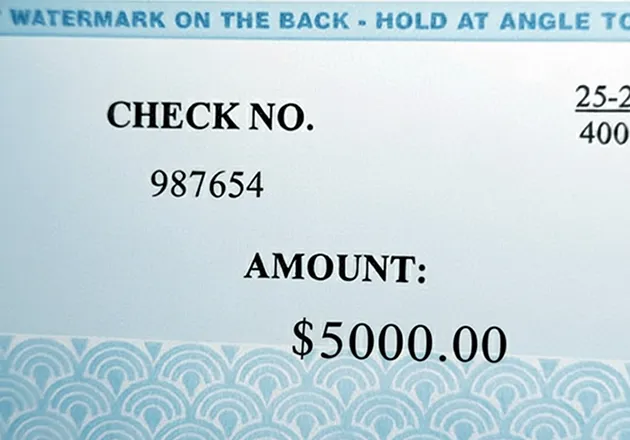
The check is the sheet of paper coming out of the printer. The email is only how it was delivered.That distinction is what makes the instrument work. A check is a written order directing a bank to pay a fixed amount on demand, and the Uniform Commercial Code counts printing as writing under section 1-201(b)(43) and allows the drawer’s signature to be made by a device or a machine under section 3-401(b). A settlement fund account, a payee, an amount, a date and a printed authorized signature satisfy every element on the page in front of you.
The second half of the answer is how banking works now. Since the Check Clearing for the 21st Century Act took effect in 2004, banks have been permitted to truncate paper checks and exchange them as digital images, and essentially all check processing runs on images rather than on paper travelling between institutions. A printed check deposits because the system it enters was rebuilt around images two decades ago.
Confirm the Email Before You Print Anything
Payout windows are also when impostor emails appear, and a legal-sounding payment that arrives unannounced is exactly the shape the FTC warns about in its fake-check guidance. The distinguishing feature is never how the check looks — counterfeits print convincingly — but what the sender wants next.• Check the case against the official site. Type the settlement’s web address into the browser rather than following a link in the email, and confirm the case name and the class match the settlement you actually filed in.
• A genuine payment asks for nothing. No fee to release it, no wire, no gift cards, no returning a portion, and never a full bank login. Any of those ends the inquiry.
• Money appearing is not the check clearing. The FTC’s warning on this point is the one that costs people the most: funds showing in an account can be reversed weeks later, and the depositor is generally responsible for anything already sent on.
An emailed check that survives those three tests is a payment, not a pitch. The rest is mechanics.
Printing It So a Bank Can Read It
The print settings matter more than the paper does.• Save the file first. Download it as a PDF before touching the print button. Issuers commonly cap how many times a single check can be printed, and a saved file survives that cap when the first attempt goes to the wrong printer or comes out cropped.
• Print at actual size. Set scaling to 100% and turn off fit-to-page. Scaling shrinks the row of digits along the bottom edge, and that row is the part the bank reads.
• Plain white paper is fine. Ordinary printer paper is what these are designed for. Black-and-white is normally accepted; no security paper, watermark stock or special ink is required or expected.
• Check the bottom edge before you stop. The digits should be crisp, unbroken and fully inside the page. A faint or clipped bottom line is the most common reason a print-out gets rejected, and it is fixed by reprinting rather than by arguing with the app.
The numbers along that bottom edge are the MICR line, which carries the routing and account numbers. A bank-issued check prints them in magnetic ink; a home printer lays down ordinary toner. Image-based processing reads them optically and does not care, which is why the print-out works at all — though a counter-top magnetic reader at a teller window may not pick them up, in which case the teller processes the item as an image instead.
Printing It Without a Printer
The check has to exist on paper before any bank will take it, because a mobile deposit works from photographs of a physical front and back. There is no route that skips the paper once a check has been issued.Save the file as a PDF and have it printed at a public library, a copy shop, a shipping store or an office that offers printing. The saved file is what matters: a class member who has already exhausted the print attempts inside the payment platform still holds a PDF that any printer will produce.
Before going to that trouble, open the payment email and look for a deposit option inside it. Some platforms offer to send the funds to a bank account directly, which avoids the printing question entirely. Where that option exists it is the simpler path, and where it does not, the print-out is the only one.
Free settlement alerts
Get notified when new class actions open to claims
Join thousands of readers who get the latest class action settlements you may qualify for — delivered straight to your inbox.
Endorsing and Depositing It
From here a printed check behaves like any other check, and the detailed mechanics — where to sign, what to do about a misspelled name, how long a bank may hold the funds — are covered in how to cash a class action settlement check. Three points are specific to a printed one.• The blank back is normal. Nothing is printed on the reverse of a check except the endorsement area and space reserved for the banks handling it. On a printed check the endorsement lines may not appear at all. Sign across the upper portion of the back; that is the endorsement.
• Add the bank’s mobile wording. Most institutions want a line such as “For mobile deposit only” beneath the signature, and some list the exact phrasing in the app. On an item the bank already regards as unusual, following that instruction is worth the ten seconds.
• Photograph it properly. A dark, non-reflective surface, even light with no shadow across the page, and the whole check inside the frame with all four corners visible. Printed checks are cut to a page rather than to check stock, so leaving the surrounding white margin in the shot is common and is not a problem.
Regulation CC governs when the money becomes available, exactly as it would for a mailed check: the first $275 of a deposit generally by the next business day, most of the remainder by the second, with longer holds permitted under stated exceptions including deposits above $6,725 in one day and accounts open less than 30 days. A hold is not a judgment about the check.
When the Bank Refuses It
Some class members deposit a printed check in the app and see the money the same day. Others are declined with no explanation. Both outcomes are normal, and the difference is usually the receiving bank’s policy rather than anything about the payment.Many deposit agreements define an item eligible for mobile deposit as an original check. A printed reproduction of a check image can fail that definition on its face, and the app applies the rule without explaining it. Underneath that policy sits a real exposure: a check that exists as a file can be printed again, and Regulation CC assigns an indemnity for losses caused by a duplicate deposited through remote capture. Institutions that have been burned by duplicates write the narrow rule and enforce it flatly.
The order of escalation is short:
• Reprint once, then stop. If the decline came with an image-quality message, a clean reprint at actual size on a dark background is worth one more attempt. Repeated app submissions of the same rejected image achieve nothing.
• Go to a branch. A teller can accept and process an item the app refuses, and can say plainly whether the refusal was policy or image quality. This is the step that resolves most of them.
• Ask the bank the direct question. Whether the institution accepts printed electronic checks at all is a question its staff can answer in a sentence, and a clear no is more useful than a fourth attempt.
• Go back to the administrator. If the bank will not take it in any form, ask through the official settlement website whether a paper check or another payment method can be issued. Raise it early — the check carries a void date, and a reissue takes time.
Print It Twice, Deposit It Once
Printing a check repeatedly is harmless. Depositing it more than once is the failure this whole category is built to prevent.A household where two people can open the same email can create a duplicate without anyone intending to, and so can depositing by app and then taking the paper to a branch when the app appears to have failed. The duplicate surfaces after both items have posted, and the person who deposited it is generally the one responsible for returning the money.
The FDIC’s guidance on remote deposit applies directly: keep the printed check until the deposit has posted and the funds are available, mark it as deposited, then destroy it. On a printed check that means destroying the extra copies too, and leaving the saved PDF alone once the money has cleared.
The Date That Costs People the Payment
Settlement checks are routinely issued with a printed validity window, and it is shorter than people assume — void after 90, 120 or 180 days is ordinary. The window applies to the printed output of an emailed check on the same terms as a mailed one, and an emailed check is easier to lose track of precisely because it never occupies space on a counter.Separately from whatever the check says, UCC section 4-404 relieves a bank of any obligation to pay a check presented more than six months after its date, though a bank may choose to pay it in good faith. Once the printed window has passed, a reissue is a request to the settlement administrator through the official settlement website, and reissues are common while a distribution is still open and impossible once it has closed.
Emailed Check, Mailed Check, or Digital Wallet
Three delivery methods are now in circulation, and each fails differently.• A mailed paper check is the most widely accepted item and the slowest. It can be delivered to an old address, and it is the only one of the three that can be lost by a third party.
• An emailed printable check arrives the day it is issued and cannot be misdelivered by post, but it depends on a printer and on a bank willing to take a printed item.
• A digital wallet payment — PayPal, Venmo, Zelle, a virtual card or direct deposit — removes the paper, the endorsement and the void date together. Its own failure is quieter: a payment addressed to an email or phone number the recipient no longer monitors, which is the situation described in a Venmo settlement payment that never shows up.
The election between them is almost always made on the claim form and not afterward, which is the argument for reading that question rather than accepting whatever is preselected. A class member still waiting and unsure which method was chosen will find the general timeline in how long a settlement check takes, and the tracing steps in where is my settlement payment.
The Joint Juice Settlement Is the Current Example
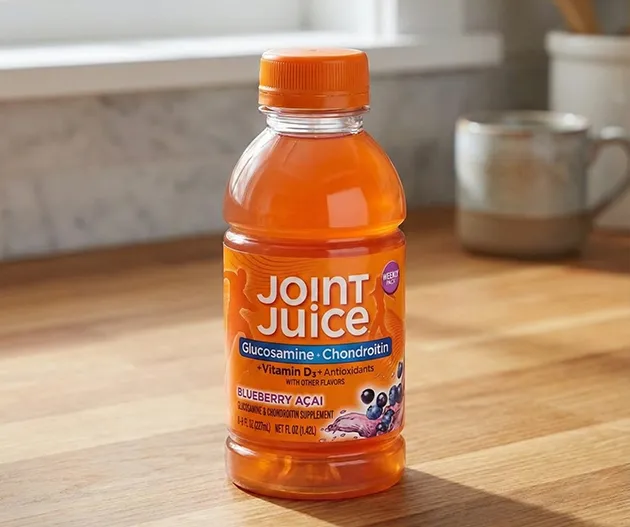
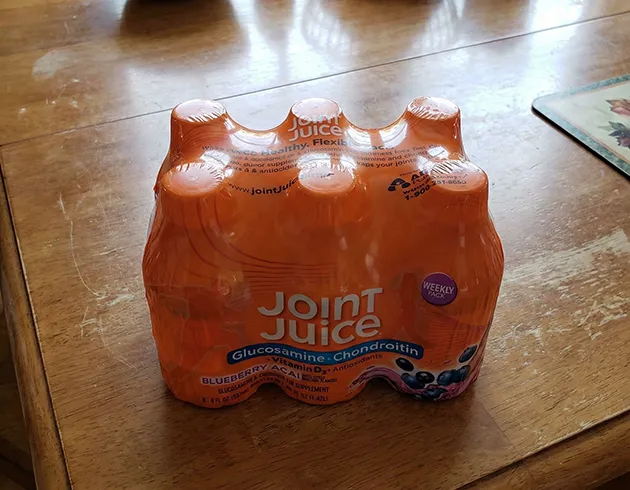
The $19.16 million Joint Juice New York settlement began paying class members in September 2026, and it paid by emailed printable check. A payment letter reviewed by OpenClassActions.com describes a pro rata distribution on an approved claim and states that the check becomes void on December 14, 2026.Every question in this article surfaced in that distribution within a day of the first payments: whether the email was genuine, what to do without a printer, why the back of the check was blank, where the routing and account numbers were, and what to do about a bank that refused the print-out by app. Reported amounts ranged from roughly $61 to $402.78, because the fund is distributed pro rata against the number of units each approved claim covered.
It is not the last settlement that will pay this way. The mechanics above are the ones that will keep repeating, and the void date is the one that will keep costing people the payment.
Frequently Asked Questions
Is an emailed settlement check that I have to print myself real?
It can be. Emailed printable checks are an established settlement payment method and several administrators now use them, so the format alone is not a sign of fraud. What separates a genuine payment from an impostor email is not how the check looks but what the sender wants next: a real settlement payment asks nothing of the recipient except depositing it — no fee, no wire, no gift cards, no returning part of the money, and no bank login. Confirm the case name against the official settlement website by typing the address into the browser rather than following a link in the email.
Why is the back of a printed settlement check blank?
Because nothing is supposed to be printed there. On any check the back carries only the endorsement area for the payee and space reserved for the banks that handle the item. The payee signs the back, and on a printed check the endorsement lines may not be pre-drawn at all — signing across the top portion of the reverse is sufficient. A blank back is not a sign the check is incomplete or fake.
Where are the routing and account numbers on a printed settlement check?
Along the bottom edge of the front, in the MICR line — the row of stylized digits that runs beneath the signature line. That is the same place they sit on any check. They are not on the back, and their absence from the back is not a defect. A printed check reproduces the MICR line in ordinary toner rather than magnetic ink, which image-based check processing reads optically without difficulty.
My bank rejected the printed check by mobile deposit. What should I do?
Try a branch before trying the app again. Many deposit agreements limit mobile deposit to an original check, and a printed image can fail that definition as a matter of policy rather than because anything is wrong with the payment. A teller can accept and process the item in person. If the bank declines it outright, ask the settlement administrator through the official settlement website whether a paper check or a different payment method can be issued instead, and raise it well before the date printed on the check.
What can I do if I do not have a printer?
Save the file as a PDF first, then have it printed elsewhere — a public library, a copy shop, a shipping store, or an office that offers printing. Saving the file before printing matters because some payment platforms cap how many times a single check can be printed, and a saved PDF survives that cap. Some platforms also offer a deposit option inside the payment email that sends the money to a bank account without a printed check at all, which is worth checking for before hunting down a printer.
What happens if I print the same check twice?
Printing it twice is harmless; depositing it twice is not. A check that exists as a file can be reproduced without limit, which is why issuers cap print attempts and why banks scrutinize printed items. Depositing the same check at two institutions, or by app and again at a branch, creates a duplicate presentment that the depositor is generally responsible for once it is caught. Deposit the check once, keep the print-out until the funds are available, then destroy it.
Does an emailed settlement check expire?
Yes, and usually sooner than people expect. Settlement checks are routinely issued with a printed validity window — void after 90, 120 or 180 days is common — and that date applies to the printed output of an emailed check exactly as it would to a mailed one. Separately, UCC section 4-404 relieves a bank of any obligation to pay a check presented more than six months after its date. If the window has passed, ask the administrator through the official settlement website whether a reissue is possible.
Can I choose a different payment method instead of a printed check?
Usually only at the time the claim is filed. Many settlements let class members elect PayPal, Venmo, Zelle, a virtual prepaid card or direct deposit on the claim form, and that election removes the printing and depositing question entirely. After payments have been issued, changing the method is a request to the settlement administrator through the official settlement website rather than something a class member can switch on their own, and administrators are not obliged to grant it.
Sources
• Uniform Commercial Code § 1-201(b)(43) (definition of “writing”), § 3-104 (negotiable instruments), § 3-401(b) (signature by device or machine) and § 4-404 (bank not obliged to pay a check more than six months old)• Check Clearing for the 21st Century Act, 12 U.S.C. § 5001 et seq. — check truncation and image exchange
• Federal Reserve Regulation CC, 12 C.F.R. part 229 — funds-availability schedules and the remote deposit capture indemnity
• Federal Trade Commission — How to Spot, Avoid and Report Fake Check Scams
• FDIC — consumer guidance on mobile and remote deposit
• Joint Juice New York Settlement payment letter reviewed by OpenClassActions.com, stating a pro rata distribution on an approved claim and a check void date of December 14, 2026
• Payment reports from Joint Juice class members, collected September 16, 2026