Smart TV owners and streaming subscribers sit at the center of hundreds of viewing-data class actions built on a 1988 videotape rental law. The Supreme Court hears argument in Salazar v. Paramount Global on October 14, 2026, on the question that decides how far that law reaches.

From Screen Scraping to Software Kits
The first generation of smart TV privacy litigation was about the television itself. Manufacturers built automatic content recognition, or ACR, directly into the set: software that samples what appears on screen, matches those samples against a reference library of shows, films and commercials, and reports back what the household watched. It worked regardless of source, capturing broadcast, cable, streaming, a game console or anything else routed through the panel.The Federal Trade Commission and the New Jersey Attorney General brought the defining early case. In February 2017 they announced a $2.2 million resolution with VIZIO over ACR software the agencies said had been running on 11 million televisions, with viewing histories combined with household demographic details and sold to third parties. The order required affirmative consent before collection and deletion of data gathered before March 1, 2016. A related consumer class action followed in California federal court.
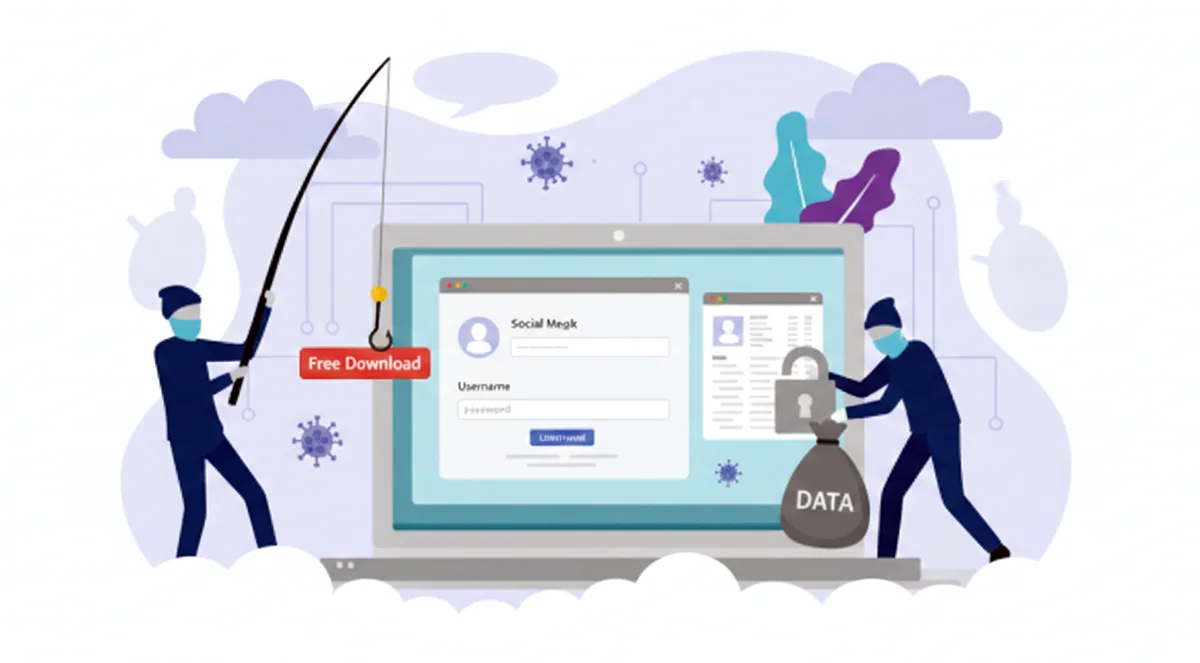
The technology has since moved up the stack. Tracking no longer lives only in the hardware — it sits in the operating systems that run the television interface and, increasingly, inside the individual streaming applications installed on it. Those apps embed software development kits and tracking pixels supplied by advertising networks and social platforms. The practical difference matters legally: ACR is one manufacturer observing its own screen, while an embedded kit can transmit a specific title alongside an account identifier directly to an outside company.
Why a 1988 Videotape Law Governs Modern Televisions
The statute driving nearly all of this litigation is the Video Privacy Protection Act, 18 U.S.C. § 2710. Congress passed it in 1988 after a newspaper obtained and published the video rental history of a Supreme Court nominee. It bars a video tape service provider from knowingly disclosing personally identifiable information that identifies a person as having requested or obtained specific video materials, unless the provider has informed, standalone consent.Two features make it the weapon of choice. First, it sets liquidated damages of at least $2,500 per person, so a plaintiff need not show any out-of-pocket loss to seek a substantial recovery. Second, it applies squarely to the act of disclosure rather than to a data breach, which means there is no need to prove that anyone misused the information afterward. Multiplied across a class, those two features produce exposure large enough that defendants frequently resolve claims rather than test them.
The friction is that the law describes a world of video cassette rentals. Applying its terms to an operating system, an advertising kit or a television panel requires courts to stretch definitions written for a storefront, and that is precisely where the fight now sits.
The Split Over Who Counts as a "Consumer"
The VPPA protects a "consumer," defined as any renter, purchaser or subscriber of goods or services from a video tape service provider. Whether that phrase covers someone who subscribed to something other than video has divided the federal appellate courts.Two circuits read it broadly. In Salazar v. National Basketball Association, 118 F.4th 533, decided October 15, 2024, the Second Circuit held that signing up for a free online newsletter made the plaintiff a subscriber of the provider's goods or services, reasoning that the definition is not limited to audiovisual offerings. The Seventh Circuit moved in the same direction in Gardner v. Me-TV National Limited Partnership, 132 F.4th 1022, decided March 28, 2025.
Two circuits read it narrowly. In Salazar v. Paramount Global, 133 F.4th 642, decided April 3, 2025, the Sixth Circuit held that the goods or services must themselves be audiovisual, so subscribing to a newsletter does not make a person a consumer under the act. The D.C. Circuit followed that approach in Pileggi v. Washington Newspaper Publishing Co., No. 24-7022, decided August 12, 2025.
The result was that identical conduct produced opposite outcomes depending on where a case was filed, which drove filings toward the friendlier circuits and left defendants facing inconsistent national exposure.
What the Supreme Court Agreed to Decide
The NBA asked the Supreme Court to review the Second Circuit's broad ruling. That petition, No. 24-994, was denied on December 8, 2025, leaving the expansive reading in place in New York, Connecticut and Vermont.Seven weeks later the Court took the question from the other direction. On January 26, 2026 it granted certiorari in Salazar v. Paramount Global, No. 25-459, where the plaintiff had lost under the Sixth Circuit's narrow rule. The issue is whether the statutory phrase "goods or services from a video tape service provider" reaches all of a provider's offerings or only its audiovisual ones.
Briefing closed over the summer, with the opening brief filed April 17, 2026, the response June 23 and the reply July 23. Oral argument is scheduled for Wednesday, October 14, 2026. A decision would ordinarily follow before the term ends the following summer.
The stakes are structural rather than incremental. A narrow ruling would eliminate the newsletter-subscriber theory that underpins a large share of pending VPPA complaints, including many filed against publishers and streaming services. A broad ruling would confirm that a person can qualify as a protected consumer through a free signup, keeping the current filing wave viable nationwide.
The Second Fight: What Counts as Identifying Information
Consumer status is only the first hurdle. A plaintiff must also show that what was disclosed qualifies as personally identifiable information — data identifying a particular person as having watched particular content.Smart TV manufacturers have won on that ground before. In White v. Samsung Electronics America, Inc., No. 2:17-cv-01775 in the District of New Jersey, owners of Samsung, LG and Sony televisions alleged the sets used tracking software to collect viewing information and pass it to advertisers and data brokers. Applying the "ordinary recipient" standard drawn from the Third Circuit's Nickelodeon decision, the court found the alleged disclosures — IP addresses, device identifiers and details about other devices on the same network — insufficient, because the complaint did not explain how an ordinary recipient could use them to identify a specific person without substantial extra effort. The VPPA counts were dismissed in September 2018. The case did not end there: after an amended complaint, the court in August 2019 allowed federal Wiretap Act claims to proceed in part.
Newer complaints are drafted against that holding. Rather than resting on network identifiers, they allege disclosure of hashed email addresses, platform account numbers and social media user IDs — values that map to a named individual on the receiving end. Whether that pleading strategy succeeds is being litigated case by case.
Where the Television Manufacturers Fit Now
Hardware cases continue alongside the application cases, and several are actively moving.In Severino v. Hisense USA Corporation, filed May 12, 2026 in the Northern District of California, the complaint alleges that Hisense televisions running the VIDAA operating system capture screen and audio samples at roughly half-second intervals and share viewing data without consent. Motions to dismiss and to compel were filed on September 15, 2026. In Manypenny v. Amazon.com, Inc., No. 2:26-cv-01534 in the Western District of Washington, filed May 6, 2026, the complaint makes comparable allegations about Fire TV devices; briefing on the pending motion completed August 25, 2026. None of these allegations has been proven, and no court has certified a class in any of them.
State enforcement has moved faster than private litigation. On December 15, 2025 the Texas Attorney General sued five television manufacturers over ACR practices. Samsung and LG each reached agreements resolving the state's allegations without admitting wrongdoing, committing to express consent before ACR collection, clearer on-screen disclosure and a workable opt-out. Those agreements changed product behavior; they did not create any payment to consumers.
Why Many of These Claims Never Reach a Courtroom
A significant share of viewing-data claims never produce a class action at all. Televisions, streaming platforms and applications routinely ship with terms containing arbitration provisions and class action waivers, which defendants invoke to move disputes out of court and into individual proceedings. That is what the motion to compel in the Hisense case seeks.The practical consequence for a viewer is that a headline about a lawsuit does not reliably indicate that a class will ever be certified or that money will ever be distributed. Claims can be redirected into individual or mass arbitration, where outcomes are resolved privately and the public record thins out considerably.
What This Means for Viewers Right Now
There is nothing in the smart TV viewing-data space to claim today. The pending manufacturer cases have no settlement, no certified class and no claim form. The VPPA settlements that have actually paid class members came from streaming services, video platforms and publisher websites rather than television hardware.Owners who want to limit collection can generally do so at the set level. Most major platforms expose an ACR toggle somewhere under privacy, terms or viewing-information settings, typically under a marketing name rather than the phrase content recognition. Switching it off stops the screen-matching feature on that television, though it has no effect on tracking inside individual apps, each of which carries its own privacy controls.
The larger question is out of viewers' hands until the Supreme Court rules. The October 14 argument will not address televisions directly — it concerns a newsletter subscriber and a website — but the definition it settles determines who is entitled to sue under the statute that nearly every one of these cases depends on.
Free settlement alerts
Get notified when new class actions open to claims
Join thousands of readers who get the latest class action settlements you may qualify for — delivered straight to your inbox.
Frequently Asked Questions
Does the Video Privacy Protection Act cover smart TVs?
Courts have not settled the question. The VPPA was written for videotape rentals in 1988, and plaintiffs argue its text reaches any provider that delivers video content and discloses what a person watched. Smart TV manufacturers have argued they are not video tape service providers and that the identifiers they share do not identify a particular person. Different courts have reached different answers, and no appellate court has issued a controlling rule for televisions themselves.
What is the Supreme Court deciding in Salazar v. Paramount Global?
The Court agreed to decide who counts as a consumer under the VPPA. The statute defines a consumer as a renter, purchaser or subscriber of goods or services from a video tape service provider. The question is whether that means any of the provider's goods and services, including a free email newsletter, or only its audiovisual ones. Argument is set for October 14, 2026.
Is there a smart TV viewing-data settlement open for claims right now?
No. The pending smart TV viewing-data cases have no settlement and no certified class, so there is nothing to file. The VPPA settlements that have actually paid class members involved streaming apps, websites and video platforms rather than television hardware.
How much does the VPPA allow in damages?
The statute sets liquidated damages of at least $2,500 per person, which is why these cases are filed as class actions. A plaintiff does not have to prove an out-of-pocket loss to recover under that provision, though the plaintiff must still establish standing and prove the disclosure actually occurred.
Can a smart TV owner turn off viewing-data collection?
Most major platforms expose an automatic content recognition setting under privacy, terms or viewing-information menus, often labeled with a marketing name rather than the words content recognition. Turning it off generally stops the screen-matching feature on that television. It does not affect tracking inside individual streaming apps, which carry their own privacy settings.
Sources
• U.S. Supreme Court — docket in Salazar v. Paramount Global, No. 25-459• U.S. Supreme Court — docket in National Basketball Association v. Salazar, No. 24-994 (certiorari denied)
• U.S. Court of Appeals for the Second Circuit — Salazar v. National Basketball Association, 118 F.4th 533 (2d Cir. 2024)
• U.S. Court of Appeals for the Sixth Circuit — Salazar v. Paramount Global, 133 F.4th 642 (6th Cir. 2025)
• U.S. Court of Appeals for the Seventh Circuit — Gardner v. Me-TV National Limited Partnership, 132 F.4th 1022 (7th Cir. 2025)
• U.S. Court of Appeals for the D.C. Circuit — Pileggi v. Washington Newspaper Publishing Co., No. 24-7022 (D.C. Cir. Aug. 12, 2025)
• U.S. District Court, District of New Jersey — docket in White v. Samsung Electronics America, Inc., No. 2:17-cv-01775
• U.S. District Court, Central District of California — In re Vizio, Inc., Consumer Privacy Litigation, No. 8:16-ml-02693 (C.D. Cal. Mar. 2, 2017)
• Federal Trade Commission — VIZIO to pay $2.2 million to settle charges it collected viewing histories on 11 million televisions
• Court records — Severino v. Hisense USA Corporation (N.D. Cal., filed May 12, 2026) · Manypenny v. Amazon.com, Inc., No. 2:26-cv-01534 (W.D. Wash., filed May 6, 2026)