Spouses and children of people who lost money on VGW’s Chumba Casino, LuckyLand Slots or Global Poker while in 12 states and Washington, D.C. may be covered by a proposed class action alleging VGW runs illegal online casinos with help from its payment, identity-verification and marketing partners. No class has been certified and there is nothing to file yet.


Allegations Only · No Settlement Yet
This article describes a class action complaint and a court order on preliminary motions. The statements below are unproven allegations. VGW, its affiliates and the other defendants have not been found liable, there is no certified class, and nothing to claim at this time. This page is informational and is not legal advice.
What Is This About?
VGW, the company behind the Chumba Casino, LuckyLand Slots and Global Poker sweepstakes casinos, lost its bid on September 18, 2026 to move a proposed class action out of federal court and into arbitration. In a 20-page order, U.S. District Judge Araceli Martínez-Olguín of the Northern District of California denied the defendants’ motion to compel arbitration and their alternative motions to dismiss for lack of subject-matter jurisdiction and lack of personal jurisdiction. The case goes forward in that court.The case is Brown v. VGW Holdings US Inc., No. 4:25-cv-07071-AMO, filed August 20, 2025 by the law firm Susman Godfrey L.L.P. The people suing are not players. The named plaintiffs are spouses of people who, according to the complaint, lost money on VGW’s sites, and they sue under state laws that the complaint says let a gambler’s spouse or children recover gambling losses. The defendants are eight VGW companies; Laurence Escalante, whom the complaint describes as VGW’s founder and chief executive; and four businesses and individuals the complaint accuses of helping run the casinos: identity-verification company Jumio Corporation, bank-data company Yodlee, Inc., payment company Trustly, Inc., and slot-machine streamer Brian Christopher Misfud.
The ruling decides where and how the case will be heard, not who is right. It does not find that VGW’s casinos are illegal gambling, and none of the complaint’s allegations has been proven. It is not a settlement: there is no fund, no administrator, no claim form and no deadline.
Free settlement alerts
Get notified when new class actions open to claims
Join thousands of readers who get the latest class action settlements you may qualify for — delivered straight to your inbox.
What the Complaint Says About Chumba Casino and VGW’s Other Sites
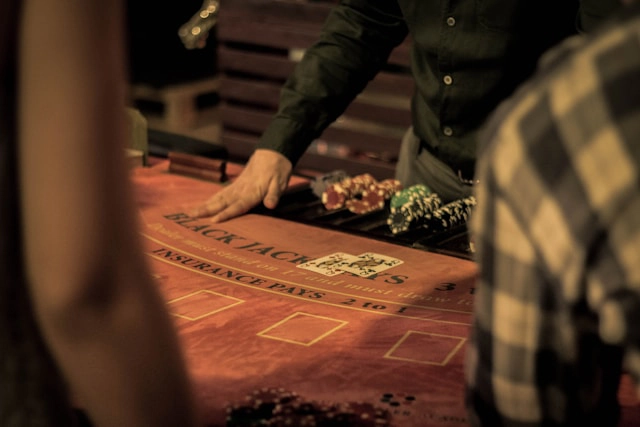
The complaint describes Chumba Casino, LuckyLand Slots and Global Poker as online casinos played through a website or an app, offering slot machines, table games such as blackjack, roulette and craps, and poker. It says Global Poker launched in 2011, Chumba Casino in 2012 and LuckyLand Slots in 2019.The sites use two kinds of virtual coins. Gold Coins can be played but not cashed out. Sweepstakes Coins are worth $1 each and can be redeemed for cash. According to the complaint, players buy Gold Coin packages that come with “free” Sweepstakes Coins worth at least the purchase price; its example is a $300 purchase at Chumba Casino that comes with $315 in Sweepstakes Coins. The complaint argues that both coins are “things of value,” that the games are decided by chance, and that buying coins to bet on them is gambling whatever label is attached.
The complaint quotes VGW public statements describing its business as “real money gaming” and, citing what it calls publicly available information, puts VGW’s 2024 revenue at more than $4 billion, with more than $3.3 billion from Chumba Casino. It also alleges that Idaho, Washington, Delaware, Connecticut, Maryland and Nevada sent VGW cease-and-desist letters, and that VGW has shut down or is shutting down its operations in those states. Those figures and characterizations are the plaintiffs’ and have not been tested in court.
A second group of defendants is what the complaint calls VGW’s “California Partners.” It alleges that Jumio, headquartered in Sunnyvale, verifies each player’s identity, age and location before they can play; that Yodlee, of Redwood City, links players’ bank accounts to the casinos and checks that the accounts hold enough money; and that Trustly, of San Carlos, moves the money between those accounts and the casinos. Misfud, who posts videos as “Brian Christopher,” is described as a Palm Springs gambling influencer who promotes Chumba Casino and LuckyLand Slots and, the complaint says, earns commissions when viewers sign up and deposit. The complaint alleges each of them knew VGW was running a gambling business and aided and abetted it. None of them has been found liable.
The defendants’ motions decided on September 18 challenged the forum rather than the merits, so the order does not set out VGW’s answer to the gambling allegations. A declaration VGW filed with those motions, summarized in the order, says the games are the same wherever a player accesses them and that VGW does not purposefully target California consumers through marketing.
Why Spouses, Not Players, Are Suing
Many states have long-standing gambling-loss recovery laws that allow a person who loses money gambling to sue the winner to recover it. According to the complaint, the laws in the states it invokes also let the gambler’s spouse or children recover those losses. The complaint relies on these statutes in Georgia, Illinois, Kentucky, Massachusetts, Mississippi, Missouri, New Jersey, New Mexico, Ohio, South Carolina, Tennessee, Wisconsin and Washington, D.C.Each named plaintiff, the complaint says, never played on VGW’s sites, never signed or accepted any VGW terms, and shared bank accounts and property with the spouse who did play, so the losses came out of joint marital property. Seven spouses filed the complaint. Three later dismissed their claims voluntarily and without prejudice; the four who remain live in Illinois, Kentucky, Missouri and Tennessee, and none of them lives in California.
That structure is what made arbitration the first fight. Players who sign up for a sweepstakes casino generally accept terms of service that include an arbitration agreement, and suits brought by players have often stalled there — most of the federal suits against the operator of Crown Coins Casino were sent to individual arbitration. The spouses in this case never agreed to VGW’s terms. The same kind of loss-recovery statute is also behind a separate proposed class action that invokes Kentucky’s law against prediction-market operator Kalshi.
What the Judge Decided on September 18, 2026
The defendants moved to compel arbitration and, in the alternative, to dismiss the case. The court heard argument on May 7, 2026, asked for supplemental briefing on arbitration, and then ruled on the papers. It denied all three requests.Arbitration: The Spouses Never Agreed to It
The arbitration agreements in VGW’s terms were accepted by the players — the plaintiffs’ spouses. The defendants argued that the doctrine of equitable estoppel should bind the spouses anyway. In the arbitration setting, equitable estoppel can stop a party from claiming a contract’s benefits while avoiding its burdens, and occasionally binds someone who never signed. Because neither side disputed that the New York Convention, an international arbitration treaty, applied, the court used federal law rather than any state’s law, and adopted the Ninth Circuit’s test from Comer v. Micor, Inc. (2006): a nonsignatory is bound only if it “knowingly exploits” the agreement.The court found the spouses had not done so. Their claims are brought under state gambling statutes and California’s Unfair Competition Law, not to enforce VGW’s terms. The court rejected three arguments for a different result. First, that the spouses need VGW’s terms to prove the coins are “things of value”: the court said that phrase comes from the statutes, not the contract, and any reference to the terms would be the kind of limited use Comer found insufficient. Second, that the spouses “stand in the shoes” of the players and bring derivative claims: the court found no Ninth Circuit federal law adopting that theory and declined to import it from other jurisdictions. Third, that the spouses benefited from any winnings as shared marital property: the court called any such benefit incidental, noting the plaintiffs do not allege they played, knew of the agreements, or gained marital property from winnings — they allege losses.
Subject-Matter Jurisdiction: Out-of-State Claims Wait for Class Certification
The defendants argued the plaintiffs cannot bring claims under the laws of California, Georgia, Massachusetts, Mississippi, New Jersey, New Mexico, Ohio, South Carolina, Washington, D.C. and Wisconsin, because no remaining plaintiff lives in any of them. The court held that whether a plaintiff may press claims for class members in states where the plaintiff does not live is not a question of standing. It is a question for the class-certification stage under Rule 23, where courts weigh typicality, adequacy and predominance. The motion was denied on that basis, which leaves the issue open.Personal Jurisdiction: VGW’s California Contracts
The VGW companies and Escalante argued that a California court has no power over them. (Jumio, Yodlee, Trustly and Misfud did not join that motion.) On general jurisdiction, the court agreed with VGW: a company declaration said the U.S. companies closed their San Francisco office in December 2022 and moved to Boulder, Colorado, and the court held that some executives working remotely from California and game design work in the state did not make the companies “at home” in California. It also declined to look back at the companies’ earlier California presence.On specific jurisdiction, the plaintiffs prevailed. Relying on the Ninth Circuit’s 2021 decision in Ayla, LLC v. Alya Skin Pty. Ltd., the court held that VGW’s alleged ongoing contracts with California-based Jumio, Yodlee, Trustly and Misfud for payment processing, age verification and advertising were enough to show VGW purposefully availed itself of California, and that VGW’s declaration did not dispute that all of its entities had those contracts. The claims relate to those contacts, the court said, because as alleged players could not deposit money or even access the apps without the verification and payment services. The court found VGW had not shown that litigating in California would be unreasonable, while acknowledging that California’s interest is “less pronounced” with no California plaintiffs in the case.
What the Order Did Not Decide
The order does not decide whether VGW’s casinos are illegal gambling under any state’s law, whether the coins are “things of value,” whether the complaint states valid claims against any defendant, or whether a class should be certified. All of those remain open, and the allegations remain unproven.Claims, Proposed Classes and What the Lawsuit Seeks
The complaint pleads 14 counts, each against all defendants. The first is under California’s Unfair Competition Law, on behalf of every plaintiff and class. It treats alleged violations of two federal laws — the Illegal Gambling Business Act, 18 U.S.C. § 1955, and the Unlawful Internet Gambling Enforcement Act, 31 U.S.C. § 5363 — and of the covered states’ gambling laws as the basis for an unlawful-business-practice claim. It also alleges the partner defendants aided and abetted VGW and that Misfud is personally liable.The other 13 counts each invoke one jurisdiction’s gambling-loss statute: D.C. Code § 16-1702; Ga. Code § 13-8-3; 720 ILCS 5/28-8; Ky. Rev. Stat. §§ 372.020 and 372.040; Mass. Gen. Laws ch. 137, § 1; Miss. Code § 87-1-5; Mo. Stat. §§ 434.030 and 434.040; N.J. Stat. §§ 2A:40-1, 2A:40-5 and 2A:40-6; N.M. Stat. §§ 44-5-1 and 44-5-3; Ohio Rev. Code §§ 3763.02 and 3763.04; S.C. Code §§ 32-1-10 and 32-1-20; Tenn. Code §§ 29-19-104 and 29-19-105; and Wis. Stat. § 895.056. The Illinois count quotes a provision calling for judgment of triple the amount lost.
Two classes are proposed. A multi-state class would cover spouses and children of people who, while located in Washington, D.C., Georgia, Illinois, Kentucky, Massachusetts, Mississippi, New Jersey, New Mexico, Ohio, South Carolina, Tennessee or Wisconsin, wagered and lost things of value at a VGW casino and have not sued for and recovered those losses. A separate Missouri class would cover spouses only. The complaint also proposes a subclass for each jurisdiction in the multi-state class, several with a minimum loss: $25 for Washington, D.C., $50 for Illinois and South Carolina, and $5 within a 24-hour period for Kentucky. Excluded are spouses and children who created their own account on a VGW casino or used someone else’s account to gamble there, along with the defendants’ officers and employees.
The complaint asks the court to certify the classes, appoint the named plaintiffs as class representatives and Susman Godfrey as class counsel, and award compensatory damages, restitution, disgorgement, statutory damages and penalties, treble or exemplary damages where allowed, injunctive relief to stop the defendants from operating or supporting the casinos, interest, and attorneys’ fees and costs. It demands a jury trial. No class has been certified, and these are requests, not awards.
How This Case Differs From VGW’s New York Agreement
VGW also reached a separate 2026 agreement with the New York Attorney General. That agreement is an Assurance of Discontinuance, not a class action: VGW pays $8 million to the state and must honor requests to redeem leftover sweeps coins from eligible New Yorkers until August 31, 2027. It is described in a separate article on the VGW New York sweeps coin redemption agreement. New York is not one of the jurisdictions in the Brown classes, and nothing in the New York agreement resolves this lawsuit.Sweepstakes casinos face other litigation as well, including the federal racketeering suit over Stake.us and promoters Drake and Adin Ross and a New Mexico class action against Stake.us. Those cases involve different companies, courts and legal theories.
What Happens Next?
Two docket entries were filed after the order, on October 1 and October 8, 2026. The public record does not describe them.Federal law, 9 U.S.C. § 16(a), allows a party to appeal an order denying a motion to compel arbitration immediately, without waiting for a final judgment, and the Supreme Court held in Coinbase, Inc. v. Bielski (2023) that district court proceedings are paused while such an appeal is pending. The public record does not show whether any defendant has taken that step.
If the case continues in the district court, the next stages would ordinarily include the defendants’ responses to the complaint, discovery, and a motion for class certification — the point at which the court said the multi-state question would be addressed. Many proposed class actions are dismissed, narrowed or settled before any payout, and there is no guarantee this one produces a recovery.
Do I Need to Do Anything Right Now?
Nothing is required at this stage because there is no claim process. There is no claim form, no deadline and no settlement fund, and no class has been certified. If the case ever reaches a settlement or judgment, a court-approved notice would explain who is covered and how class members could take part.Questions
Is there a Chumba Casino class action settlement?
Not in this case. Brown v. VGW Holdings US Inc. is a pending proposed class action in the Northern District of California. There is no settlement fund, no administrator, no claim form and no deadline, and no class has been certified. VGW’s separate 2026 agreement with the New York Attorney General is a different matter that does not resolve this lawsuit.
Who is suing VGW in the Brown case?
Spouses of people who played on VGW’s sites, not the players themselves. Seven spouses filed the complaint in August 2025; three later dismissed their claims voluntarily, and the four who remain live in Illinois, Kentucky, Missouri and Tennessee. They sue under state laws that, according to the complaint, let a gambler’s spouse or children recover gambling losses. The complaint says none of them ever played on the sites or accepted VGW’s terms.
Why did the judge refuse to send the Chumba Casino lawsuit to arbitration?
The arbitration agreements were accepted by the players, and the plaintiffs are their spouses, who never signed them. The defendants argued the doctrine of equitable estoppel should bind the spouses anyway. Applying the Ninth Circuit’s test from Comer v. Micor, the court held that a nonsignatory is bound only if it knowingly exploits the agreement, and found the spouses had not done so because their claims rest on state gambling statutes and California’s Unfair Competition Law rather than on VGW’s terms.
Did the court decide that Chumba Casino is illegal gambling?
The September 18, 2026 order did not decide that question. It ruled only on arbitration and on whether the court has jurisdiction to hear the case. Whether VGW’s sweepstakes casinos amount to illegal gambling under the laws of the states named in the complaint remains an unproven allegation.
Can VGW appeal the arbitration ruling?
Federal law, 9 U.S.C. § 16(a), allows an immediate appeal from an order denying a motion to compel arbitration, and the Supreme Court held in Coinbase v. Bielski (2023) that the district court case is paused while such an appeal is pending. Two docket entries were filed after the order, on October 1 and October 8, 2026, but the public record does not describe them.
Are Chumba Casino players part of the proposed class?
The proposed classes are made up of spouses and children of people who lost money on VGW’s casinos while in the covered states; the Missouri class is limited to spouses. The complaint excludes any spouse or child who created their own account on a VGW casino or used someone else’s account to gamble there. No class has been certified.
Sources
• Class Action Complaint, Brown v. VGW Holdings US Inc., No. 4:25-cv-07071 (N.D. Cal. filed Aug. 20, 2025), Dkt. 1 — complaint PDF• Order re Defendants’ Motion to Compel Arbitration and Motion to Dismiss, Brown v. VGW Holdings US Inc., No. 4:25-cv-07071-AMO (N.D. Cal. Sept. 18, 2026), Dkt. 75 — order PDF
• Public docket, Brown v. VGW Holdings US Inc., No. 4:25-cv-07071-AMO (N.D. Cal.) — docket on CourtListener
• Federal Arbitration Act, 9 U.S.C. § 16(a) (appeals from orders denying arbitration)
• Coinbase, Inc. v. Bielski, 599 U.S. 736 (2023)
• 18 U.S.C. § 1955 (Illegal Gambling Business Act) and 31 U.S.C. § 5363 (Unlawful Internet Gambling Enforcement Act), as cited in the complaint
• Cal. Bus. & Prof. Code § 17200 and the state gambling-loss statutes listed above, as cited in the complaint