People who bought Whirlpool, Maytag, KitchenAid, JennAir or Amana ranges with front-mounted burner knobs may be covered by a proposed class action alleging Whirlpool knew since at least 2011 that the knobs can turn on from a light bump and hid the hazard. No class has been certified and there is nothing to file yet.

Allegations Only · No Settlement Yet
This article describes a class action complaint. The statements below are unproven allegations. Whirlpool Corporation has not been found liable, there is no certified class, and nothing to claim at this time. This page is informational and is not legal advice.
What Is This About?
A Delaware man filed a proposed nationwide class action against Whirlpool Corporation on October 28, 2026, claiming the front-mounted burner knobs on Whirlpool-made ranges are too easy to turn on by accident. The case is Davies v. Whirlpool Corporation, No. 1:26-cv-03089, in the U.S. District Court for the Western District of Michigan, where Whirlpool is headquartered.According to the complaint, the knobs can rotate to “on” after “minor, inadvertent contact,” igniting gas burners or heating electric cooktops without the owner noticing. The complaint alleges this creates a risk of leaking gas, fire, property damage and injury, and that Whirlpool has known about the problem since at least 2011 but never disclosed it to buyers. Whirlpool has not yet filed a response, and none of the allegations has been tested in court.
Free settlement alerts
Get notified when new class actions open to claims
Join thousands of readers who get the latest class action settlements you may qualify for — delivered straight to your inbox.
What the Complaint Says Is Wrong With the Knobs
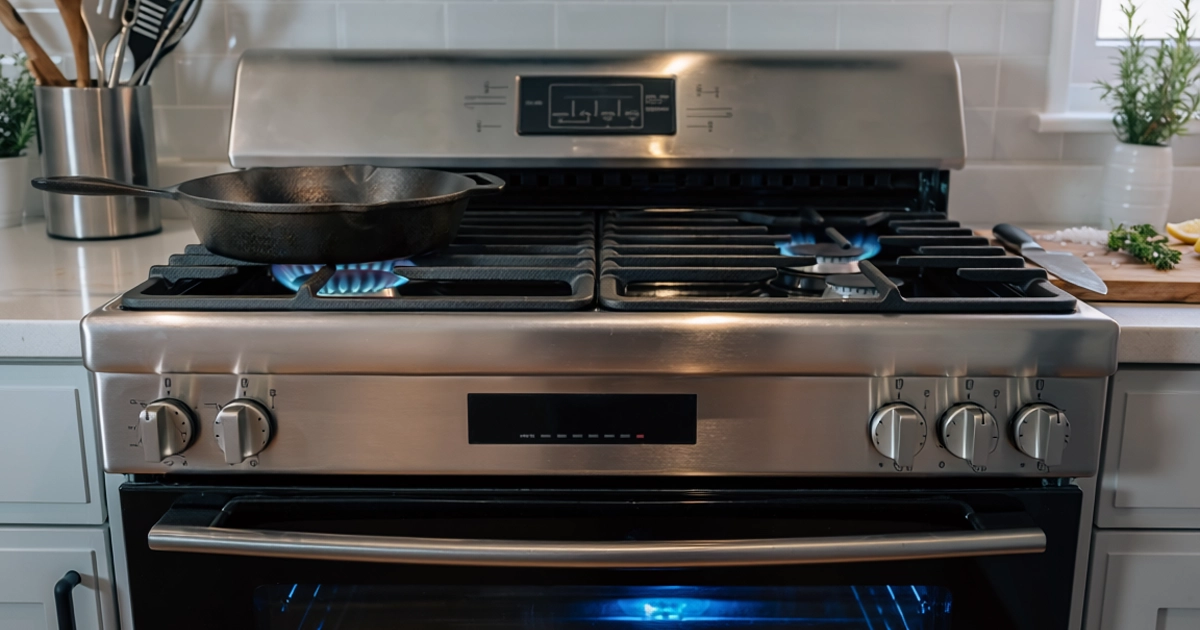
Turning on a burner is meant to take two deliberate steps: push the knob in, then rotate it to the heat setting. The complaint quotes the user manual for the plaintiff’s range describing that two-step process. It alleges that in practice the knobs need so little force to push in, and so little rotation to reach “on,” that a single brushing motion can do both at once.The complaint also claims the ranges lack guards around the knobs. It says the oven door handle does not act as an effective barrier because the outermost knobs stick out farther than the handle and the handle is rounded. According to the filing, contact from a person leaning against the range, from cleaning, or from children or pets can switch a burner on.
The named plaintiff says he bought a new Whirlpool slide-in gas range, model WEG750H0HV, from an authorized dealer in Delaware in October 2023 for about $2,249. He alleges that shortly after delivery he leaned over the range, bumped the knobs on without realizing it, and his shirt caught fire, and that the range continues to turn on inadvertently “at regular intervals.”
The complaint describes the problem as a design defect or, in the alternative, a manufacturing defect. It also points to research on gas stove emissions, arguing that a burner left running unnoticed adds to indoor exposure to benzene and nitrogen dioxide.
Which Ranges and Models Are Named?
The proposed class is not limited to a list of model numbers. The complaint says the models at issue include the plaintiff’s model “and all other models (discontinued or still available for sale) containing front-mounted burner controls,” gas or electric, sold under Whirlpool’s brand names. It lists those brands as Whirlpool, Maytag, KitchenAid, JennAir, Amana, Roper, Admiral, Affresh and Gladiator.The complaint names these specific models while describing complaints Whirlpool allegedly received:
- The plaintiff’s range: WEG750H0HV (a Whirlpool slide-in gas range)
- Models in CPSC incident reports the complaint says were sent to Whirlpool: AGR5844VDW, KSGB900ESS, WGG745S0FS, KSDG950ESS, WGG745S0FS02, KFDD500ESS and KSGG700ESS2
- Models in customer reviews on whirlpool.com, kitchenaid.com and maytag.com: WFG320M0BW, KSGG700EBS, KSDB900ESS, WFG525S0JB, WFG515S0JW, MGT8800FZ, MGR8800FZ, KSEG950ESS and KFGD500EBS
The complaint says these examples are “samples and not exhaustive.” A model that does not appear above could still fall within the proposed class if it has front-mounted burner knobs, as the complaint defines the class today. The class definition can change as the case goes on.
What the Complaint Says Whirlpool Knew
The lawsuit’s central claim is that Whirlpool knew about the alleged defect before it sold these ranges. It relies on consumer incident reports filed with the U.S. Consumer Product Safety Commission, which the complaint says the agency forwards to manufacturers and posts on its public database, SaferProducts.gov.The earliest report the complaint cites was sent to Whirlpool on August 20, 2011, about model AGR5844VDW, and the complaint says Whirlpool responded to it. It lists further CPSC reports sent to Whirlpool between 2017 and 2021, including two in May 2019 and June 2021 about the same model the plaintiff later bought. It also cites customer reviews posted between about 2017 and 2022 on whirlpool.com, kitchenaid.com and maytag.com, and says certified Whirlpool technicians have seen ranges turn on unintentionally in the field. More reports are attached to the complaint as an exhibit.
From this, the complaint argues Whirlpool had a duty to warn buyers and instead concealed the problem, so that people paid more for their ranges than they would have, or bought ranges they would not otherwise have bought.
Is There a Whirlpool Range Knob Recall?
A search of CPSC’s recall listings on November 7, 2026 found no Whirlpool recall tied to front-mounted range knobs or unintended burner activation. The SaferProducts.gov entries the complaint relies on are reports submitted by consumers; they are not recalls and do not reflect any finding by the agency. Among the relief the lawsuit requests is a court order requiring Whirlpool to take corrective action, including notification and a recall.An Earlier Case Over the Same Knobs
This is not the first lawsuit over Whirlpool’s front-mounted knobs. In Tapply v. Whirlpool Corp., No. 1:22-cv-00758, owners from Michigan, Illinois, Oklahoma, New Hampshire and Nevada claimed their gas ranges turned on with “the slightest touch, bump, or brush.” The district court dismissed that amended complaint, but on August 6, 2025 the U.S. Court of Appeals for the Sixth Circuit reinstated the owners’ fraud and consumer protection claims, except an Illinois common-law fraud claim. The appeals court found the owners had plausibly alleged that Whirlpool knew of the problem from complaints the CPSC forwarded to it. One judge dissented, arguing that a handful of complaints covering a few of the 16 models listed was too thin to show that knowledge.The new case is a separate lawsuit with a different plaintiff and a broader class covering electric as well as gas ranges. Several of the same law firms represent the plaintiffs in both. The court’s case-assignment review on October 30, 2026 marked the new case as related to another case, and on November 2, 2026 it was assigned to Judge Jane M. Beckering, who also presided over Tapply in the district court.
What the Lawsuit Asks For
The complaint proposes a nationwide class of U.S. residents who bought or otherwise acquired a covered range for household use, plus a multi-state consumer protection subclass and a Delaware subclass. It brings four claims: violation of the Michigan Consumer Protection Act, violation of other states’ consumer protection laws, violation of the Delaware Consumer Fraud Act, and fraud by omission.It asks the court to certify the class, declare the ranges defective, and order Whirlpool to stop selling them as designed and to issue corrective action, including notification, a recall, service bulletins and covered replacement parts or ranges. It also seeks damages, restitution, punitive damages, attorneys’ fees and a jury trial. The complaint was filed by Feldman Shepherd Wohlgelernter Tanner Weinstock & Dodig, Fink Bressack and Morgan & Morgan.
The next step is Whirlpool’s response to the complaint, which in cases like this is often a motion to dismiss. Class certification, if it happens, would come later.
Questions
Which Whirlpool brands does the range knob lawsuit cover?
The complaint defines the ranges as those sold under Whirlpool’s brand names, listing Whirlpool, Maytag, KitchenAid, JennAir, Amana, Roper, Admiral, Affresh and Gladiator. It covers gas and electric models with front-mounted burner control knobs, whether discontinued or still on sale. These are allegations; no court has ruled on them.
Has Whirlpool recalled ranges over the knob problem?
A search of the U.S. Consumer Product Safety Commission’s recall listings on November 7, 2026 found no Whirlpool recall tied to front-mounted range knobs. The complaint cites consumer incident reports filed with the CPSC, which are complaints, not recalls. Among its requests, the lawsuit asks the court to order Whirlpool to issue corrective action, including a recall.
How is this case different from Tapply v. Whirlpool?
Tapply v. Whirlpool is an earlier proposed class action over the same kind of front-mounted knobs, filed in 2022 by owners in five states. The Sixth Circuit reinstated most of its claims in August 2025. The new complaint is a separate case brought by a Delaware owner, and the court’s case-assignment review marked it as related to another case. Both are in the Western District of Michigan before Judge Jane M. Beckering.
Is there money available from the Whirlpool range knob lawsuit?
No. The case was filed on October 28, 2026 and is at the complaint stage. No class has been certified, there is no settlement, and there is nothing to file. Any payment would depend on a settlement or a judgment that has not happened.
Sources
- Davies v. Whirlpool Corporation, No. 1:26-cv-03089, U.S. District Court for the Western District of Michigan — Class Action Complaint, filed October 28, 2026
- Court docket for Davies v. Whirlpool (CourtListener), including the October 30, 2026 case-assignment review and November 2, 2026 judge assignment
- Tapply v. Whirlpool Corp., No. 23-1666 (6th Cir. Aug. 6, 2025) — published opinion
- U.S. Consumer Product Safety Commission — Recalls listing, searched November 7, 2026