Investors who bought Webull Corporation (Nasdaq: BULL) stock or warrants between April 26, 2025 and October 6, 2026 may be covered by a proposed class action alleging Webull understated how much of its business depends on China. No class has been certified and there is nothing to file yet.


Allegations Only · No Settlement Yet
This article describes a class action complaint. The statements below are unproven allegations. Webull Corporation and its executives have not been found liable, there is no certified class, and nothing to claim at this time. This page is informational and is not legal advice.
What Is This About?
A Webull shareholder filed a proposed securities class action on October 8, 2026, in the U.S. District Court for the Middle District of Florida, Tampa Division. The case is Ward v. Webull Corporation, No. 8:26-cv-03052, and it names Webull Corporation, founder and CEO Anquan Wang, and CFO H.C. Wang as defendants. The 24-page complaint claims Webull’s SEC filings painted the company as a U.S.-run broker whose China operations were limited to research and technical support, when, according to the complaint, its core engineering, data systems and most of its workforce were tied to China. The suit followed a one-day, roughly 19% fall in Webull’s shares after news reports on a House committee’s findings about the company. Webull disputes those findings and has not yet responded to the lawsuit in court.Free settlement alerts
Get notified when new class actions open to claims
Join thousands of readers who get the latest class action settlements you may qualify for — delivered straight to your inbox.
What Does the Complaint Allege?
Webull runs a commission-free trading app and says it is a regulated broker-dealer in 12 markets, with Webull Financial LLC as its U.S. broker. The holding company is incorporated in the Cayman Islands and has listed its Class A shares on Nasdaq under the ticker BULL since April 11, 2025, when it went public by merging with a blank-check company, SK Growth Opportunities Corporation.The complaint targets the same passage repeated in three SEC filings: Webull’s annual report filed April 25, 2025, a registration statement filed July 18, 2025, and its annual report filed April 9, 2026. In each, Webull said it did not believe it fell within laws aimed at companies with China connections, giving reasons that included:
- its principal business operations were based in the United States;
- personal data of Webull Financial’s customers was stored on U.S. servers and could not be accessed by non-U.S. employees without permission and oversight from U.S. staff; and
- its operations in mainland China were limited to research and development and technical support.
The two annual reports also said concerns raised in letters from 14 state attorneys general and from the House Select Committee on the Chinese Communist Party were largely based on outdated and inaccurate information. The complaint alleges those statements were misleading because Webull’s software development, data pipelines and core engineering depended on staff in China and on infrastructure subject to Chinese law, and because its ownership, workforce, technology, data routing, financing and compliance setup were structurally tied to China. It notes that Webull’s mainland subsidiary, Hunan Weibu Information Technology, had 863 employees, or 62% of the company’s workforce, at the end of 2025, and that Anquan Wang, a Chinese citizen, held about 79% of the voting power as of March 2026. Webull’s registration statement had itself disclosed the subsidiary’s headcount and Wang’s control; the complaint argues the filings still understated the company’s dependence on China and the regulatory risk that came with it.
What Caused the Stock Drop?
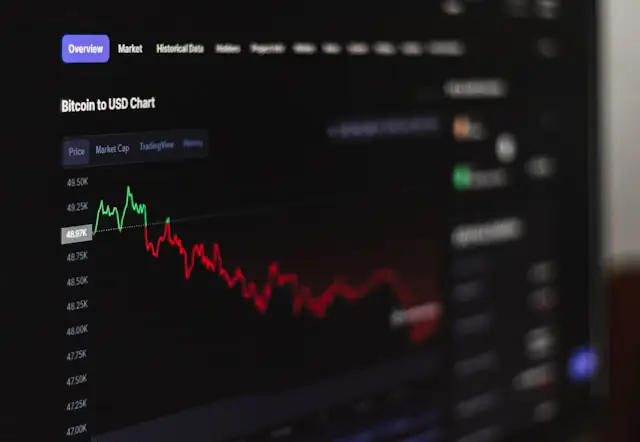
Before the market opened on October 7, 2026, CNBC reported on findings by the House Select Committee, which had first written to Webull’s U.S. chief executive in December 2024 asking about its relationship with its China operations and the security of customer data. According to the reporting cited in the complaint, the committee found a “profound gap” between how Webull presented itself as an American company and its actual control and operations, and concluded that the company was tied to China “in structural ways.” The committee also reportedly found that Webull had at first told it the company had no offices or employees in China.The complaint says BULL fell $1.39 a share that day, about 19%, to close at $5.89 on unusually heavy volume. It treats the report as the moment the market learned what the earlier filings allegedly left out. Whether the filings were actually false, and whether the drop was caused by anything the defendants said, are questions the court has not decided.
What Laws Does It Claim Were Broken?
The complaint brings two counts under the Securities Exchange Act of 1934. Count I claims all three defendants violated Section 10(b) and SEC Rule 10b-5, the general antifraud provisions for securities trading. Count II claims Anquan Wang and H.C. Wang are liable as “controlling persons” under Section 20(a). The plaintiff asks the court to certify a class, award damages with interest against the defendants jointly, and award costs and attorney fees, and demands a jury trial. The plaintiff is represented by The Rosen Law Firm. Other investors may file similar suits, which are often consolidated before one judge.What Has Webull Said?
Webull has rejected the committee’s conclusions. A company spokesperson told reporters that Webull “has made every effort to cooperate with the Committee” and that it was “deeply disappointing” the committee published a report “containing significant inaccuracies and unsupported conclusions.” The spokesperson said the committee never asked Webull to clarify its findings and that U.S. customer data is stored in the United States. Webull has not yet filed anything in response to the lawsuit.How Is This Different From the Webull LIFO Lawsuit?
OCA is also following a separate Webull LIFO tax-lot class action, filed in federal court in Manhattan. That case is brought by brokerage customers and claims Webull Financial confirmed their last-in, first-out lot elections but matched their trades another way. The Florida case covered on this page is an investor suit: it concerns what Webull Corporation told people who bought its own shares and warrants, not how the app handled customer accounts. Someone could fall into one group, both or neither.What Happens Next?
Under the Private Securities Litigation Reform Act, a notice about the case was published the day it was filed, and it lists December 7, 2026 as the deadline for investors to ask the court to be appointed lead plaintiff, the investor who directs the case for the proposed class. The law does not require any investor to seek that role, and those who do not can still be covered if a class is certified. After a lead plaintiff and lead counsel are appointed, an amended complaint usually follows, and defendants typically move to dismiss. Securities cases often take years, and many are dismissed or settle; there is no guarantee of certification or recovery. OCA will update this page as the case develops.Questions
Who is covered by the proposed Webull securities class?
The complaint proposes a class of everyone, other than the defendants and related insiders, who bought or otherwise acquired Webull Corporation securities traded on Nasdaq between April 26, 2025 and October 6, 2026, inclusive. That includes the Class A ordinary shares (BULL) and the warrants (BULLW). No class has been certified.
Is there a Webull stock settlement or claim form?
No. Ward v. Webull Corporation was filed on October 8, 2026 and is at the complaint stage. There is no settlement, no certified class and no claim form. The allegations are unproven and Webull has not been found liable.
What is the lead plaintiff deadline in the Webull securities case?
The notice published under the Private Securities Litigation Reform Act after the filing lists December 7, 2026 as the deadline for investors to ask the court to be appointed lead plaintiff. Serving as lead plaintiff is optional; an investor who does not seek the role can still be a class member if a class is later certified.
Is this the same as the Webull LIFO tax-lot lawsuit?
No. The LIFO case is a separate customer class action in New York federal court about how Webull Financial matched brokerage customers’ trades. Ward v. Webull Corporation is an investor case in Florida federal court about statements Webull made to people who bought its own stock and warrants.
What has Webull said about the House committee findings?
A Webull spokesperson told reporters the company had made every effort to cooperate with the committee and called it deeply disappointing that the committee published a report containing significant inaccuracies and unsupported conclusions. The company also said U.S. customer data is stored in the United States. Webull has not yet responded to the lawsuit in court.
Sources
• Ward v. Webull Corporation, No. 8:26-cv-03052 (M.D. Fla.) — docket and complaint• Reuters (via The Globe and Mail) — October 7, 2026 report on the share drop and Webull’s response
• CNBC — October 7, 2026 report on the House Select Committee findings
• House Select Committee on the CCP — December 2024 letter to Webull’s CEO