Published
September 9, 2026
U.S. buyers made roughly 80,000 purchases of pharmaceuticals, regulated chemicals and pill-press equipment through Alibaba.com and AliExpress between 2016 and 2024, sales Alibaba has now admitted its systems failed to stop. Alibaba and payment processor AUS Merchant Services will pay $600 million under non-prosecution agreements announced in July 2026 — the money is criminal penalties and forfeiture paid to the government, so there is no consumer fund and nothing to claim.

What the Agreements Cover
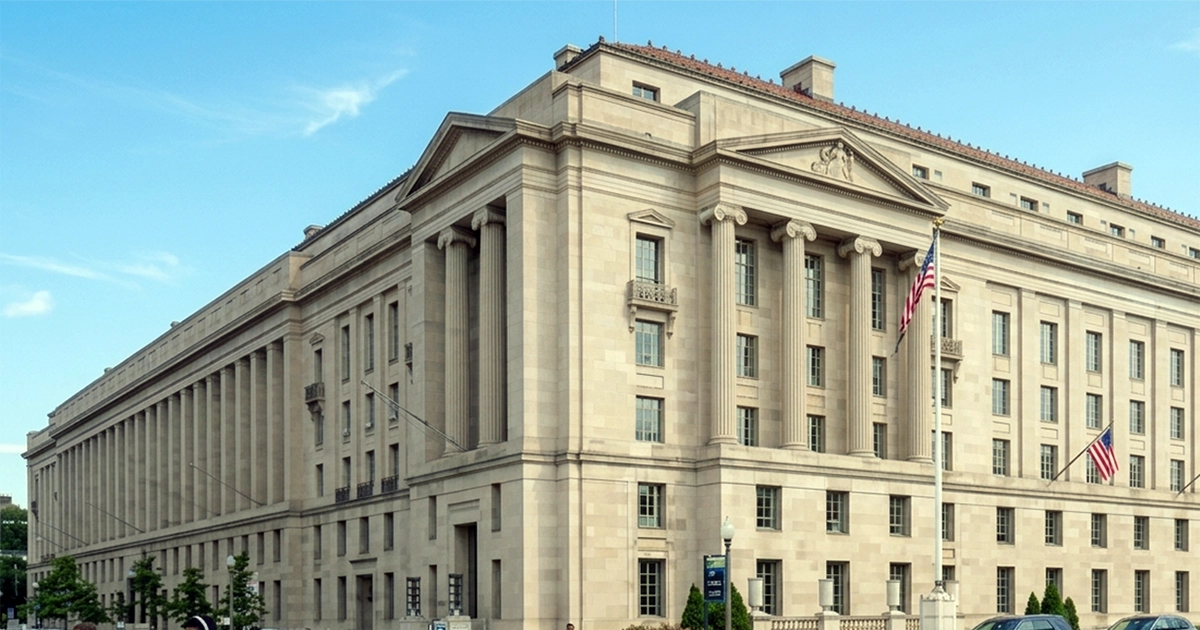
The Justice Department announced on July 1, 2026 that Alibaba Group Holding Limited and AUS Merchant Services Inc. — a payment processor formerly known as Alipay US, and a subsidiary of Ant Group — entered non-prosecution agreements resolving misdemeanor violations of the Federal Food, Drug, and Cosmetic Act. The agreements were signed June 29, 2026 and were handled by the U.S. Attorney's Office for the District of Rhode Island together with the Civil Division's Enforcement and Affirmative Litigation Branch and the Criminal Division's Money Laundering, Narcotics and Forfeiture Section.The conduct at issue is what third-party merchants sold through Alibaba.com, a business-to-business marketplace, and AliExpress.com, its consumer-facing counterpart: prescription drugs, active pharmaceutical ingredients, controlled substances, List I and List II chemicals, and the tableting and encapsulating machines used to press counterfeit pills. Neither company manufactured or shipped those goods. The case is about whether the platform and the payment rails underneath it did enough to keep them off.
Status
Non-Prosecution Agreements Signed (June 2026)
Announced July 1, 2026 · misdemeanor FDCA resolution · three-year term, extendable by up to one year
Total Paid
$600 Million
Alibaba: $125M penalty + $200M forfeiture · AUS: $85M penalty + $190M forfeiture — all to the U.S. government
Can I Claim?
No — There Is No Consumer Fund
No claim form, administrator or deadline · reported as the largest monetary resolution in the District of Rhode Island's history
What Alibaba Admitted
Alibaba stipulated that the Statement of Facts attached to its agreement is true and accurate, and accepted responsibility for the acts of its officers, directors, employees and agents described in it. Between January 2016 and December 2024, roughly 80,000 product sales on the two platforms involved goods shipped into the United States that lacked the approvals federal law requires. Their combined gross merchandise value exceeded $200 million. Federal agents made more than 40 undercover purchases of drugs and counterfeiting equipment during the investigation, and the goods were shipped to Rhode Island.The failure was not an absence of rules. Alibaba's marketplace published policies that expressly prohibited FDA-noncompliant pharmaceuticals and pill presses, and required users to follow the laws of the places they operated in. What the Statement of Facts describes is enforcement that did not match the policy: company employees raised concerns that the platform was being used to sell improper products into the United States and that its compliance measures and filtering systems were inadequate, and the business unit "was not sufficiently reactive or proactive in following up on these concerns." The platforms also "generally did not penalize merchants unless they publicly posted prohibited goods," which left private channels open.
Those private channels mattered. Alibaba's built-in messaging service let merchants and buyers talk directly, and some merchants used it to arrange shipments in ways meant to evade U.S. customs, or to hand buyers contact details for encrypted apps outside Alibaba entirely. The company could monitor its own messaging and did so at points during the period, but not enough to stop the sales. Alibaba earned money on this activity indirectly, through membership, marketing, advertising, shipping and payment-processing fees charged to sellers.
Free settlement alerts
Get notified when new class actions open to claims
Join thousands of readers who get the latest class action settlements you may qualify for — delivered straight to your inbox.
What the Payment Processor Admitted
AUS is a registered money services business, which makes it a financial institution under the Bank Secrecy Act and obliges it to run an anti-money-laundering program and file suspicious activity reports. Its role was to accept U.S. dollar payments — by card and by wire into U.S. bank accounts — on behalf of overseas merchants selling on Alibaba.com, then move the funds offshore for settlement.The admitted gap is specific and technical. Until 2022, AUS relied on overseas affiliates to monitor those transactions. When it brought monitoring in-house that year, it did not fully incorporate the wire data from its own U.S. bank accounts alongside the sales-order data it was already using. The consequence was that its monitoring "did not always show" that some wire payments came from high-risk jurisdictions, or that a single invoice was being funded by multiple payors — two of the clearest signals the system existed to catch.
The agreement also records what AUS did when it found a bad merchant: in certain instances it reported them to Alibaba rather than systematically restricting them itself. One case makes the cost of that concrete. In October 2022 AUS opened an investigation into a merchant selling prohibited goods to U.S. customers and filed a regulatory report. That merchant sold prohibited goods to a U.S. customer again in January 2023. When an employee reviewed the transaction in July 2023 and noted the product was prohibited and could not be sold online without a prescription, the review concluded the activity fell below the regulatory reporting threshold.
The $200 Million Is Not Alibaba's Profit
The Statement of Facts states plainly that the value of the 80,000 transactions "represents the prices charged by third-party merchants, and not revenues or profits received by the Alibaba Platforms." The $200 million Alibaba forfeited is measured against what buyers paid sellers, not against what Alibaba kept. What Alibaba actually earned came from the platform fees named above, and the agreement does not put a number on it.The distinction runs the other way too, in the government's favor: a forfeiture pegged to gross merchandise value rather than platform revenue is a considerably larger number than a disgorgement of fees would have been. Alibaba's board approved the resolution at $325 million total — the $125 million penalty plus the $200 million forfeiture — in March 2026, months before the agreements were signed. Neither company may claim a U.S. tax deduction for any part of what it paid, or seek reimbursement or indemnification for it from any source.
What This Means for Shoppers
There is nothing to file. The penalties go to the U.S. Treasury and the forfeited funds to the government, and no part of the $600 million is set aside for people who bought something they should not have been able to buy. That is the standard shape of a federal enforcement resolution, and it is the same structure behind the recent $2.25 million Amazon order over identity theft records: a headline dollar figure that is a penalty, not a payout.The useful takeaway is about the goods themselves. Prescription drugs and active pharmaceutical ingredients bought from overseas sellers through a marketplace have not passed the approval process U.S. medication goes through, may not contain what the listing says, and have no recall path if something is wrong with them. Anyone who bought medication this way and still has it is better served raising it with a pharmacist or physician than with a claims administrator, because no claims administrator exists here.
What the agreements change going forward sits in the compliance programs attached to them. The Alibaba platforms agreed to suspend and investigate users they have reasonable grounds to believe are knowingly selling prohibited items, to ban them permanently where the investigation bears out, and to take steps so a banned seller cannot simply return under a new identity. They agreed to expand artificial-intelligence screening of listings, to extend the same controls to pill-press and precursor shipments aimed at Mexico and Canada, and to stand up a fast-track channel for U.S. law enforcement requests within 90 days, along with a published guidebook explaining what records exist and how long they are kept. AUS agreed to comparable enhancements to its monitoring and reporting program and to its own law enforcement channel.
Frequently Asked Questions
Is there money for consumers?
No. The $600 million is criminal penalties and forfeiture paid to the government. There is no fund, no claim form, no administrator and no deadline.Did Alibaba plead guilty?
No. A non-prosecution agreement means no charges were filed and there is no conviction. Both companies did accept responsibility for the conduct described in their agreements and stipulated that the facts are accurate.What happens if they break the agreement?
Each agreement runs three years and the government may extend it by up to a year. If the government determines a company knowingly and materially breached it, the company can be prosecuted for the underlying conduct — after written notice and an opportunity to cure.Does this cover anything other than drugs?
The resolution is built on the Federal Food, Drug, and Cosmetic Act and reaches drugs, devices, controlled substances, listed chemicals, anabolic steroids and counterfeiting equipment. It does not resolve claims about other categories of goods.Sources
• Justice Department — Alibaba Group and AUS Merchant Services Agree to Pay $600 Million (Press Release No. 26-727, July 1, 2026)• U.S. Attorney's Office, District of Rhode Island — Announcement of the Resolution
• Alibaba and AUS Merchant Services non-prosecution agreements, including each Statement of Facts and corporate compliance program, published by the Justice Department alongside the press release.
For more class actions keep scrolling below.
Status
Non-prosecution agreements executed (no charges filed, no conviction)
Total Paid
$600,000,000 to the United States
Alibaba
$125,000,000 criminal penalty + $200,000,000 civil forfeiture
AUS Merchant Services
$85,000,000 criminal penalty + $190,000,000 civil forfeiture
Statute
Federal Food, Drug, and Cosmetic Act (21 U.S.C. § 301 et seq.), misdemeanor
Prosecuting Offices
U.S. Attorney's Office, District of Rhode Island; DOJ Civil Division; DOJ Criminal Division
Date Signed
June 29, 2026
Date Announced
July 1, 2026
Term
Three years, extendable by up to one year
Official Website
Justice Department Announcement — Alibaba and AUS