A notice says you won a sweepstakes you never entered, and all that stands between you and the money is a small fee. Reporting it takes about twenty minutes, and the agency you send it to depends on how it reached you — mail, inbox, or phone. Here is where each report goes, what each agency actually does with it, and the moves that recover money if you already paid.

The Short Answer
Report a fake sweepstakes to the Federal Trade Commission at ReportFraud.ftc.gov, the federal government's central portal for fraud, scams, and bad business practices. Then add the agency that matches how the pitch reached you: the U.S. Postal Inspection Service if it came in the mail, the FBI's Internet Crime Complaint Center if it came by email, social media, or a website, and DoNotCall.gov if it came as an unwanted call. Then file with your state attorney general's consumer protection division, which is the office most likely to do something about your specific complaint.If money already changed hands, that sequence changes. Contact the payment company first — the gift card issuer, your bank, the payment app — because the window in which funds can still be frozen is measured in hours and days, not weeks. The reports can wait an hour. The payment cannot.
First, Confirm It Is a Scam
You almost certainly already know, but it helps to be able to say why, both for your own certainty and for the complaint you are about to file. The FTC's guidance on fake prize, sweepstakes, and lottery scams reduces it to three signs, any one of which settles the question.- You have to pay to get the prize. Real prizes are free. A fee described as taxes, shipping and handling, processing, insurance, or customs duties is a scam, whatever it is called.
- You have to pay to increase your odds. Real sweepstakes are free and won by chance, and it is illegal for anyone to ask you to pay to improve your chances.
- You have to hand over financial or personal information. There is no legitimate reason to give a bank account number, card number, or Social Security number to claim a prize.
The payment method is its own tell. When someone insists on a wire transfer, a gift card, a payment app, or cryptocurrency, the reason is that those rails are fast and hard to reverse. The FTC's position is blunt: if someone contacts you and says you can only pay one of those ways, it is a scam.
Two more patterns show up constantly in prize scams. One is the borrowed name — scammers use the names of well-known sweepstakes companies and government agencies because the recognition does the persuading. Publishers Clearing House is a real company and one of the most impersonated names in this category, which is why a message invoking it proves nothing about who sent it. The other is the fake check: a check arrives, you are told to deposit it and wire back a portion for fees, and weeks later the check bounces and the bank takes the full amount back out of your account.
One legal footnote worth knowing before you file: playing a foreign lottery through the U.S. mail or over the phone violates federal law, which prohibits using the mail to buy or sell lottery tickets, chances, or shares. Nearly every "you won an international lottery" solicitation is a scam outright, but even the premise it is selling is not something a U.S. consumer can lawfully take part in.
Free settlement alerts
Get notified when new class actions open to claims
Join thousands of readers who get the latest class action settlements you may qualify for — delivered straight to your inbox.
Where to Report — Channel by Channel
There is no single agency that handles all of it, which is why so many people file one report and assume they are done. Each office below takes a different slice, and filing with two or three costs a few extra minutes.| How it reached you | Where the report goes |
|---|---|
| Any channel — always file this one | Federal Trade Commission, at ReportFraud.ftc.gov |
| A letter, postcard, or check in the U.S. mail | U.S. Postal Inspection Service — mail fraud complaint |
| Email, social media, a website, or a messaging app | FBI Internet Crime Complaint Center (IC3) |
| A phone call or a robocall | DoNotCall.gov, plus the FTC report |
| Any channel, and you want someone to act on your case | Your state attorney general's consumer protection division |
| You gave out personal or financial information | IdentityTheft.gov, for a personalized recovery plan |
The FTC is the anchor report. Its assistant walks you through a short set of questions — what happened, how they contacted you, what you were asked to pay, what you actually paid — and it carries a category for sweepstakes, prize, and lottery scams. It accepts reports whether or not you lost money, and reports from people who did not pay are still useful, because they establish the scale of a campaign.
The Postal Inspection Service matters more than most people realize for this particular scam. Prize fraud has been a mail-based business for decades, and postal inspectors have jurisdiction over anything that moves through the U.S. mail. Their reporting page takes mail fraud complaints online. Keep the envelope along with the letter — the postmark, permit number, and return address are tracing material, and they are the first thing people throw away.
IC3 is the FBI's intake point for anything cyber-enabled, which now covers most of this category: the message that arrived on Facebook or WhatsApp, the pop-up claiming you won a gift card, the email with a claim link. IC3 says fast reporting can support the recovery of lost funds, so it is worth filing the same day rather than the same month.
Your state attorney general is the office to file with if you want your individual complaint to go somewhere. State consumer protection divisions routinely open files on individual complaints and contact the business, which is exactly what the FTC does not do. Many of them also publish sweepstakes and lottery scam alerts of their own — the District of Columbia's attorney general has one specifically on this scam type. If you are not sure where your state's complaint form lives, our directory of consumer protection offices by state and territory lists all of them.
Two secondary reports are worth the extra minute. Tell the company being impersonated, because legitimate sweepstakes operators run fraud-reporting pages precisely so they can pursue people using their name. And report the account or ad to the platform it appeared on, which is the only channel that can actually take the thing down today.
What Actually Happens to Your Report
It is worth being honest about this, because the gap between what people expect and what happens is why so many never file a second time.The FTC does not resolve individual reports. It says so directly: it does not investigate individual complaints, mediate your dispute, or contact the company for you, and it cannot give you a status update on a report you filed. What it does instead is enter your report into Consumer Sentinel, a secure database it makes available to more than 2,000 civil and criminal law enforcement partners in the United States and abroad. Your report is a data point in a pattern, and the pattern is what produces a case.
That pattern does sometimes convert into money. In June 2024 the FTC announced settlements permanently banning three operators from the prize promotion business over a sweepstakes scheme the agency said took more than $28 million from consumers in the U.S. and abroad. And in April 2025 the agency announced it was sending more than $18 million to consumers harmed in its case against Publishers Clearing House — a case built on allegations about how the company presented its sweepstakes entries online, resolved by a 2023 stipulated order. Refund programs like those are assembled from complaint records, which is the practical reason to file even when you lost nothing: the reports are the raw material.
Scale is the other reason. The FTC reported that people lost about $16 billion to fraud of all types in 2025, the highest figure on record, and that imposter scams — the family that fake prize notices belong to — accounted for nearly one in three fraud reports and $3.5 billion in reported losses. Prize, sweepstakes, and lottery scams are a smaller slice of that total, but the agency's data has consistently shown older adults are far more likely than younger adults to report losing money to them.
If You Already Paid, Work the Payment Rail First
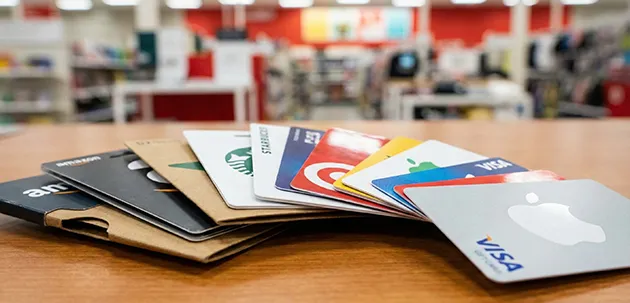
Reports are for the long game. Recovering money is a short game, and it is decided by how quickly you reach the company that moved the funds.Gift cards are the most common demand and, counterintuitively, not always a dead end. The FTC's guidance on avoiding and reporting gift card scams is to contact the company that issued the card immediately and ask for the money back — if the funds were frozen or never drained, some issuers will return them, and the faster you call the better the chance. Have the card itself, the receipt, and the card number ready. Then report the card to the FTC as well.
For a wire transfer, contact your bank, report the transfer as fraudulent, and ask it to reverse the wire. For a money transfer service, contact the service directly. For a payment app, report it in the app and to the bank or card linked behind it. Cryptocurrency payments are generally not reversible, though the transaction record still belongs in your IC3 report.
Older wire fraud is worth a second look rather than writing off. If the money went out through Western Union between January 2004 and March 2020, the Justice Department is still running a victim remission program that has returned the full transfer amount — not a pro rata share — to people who file a petition. Our page on the Western Union fraud victim remission covers the current phase and its deadline. It is the clearest example in this whole area of an old, reported loss actually turning back into money.
If You Shared Personal Information
A prize scam that collected your details rather than your money is still a loss, just a slower one. If you gave out a Social Security number, a bank account number, a card number, or a copy of an ID, go to IdentityTheft.gov, the FTC's identity theft portal, which builds a step-by-step recovery plan based on exactly what was exposed.Alongside that: place a free credit freeze with Equifax, Experian, and TransUnion, which blocks new accounts from being opened in your name and can be lifted whenever you need it. If you gave a card number, ask the issuer for a new one rather than just watching the statement. Change the password on any account whose credentials you typed into a claim page, and turn on two-factor authentication where it is offered. Then keep watching statements — information sold on is often used months later, when the incident has stopped feeling urgent.
Expect a Second Approach — the Recovery Scam
This is the part that catches people who already consider themselves warned. Once you have paid a scammer, you are on a list of people who have paid a scammer, and that list has resale value. The follow-up pitch is a recovery offer: someone contacts you claiming they can get your money back, for a fee.These are increasingly built to look official. The FBI has warned that criminals impersonate Bureau personnel and the Internet Crime Complaint Center itself in recovery schemes, using spoofed websites, fake social media accounts, and AI-generated video, and IC3 has separately warned about fictitious law firms soliciting scam victims with offers to trace and recover funds. The FTC's page on refund and recovery scams covers the broader pattern.
The rule that resolves every version of it: no government agency charges a fee, tax, deposit, or processing cost to recover money, and no agency will refer you to a company that does. Filing with the FTC and IC3 is free. Anyone who contacts you first, unprompted, offering to recover money you lost — especially anyone asking for payment up front — is running the second half of the same scam.
Cutting Off the Next Round
Reporting does not stop the mail and the calls. A few things help.Do not respond to any of it, including to demand removal. A response confirms a live, attentive target and can move you onto better lists, which is the opposite of what you want. For unwanted calls, register your number at DoNotCall.gov and report the calls there. For texts, forward the message to your carrier's spam short code (7726) and block the sender. Use the report-and-block tools inside your email client and social apps, which are the only mechanisms that act on the individual account quickly.
For sweepstakes mail specifically, there is a statutory tool most people have never heard of. The Deceptive Mail Prevention and Enforcement Act, enacted in 1999, requires anyone mailing sweepstakes or skill contest material to maintain reasonable procedures to stop mailing to people who submit a written removal request, and to keep records of those requests for five years. A removal request only binds mailers who comply with the law, so it will thin legitimate promotional mail more than it thins fraud — but it costs a stamp and it is a right you have.
The most effective countermeasure in this category is not procedural at all. Because prize scams lean so heavily on older adults, the single intervention that stops the most money is a standing agreement inside a family: if anything ever arrives saying you won something, show me before you send anything or click anything.
Telling a Real Sweepstakes From a Fake One
Real sweepstakes exist in large numbers, and the point of this article is not that every prize notice is fraudulent. Four checks separate them.- Did you enter? You cannot win a drawing you never entered. This one alone resolves most cases.
- Is the sponsor named and verifiable? A real promotion names the company running it, and you can look that company up independently — never through a link or number the notice gave you.
- Are there official rules? A legitimate sweepstakes publishes the entry period, eligibility, odds, prize value, and a free method of entry. "No purchase necessary" is not decoration; a promotion that requires payment to enter is a different legal animal.
- Is anyone asking for money or account details? At any stage, for any reason, under any label. A real promotion asks for none.
The free-entry point is where even large, legitimate operators have drawn legal fire. The FTC's 2023 case against Publishers Clearing House turned in part on how clearly the free entry method was disclosed online; the resulting order requires clear, unavoidable disclosure on every shopping page that a purchase is not necessary to enter and will not improve a participant's chances. A separate class action over a 2021 Coinbase Dogecoin promotion made a similar allegation — that the free mail-in entry method was not adequately disclosed — and resolved in a $2.25 million settlement, with the company denying wrongdoing. Both are useful reminders that "is the free entry method obvious?" is a real question with real legal weight behind it, not a technicality.
If you want to enter sweepstakes without wading through the fakes, we maintain a listing of current sweepstakes and giveaways with entry deadlines, and a broader guide to spotting a scam covers the habits that catch fraud early across every category.
What to Have Ready Before You File
Each report takes a few minutes if you gather this first. Screenshots are better than descriptions, and everything below strengthens the file.- The original solicitation: the letter and its envelope, or screenshots of the email, text, post, ad, or message thread.
- How they contacted you and when — the date it arrived and the date of any follow-up.
- Sender details as they appeared: the name used, the sending email address, the profile or page link, the website, the return address on the envelope.
- What you were asked to pay, in what form, and what it was called.
- What you actually paid, if anything: amounts, dates, gift card numbers and receipts, wire or transfer reference numbers, transaction IDs.
- What personal information you shared, if any.
- The confirmation or reference number from each report you file, so the reports can be cross-referenced later.
Keep the originals after you file. Do not mail a scam letter to an agency unless it asks for it — a photo or scan is what the online forms want, and the physical letter is worth holding onto.
Frequently Asked Questions
Where do I report a fake sweepstakes?
Start with the Federal Trade Commission at ReportFraud.ftc.gov, which is the federal government's central portal for fraud and scam reports and carries a sweepstakes, prize, and lottery category. Then add the channel-specific agency: the U.S. Postal Inspection Service if the solicitation arrived by U.S. mail, the FBI's Internet Crime Complaint Center at IC3.gov if it arrived by email, social media, or a website, and DoNotCall.gov for unwanted calls. Finally, file with your state attorney general's consumer protection division, which is the office most likely to act on your individual complaint.
Does reporting a sweepstakes scam actually do anything?
Not in the way most people hope. The FTC says plainly that it does not resolve individual reports, mediate disputes, or contact the company on your behalf. What your report does is feed Consumer Sentinel, the FTC's secure database, which the agency makes available to more than 2,000 federal, state, local, and international law enforcement partners who use the volume and the pattern to build cases. Those cases sometimes return money: in April 2025 the FTC said it was sending more than $18 million to consumers in its case against Publishers Clearing House, and in June 2024 it announced settlements permanently banning three operators of a sweepstakes scheme the agency said took more than $28 million from consumers. Neither outcome happens without complaints first.
I got a fake prize letter in the mail. Which agency handles that?
The U.S. Postal Inspection Service. Anything that travels through the U.S. mail is squarely within its mail fraud jurisdiction, and it accepts mail fraud complaints online through its reporting page. Keep the envelope as well as the letter — postmarks, permit numbers, and return addresses help inspectors trace a mailing operation, and they are gone if you throw the envelope away. File with the FTC too; the two reports serve different purposes and neither replaces the other.
I already paid a fake sweepstakes. Can I get my money back?
Sometimes, and speed is the single biggest factor. If you paid with a gift card, contact the company that issued the card right away and ask it to freeze the funds — the FTC says some gift card companies will return money that has not yet been drained, and the faster you call the better the odds. If you sent a wire transfer, contact your bank and ask it to reverse the transfer. If you used a payment app, report it to the app and to the bank or card behind it. Cryptocurrency payments are generally not reversible. Report the payment to the FTC as well, because refund programs in later enforcement actions are built from those records.
Do I ever have to pay anything to claim a real prize?
No. The FTC's guidance is unambiguous: real prizes are free, and being told to pay a fee for taxes, shipping and handling, processing, insurance, or customs duties in order to release a prize means you are dealing with a scammer. It is also illegal for anyone to ask you to pay to improve your odds of winning. Any demand that you pay by wire transfer, gift card, payment app, or cryptocurrency is a scam on its own, regardless of what the payment is called. Questions about the tax treatment of a prize you actually won should go to the IRS.
Someone contacted me offering to recover the money I lost. Is that real?
Treat it as a second scam. Fraud victims are specifically targeted for refund and recovery schemes, and lists of people who already paid once are traded among scam operations. The FBI has warned that criminals impersonate the Bureau and its Internet Crime Complaint Center in these schemes, using spoofed websites, fake social media accounts, and AI-generated video, and IC3 has separately warned about fictitious law firms soliciting scam victims. No government agency charges a fee, tax, deposit, or processing cost to recover money, and reporting to the FTC and IC3 is free. If someone asks for an upfront payment to get your money back, that is the tell.
How do I stop the fake prize mail, calls, and texts?
Do not respond to any of it, including to ask to be removed — a response confirms a live, engaged target and can move you onto more lists. Register your number at DoNotCall.gov and report unwanted calls there, forward scam texts to your carrier's spam short code, and use the block and report tools inside your phone, email, and social apps. For sweepstakes mail specifically, the Deceptive Mail Prevention and Enforcement Act gives you the right to send a written removal request to the mailer, which must maintain procedures to honor it and keep a record of the request for five years. Removal requests only reach mailers who follow the law, so treat them as one tool among several rather than a cure.
How can I tell whether a sweepstakes is real before I enter?
Four checks catch most fakes. First, did you enter? You cannot win a drawing you never entered. Second, is there a named sponsor you can look up independently, rather than a generic-sounding organization? Third, are there official rules that state the entry period, eligibility, odds, prize value, and a free method of entry — no purchase necessary — with no purchase improving your chances? Fourth, is there any request for money or account information at any stage? A real promotion asks for none. The FTC's 2023 case against Publishers Clearing House turned partly on the disclosure of the free entry method, and the resulting order requires clear disclosure that a purchase is not necessary to enter and will not help you win.
Sources
- Federal Trade Commission — Fake Prize, Sweepstakes, and Lottery Scams, including the three signs of a prize scam
- Federal Trade Commission — ReportFraud.ftc.gov and its FAQ on what the agency does and does not do with a report
- Federal Trade Commission — Lottery & Sweepstakes enforcement and guidance
- U.S. Postal Inspection Service — Report mail fraud
- FBI Internet Crime Complaint Center (IC3) and its public service announcement on fictitious law firms targeting scam victims
- IdentityTheft.gov and DoNotCall.gov — FTC reporting and recovery portals
- Federal Trade Commission — Avoiding and Reporting Gift Card Scams and Refund and Recovery Scams
- Federal Trade Commission — FTC Data Show People Reported Losing $3.5 Billion to Imposter Scams in 2025 (June 2026)
- Federal Trade Commission — FTC Action Leads to Sweepstakes Ban for Three Individuals (June 2024)
- Federal Trade Commission — Action Against Publishers Clearing House (June 2023) and FTC Sends More Than $18 Million to Consumers (April 2025)
- 39 U.S.C. § 3001 — Nonmailable matter and the Deceptive Mail Prevention and Enforcement Act (Pub. L. 106-168)
- District of Columbia Attorney General — Consumer Alert: Sweepstakes and Lottery Scams