A presidential pardon wipes out federal criminal liability only, so a state can still charge, convict and sentence the same person for the same conduct under its own law. The Supreme Court reaffirmed that dual-sovereignty rule in Gamble v. United States in 2019, and Steve Bannon’s 2025 guilty plea in New York shows it at work.

The Short Answer
The president’s pardon power is broad, but it has a hard edge: Article II of the Constitution lets the president grant pardons only “for Offences against the United States.” That means federal crimes. Theft, fraud, assault, forgery and nearly every other crime also exist under state law, and a state prosecutes those under its own authority. A federal pardon does not touch them.The Fifth Amendment’s ban on double jeopardy does not close that gap either. Under the dual-sovereignty doctrine, the United States and each state are separate sovereigns, each defining its own offenses. One act that breaks both federal and state law is treated as two offenses, so a prosecution by one government does not bar a prosecution by the other. The Supreme Court left that rule standing in 2019, in Gamble v. United States.
Two things can still stop a state case after a federal pardon: a state statute that limits prosecutions following a federal case, and the ordinary decisions of state prosecutors and judges. Both have mattered in real cases.
What the Pardon Clause Covers, and What It Doesn’t
Article II, Section 2 gives the president “Power to grant Reprieves and Pardons for Offences against the United States, except in Cases of Impeachment.” A presidential pardon can come before charges, during a prosecution or after a conviction, and it can cover a list of named offenses or a period of conduct.What it reaches is federal punishment: federal prison time, federal fines and the federal conviction’s legal consequences. It does not reach:
• State crimes, which are pardoned, if at all, by a governor or a state clemency board under that state’s constitution
• Civil lawsuits by private parties, such as fraud or defamation claims, even when they rest on the same conduct
• State civil enforcement, such as consumer protection actions brought by a state attorney general
• Impeachment, which the clause expressly excludes
The civil point is easy to miss. A pardon ends a federal criminal case; it does not erase a debt or a damages claim. The difference between civil and criminal cases is exactly the line a pardon follows.
Gamble v. United States: The Supreme Court Keeps the Rule
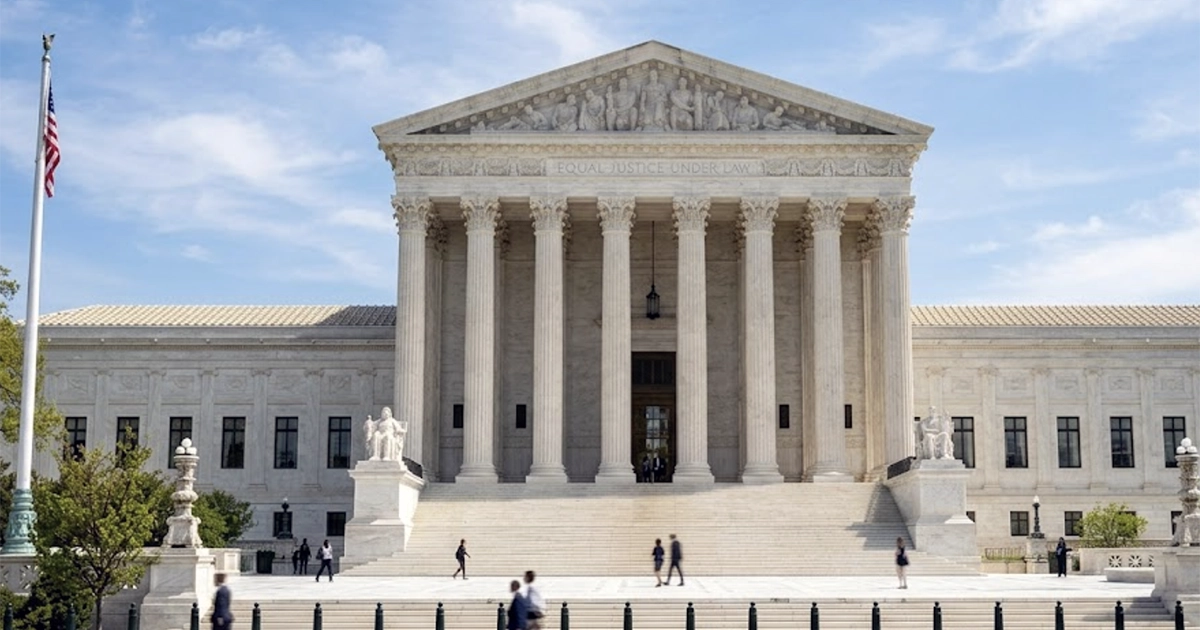
Terance Gamble was stopped in Mobile, Alabama in 2015, and officers found a handgun in his car. Because of an earlier robbery conviction, Alabama prosecuted him for being a felon in possession of a firearm, and he pleaded guilty. Federal prosecutors then charged him under federal law for possessing the same gun. Gamble argued that the second prosecution put him in jeopardy twice for one offense and asked the Supreme Court to abandon the dual-sovereignty doctrine.On June 17, 2019, the Court refused, 7 to 2. Justice Samuel Alito’s majority opinion reasoned that the Double Jeopardy Clause protects against being tried twice for the same “offence,” and that an offense is defined by a sovereign’s law. Where two sovereigns have each passed a law, there are two offenses. The Court pointed to more than 170 years of precedent, including United States v. Lanza (1922) and the 1959 companion cases Abbate v. United States and Bartkus v. Illinois, and found no strong reason to overturn them. Justice Clarence Thomas concurred. Justices Ruth Bader Ginsburg and Neil Gorsuch dissented separately, with Gorsuch calling the doctrine a “colossal exception” to the ancient rule against double jeopardy.
Gamble was not a pardon case. But it was decided while state prosecutors were openly preparing cases against people close to the president, and it settled the constitutional question those cases depended on: a federal case, a federal conviction or a federal pardon does not stop a state from enforcing its own criminal law. The same reasoning lets two states each prosecute one act (Heath v. Alabama, 1985). It does not cover Puerto Rico, which the Court held in 2016 is not a separate sovereign for these purposes (Puerto Rico v. Sanchez Valle). The broader rule is covered in OCA’s double jeopardy explainer.
Where States Limit Themselves
The Constitution allows a successive state prosecution, but many states restrict it by statute. New York is the best-known example. Its Criminal Procedure Law section 40.20 generally bars a state prosecution for an offense based on the same act or transaction as an earlier prosecution, including a federal one, subject to a list of exceptions.That statute decided Paul Manafort’s New York case. After Manafort was convicted and sentenced federally, the Manhattan District Attorney indicted him in 2019 on state mortgage-fraud charges. A state judge dismissed the indictment under New York’s double jeopardy statute, and the Appellate Division unanimously affirmed in October 2020, finding the state and federal charges rested on the same conduct. Trump pardoned Manafort that December. The state case was already over, and it ended because of New York’s own law, not the pardon.
New York then changed the statute for a narrow group. A law Governor Andrew Cuomo signed on October 16, 2019, added an exception allowing state prosecution of people who received a presidential pardon for the related federal crime and who held certain close ties to the president, such as working in the administration or on a presidential campaign or transition. Its sponsor said at the time that many other states already made clear in their law that a presidential pardon does not affect state charges.
The federal side has its own self-imposed limit. The Justice Department’s “Petite policy” generally discourages a federal prosecution after a state prosecution for substantially the same act, unless a substantial federal interest was left unvindicated. It is internal policy, not law, and it does not bind the states.
Pardoned Federally, Prosecuted by a State: The Cases
Steve Bannon and “We Build the Wall”
Federal prosecutors in Manhattan charged Steve Bannon in August 2020 with defrauding donors to the “We Build the Wall” fundraising campaign. On January 20, 2021, before any trial, President Trump pardoned him. Because the federal case never reached trial, jeopardy had never attached. In September 2022 the Manhattan District Attorney indicted Bannon in state court over the same fundraising, on state money laundering, fraud and conspiracy charges. On February 11, 2025, Bannon pleaded guilty to one count of scheming to defraud in the first degree. He was sentenced to a three-year conditional discharge, with no prison time, and barred during that period from serving as an officer or director of a New York charity or nonprofit, from fundraising for one, and from using the campaign’s donor data. That is a federally pardoned defendant convicted and sentenced in state court for the same scheme.Ken Kurson and the State Eavesdropping Charges
Ken Kurson, a former newspaper editor, was charged federally with cyberstalking and pardoned in January 2021. That August, the Manhattan District Attorney charged him in state court with eavesdropping and computer trespass, alleging he used spyware to get his then-wife’s passwords and access her email and social media accounts. Kurson later pleaded guilty to attempted versions of those crimes, which reduced the felonies to misdemeanors, under a deal that let him replace the plea with a lower-level harassment plea if he completed 100 hours of community service and stayed out of trouble for a year.The 2025 Pardons Over the 2020 Election
In November 2025, President Trump announced pardons for Rudy Giuliani, several other lawyers and dozens of Republicans who served as alternate electors after the 2020 election. None of them faced federal charges, and several faced state charges in Arizona, Georgia, Michigan, Nevada and Wisconsin. Attorneys general in those states said the pardons had no effect on state prosecutions, because the president cannot pardon state crimes. Those cases have since played out on state-law grounds: by August 2026 the Arizona, Georgia, Michigan and Nevada cases had been dismissed, and Wisconsin’s case was still pending.The pattern across these cases is consistent. The pardon ended, or headed off, federal exposure; whether a state case went forward turned on state law, state prosecutors and state judges.
Why Successive Prosecutions Are Uncommon
The doctrine allows a second prosecution; it does not require one. In practice, state prosecutors rarely re-try conduct the federal government has already punished, both because of statutes like New York’s and because a second case costs money and may add little. Pardons change that calculus. A pardon removes the federal punishment, so a state that believes its own law was broken may see a reason to act that would not exist after an ordinary federal conviction. Bannon’s and Kurson’s cases both followed that path, and in both the state cases rested on conduct that state law independently made a crime.Free settlement alerts
Get notified when new class actions open to claims
Join thousands of readers who get the latest class action settlements you may qualify for — delivered straight to your inbox.
Frequently Asked Questions
Does a presidential pardon cover state crimes?
The Constitution limits the president’s pardon power to “Offences against the United States,” meaning federal crimes. State crimes fall under each state’s own clemency process, usually run by the governor or a pardon board.
Isn’t a state prosecution after a federal pardon double jeopardy?
Under the dual-sovereignty doctrine, the federal government and each state are separate sovereigns, and an act that breaks both sets of laws counts as two offenses. The Supreme Court reaffirmed that rule 7–2 in Gamble v. United States in 2019. Some states add their own statutory limits on prosecuting conduct that was already prosecuted federally.
Has anyone pardoned by a president later been convicted in state court?
Steve Bannon was pardoned in January 2021 before his federal fraud trial, then charged by the Manhattan District Attorney and pleaded guilty in February 2025 to a state scheme-to-defraud count, receiving a three-year conditional discharge. Ken Kurson was pardoned on federal cyberstalking charges in January 2021, then charged in Manhattan and pleaded guilty to reduced misdemeanor counts.
Does a pardon stop civil lawsuits?
A presidential pardon relieves federal criminal punishment. It does not wipe out civil claims that private parties bring for the same conduct, such as fraud or defamation suits, and it does not bind state civil enforcement.
Sources
• Supreme Court of the United States: Gamble v. United States, No. 17-646 (June 17, 2019)• Constitution Annotated: Dual Sovereignty Doctrine
• CBS News: Steve Bannon pleads guilty in “We Build the Wall” donor fraud case
• ABC7 New York: Steve Bannon pleads guilty in border wall fraud case
• Kurson pleads guilty in Manhattan after federal pardon
• Associated Press via WSLS: Court won’t revive state fraud charges against Manafort
• JURIST: New York governor signs bill allowing prosecution of those who received presidential pardons
• The Nevada Independent: Trump pardons Nevada fake electors; state cases unaffected
• Atlanta Journal-Constitution: Judge drops Nevada case against electors (August 2026)