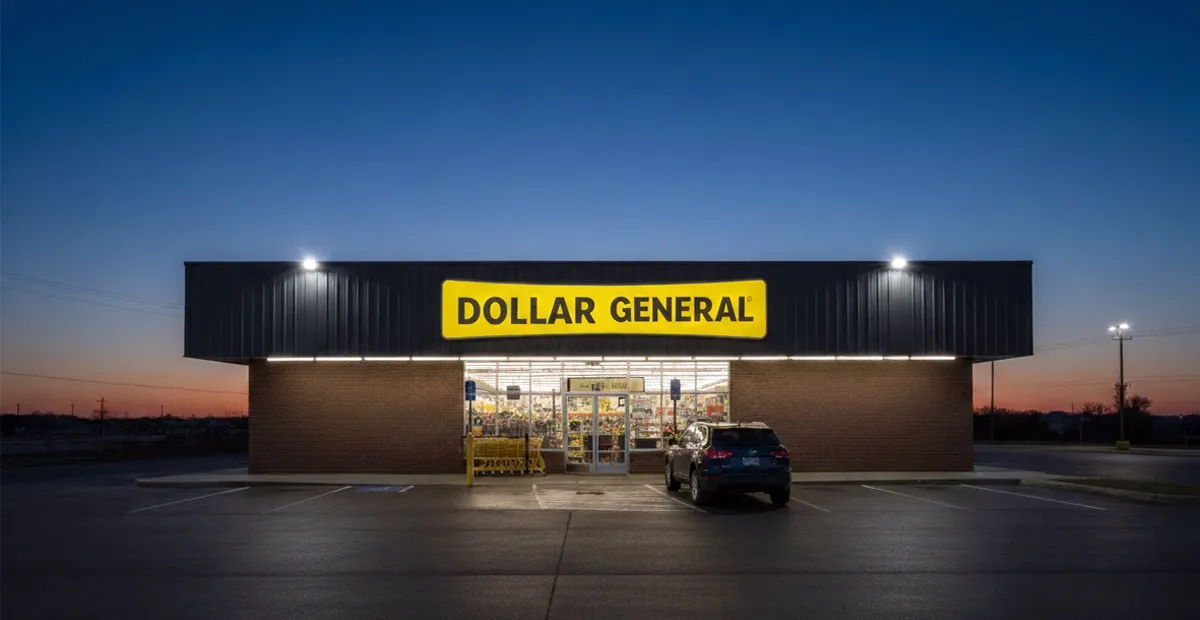
Dollar General shoppers are at the center of an October 2026 lawsuit in which the Federal Trade Commission and 20 states allege the retailer routinely charged more at the register than its shelf tags, circulars and app advertised. The case is a government enforcement action, not a class action, and there is no fund or claim form.

Allegations Only · No Settlement Yet
This article describes a complaint filed by the Federal Trade Commission and 20 states. The statements below are unproven allegations. Dollar General has not been found liable, this is not a class action, and there is nothing to claim at this time. This page is informational and is not legal advice.
What Is This About?
The Federal Trade Commission and 20 states sued Dollar General Corporation on October 26, 2026, in the U.S. District Court for the Middle District of Tennessee. The case is Federal Trade Commission et al. v. Dollar General Corporation, No. 3:26-cv-01693, and it is assigned to District Judge Aleta A. Trauger.The complaint alleges that for years Dollar General charged shoppers more at checkout than the prices shown on shelf tags, product stickers, in-store signs, weekly circulars, its website and its mobile app, and that the company kept doing so after inspections, consumer complaints and earlier settlements put it on notice. The FTC and the states say those practices violate the FTC Act, the Gramm-Leach-Bliley Act and the consumer protection or weights-and-measures laws of each state that joined. None of the allegations has been tested in court.
The Commission voted 2-0 to authorize the suit. In the FTC’s announcement, Christopher Mufarrige, Director of the agency’s Bureau of Consumer Protection, said Dollar General “has betrayed the trust of millions of American consumers.”
Free settlement alerts
Get notified when new class actions open to claims
Join thousands of readers who get the latest class action settlements you may qualify for — delivered straight to your inbox.
What the Complaint Alleges
Dollar General runs more than 20,000 stores in 48 states, and the complaint stresses who shops there. According to the filing, about 80% of its stores sit in towns of 20,000 people or fewer, roughly 75% of Americans live within five miles of one, and households earning $35,000 or less account for 60% of the company’s revenue. The government’s theory is that a register price even a few cents above the shelf tag lands hardest on those customers.The complaint describes three places where prices are advertised: weekly circulars mailed, inserted in newspapers or posted online; shelf tags, product labels and in-store signs; and the company’s website and app. For each, it cites consumers who said a promotion, a shelf price or an app price did not ring up at the register, and who were told by employees that the register price was the price.
The filing also lays out how the plaintiffs say mismatches arise. Dollar General changes core prices weekly, and the register is updated on a set schedule whether or not anyone has replaced the tag on the shelf. Store teams are supposed to swap labels during a weekly five-hour “Compliance Tuesday” shift, but the complaint alleges stores are often too thinly staffed to finish the job. Because core price changes are usually increases, the complaint says, a stale shelf tag usually means the shopper pays more than the tag shows.
Portions of the public complaint are blacked out. On the day it was filed, the plaintiffs asked the court to seal material Dollar General had designated confidential, and the redacted passages include figures from the company’s own pricing audits and internal emails.
Undercover Purchases and State Price Inspections
FTC investigators made undercover purchases at four Dollar General stores between January and April 2026, paying by credit card each time. The complaint says every visit turned up items that rang up at a price different from the shelf or product label:• Cleveland, Ohio (January 16): 13 of 58 items mispriced, a 22.4% error rate, for a net overcharge of $3.25
• Springfield, Missouri (February 27): 6 of 59 items mispriced, for a net overcharge of $4.07
• Sharpsburg, Pennsylvania (March 11): 6 of 60 items mispriced, for a net overcharge of $2.60
• Baltimore, Maryland (April 1): 5 of 59 items mispriced, all of them overcharges, totaling $3.65
The complaint pairs those buys with state and local inspection records. Most states test pricing against a federal procedure that treats more than 2% of sampled items as a failure. Among the results the plaintiffs cite: Dollar General failed more than 39% of Kansas inspections from January 2023 to March 2026; Louisiana stores failed 144 audits and incurred $176,850 in fines over a similar period; all eight Iowa inspections from 2023 to mid-2024 were failures; and one store in Nephi, Utah failed 15 of 19 inspections, including ten in a row. In Wisconsin, a statewide survey of 279 stores in early 2026 found 290 products that scanned above their advertised price.
The company’s own customer-service logs figure in the case too. From January 2023 through March 2026, the complaint says, Dollar General logged 29,265 complaints under the category “Did Not Honor Marked Price,” from all 48 states where it operates.
Why the Lawsuit Cites a Banking Privacy Law
Alongside the standard FTC Act deception count, the FTC brings a second federal count under Section 521 of the Gramm-Leach-Bliley Act, a 1999 law that bars anyone from obtaining a bank customer’s financial information through false or fraudulent statements. The theory is that the advertised prices were the false statements, and that they led shoppers to hand over debit card, credit card and check details at the register.The choice matters for refunds. In 2021 the Supreme Court held in AMG Capital Management v. FTC that Section 13(b) of the FTC Act does not let the agency win money for consumers on its own. As the complaint explains, a Gramm-Leach-Bliley violation can be enforced as if it broke an FTC trade regulation rule, which opens the door to court-ordered refunds under Section 19 of the FTC Act. Many of the consumer examples in the complaint note that the shopper paid by debit or credit card.
Earlier Pricing Settlements
The complaint says Dollar General has resolved seven pricing actions with six states since 2019, paying more than $6 million in total:• Wisconsin, 2019: $10,586
• Vermont, 2019: $1.75 million
• Wisconsin, 2023: $850,000
• New Jersey, 2023: $1.2 million
• Ohio, 2023: $1 million
• Colorado, 2025: $400,000
• Pennsylvania, 2025: $1.55 million
The Colorado and Pennsylvania settlements require Dollar General to post in-store signs saying it will honor the lowest price when the shelf and register disagree. The complaint also counts eight private class actions over pricing accuracy filed against the company since 2022. One of them ended in the Dollar General price overcharge settlement, a New Jersey state-court case whose claim deadline passed on April 13, 2026.
The 20 States in the Case
Alabama, Arizona, Arkansas, California, Connecticut, Florida, Illinois, Iowa, Kansas, Louisiana, Michigan, Mississippi, Nebraska, New Jersey, North Carolina, Ohio, Oklahoma, Tennessee, Utah and Wisconsin joined the FTC. Most sue through their attorneys general; California sues through Los Angeles County Counsel, and Utah through its Division of Consumer Protection.Each state brings its own claims. Michigan cites a state law under which a scanner price higher than the displayed price is prima facie evidence of a violation. Wisconsin’s claims include a scanner statute that requires retailers to refund the difference when an item rings up above its posted price and to display a sign explaining that refund. The complaint says 35 Wisconsin stores lacked the sign on a first inspection in early 2026 and 10 still lacked it on a second.
What the Government Is Asking For
The plaintiffs want a permanent injunction barring the practices described in the complaint, monetary relief for consumers, and civil penalties, restitution, disgorgement and fees under the state laws. Several states seek per-violation penalties, including up to $2,500 per violation under California’s false advertising and unfair competition laws and up to $25,000 per violation under Ohio’s Consumer Sales Practices Act. The complaint does not put a total dollar figure on the harm, saying only that it runs to millions of dollars.Can Dollar General Shoppers Get Money?
Not at this stage. A government enforcement action has no class, no administrator and no claim form. If the court eventually orders monetary relief, or Dollar General settles with the FTC and the states, the order or settlement would spell out whether refunds go to consumers and how. The FTC has run refund programs after other cases, and it announces any program itself. There is nothing to sign up for today.What Happens Next
The court issued a summons to Dollar General on October 26, 2026, and as of October 27 the docket showed no response from the company. Judge Trauger has set an initial case management conference for February 22, 2027. Before then, Dollar General can answer the complaint or move to dismiss some or all of it, and the court will decide the pending request to keep the confidential material sealed.Read the Complaint
Questions
Is there a claim form for the FTC lawsuit against Dollar General?
There is no claim form, fund or deadline. The FTC and 20 states filed a government enforcement action, not a class action, on October 26, 2026. The complaint asks the court for monetary relief and restitution, but money would reach shoppers only if the court later orders it or the parties reach a settlement that sets up a refund program.
Is this the same as the Dollar General price settlement?
It is a separate case. The earlier settlement resolved a private class action in New Jersey state court, Braun v. Dolgencorp, LLC, whose claim deadline was April 13, 2026. The FTC case was filed in federal court in Tennessee by the government and is in its earliest stage.
Why does the FTC cite the Gramm-Leach-Bliley Act?
Section 521 of the Gramm-Leach-Bliley Act prohibits obtaining a bank customer’s financial information through false statements. The FTC alleges the advertised prices led shoppers to hand over debit card, credit card and check details at checkout. Violations of that section can be enforced like a trade regulation rule, which allows the court to order refunds to consumers.
Which states joined the lawsuit?
Alabama, Arizona, Arkansas, California, Connecticut, Florida, Illinois, Iowa, Kansas, Louisiana, Michigan, Mississippi, Nebraska, New Jersey, North Carolina, Ohio, Oklahoma, Tennessee, Utah and Wisconsin. California sues through Los Angeles County Counsel and Utah through its Division of Consumer Protection.
Has a court found that Dollar General overcharged customers?
The court has not ruled on any claim. The complaint states the government’s allegations, which Dollar General has not yet answered in court. The FTC files a complaint when it has reason to believe the law is being violated, and the court decides the case.
Sources
• Complaint, FTC et al. v. Dollar General Corporation (M.D. Tenn.)• Federal Trade Commission: Dollar General Complaint
• CourtListener: FTC v. Dollar General Corporation Docket