People who replied STOP to debt collection texts from Bounce AI and kept getting them may be covered by a proposed class action alleging the collector violated the Fair Debt Collection Practices Act and Florida's consumer collection law. No class has been certified and there is nothing to file yet.

Allegations Only · No Settlement Yet
This article describes a class action complaint. The statements below are unproven allegations. Bounce AI, Inc. has not been found liable, there is no certified class, and nothing to claim at this time. This page is informational and is not legal advice.
What Is This About?
Bounce AI, Inc., a debt collection company based in Rochester, New York, is facing a proposed class action alleging that it kept sending debt collection text messages to consumers after they told it to stop by replying “STOP.” The complaint says that breaks a federal rule requiring debt collectors to stop contacting a consumer who asks them to in writing, as well as a Florida law against collection contact that can reasonably be expected to harass. Bounce AI has not been found liable, and the allegations are unproven.The case is captioned Johnson v. Bounce AI, Inc., Case No. 8:26-cv-02694. It was filed on September 15, 2026 in the U.S. District Court for the Middle District of Florida, in Tampa, by a Hillsborough County consumer. It brings one count under the federal Fair Debt Collection Practices Act (FDCPA) and one under the Florida Consumer Collection Practices Act (FCCPA), on behalf of a proposed nationwide class and a Florida class.
Free settlement alerts
Get notified when new class actions open to claims
Join thousands of readers who get the latest class action settlements you may qualify for — delivered straight to your inbox.
What Does the Complaint Allege?
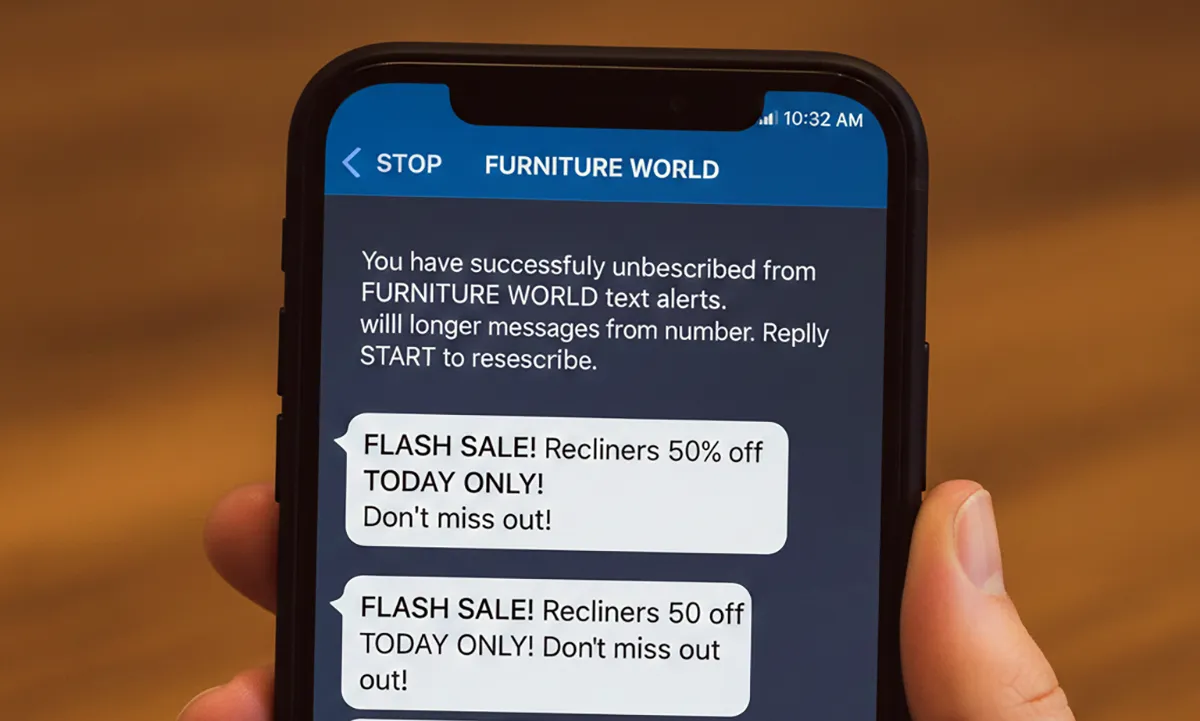
According to the complaint, Bounce AI began texting the plaintiff's cell phone around November 2025 about a consumer debt allegedly owed to a third-party creditor. The messages identified Bounce AI as a debt collector, named the creditor and the balance, and pointed him to a website or a phone number to resolve the account. The complaint alleges the same or similar messages went to consumers across the country.On or about August 17, 2026, the plaintiff replied “stop.” The complaint treats that reply as a written request to cease communication, and alleges Bounce AI kept texting him anyway, including on September 2, 2026, with messages demanding payment. Screenshots of the exchange are included in the filed complaint embedded below. The complaint alleges the post-STOP texts wasted his time, annoyed and frustrated him, and drained his phone battery, and that Bounce AI sent similar texts to other consumers after they asked it to stop.
What Laws Does It Rely On?
• Fair Debt Collection Practices Act, 15 U.S.C. § 1692c(c). If a consumer notifies a debt collector in writing that they want it to stop communicating, the collector must stop contacting them about that debt. The exceptions are narrow: telling the consumer it is ending its efforts, or that it or the creditor may use, or intends to use, a specific remedy. The complaint alleges the post-STOP texts sought payment and fell into none of those exceptions.• Florida Consumer Collection Practices Act, Fla. Stat. § 559.72(7). Florida bars anyone collecting a consumer debt from willfully communicating with a debtor so often that it can reasonably be expected to harass them. The complaint alleges Bounce AI acknowledged the STOP request and kept texting, which it says makes the conduct willful.
A central question in cases like this is whether a one-word text reply counts as a written cease-communication request under the FDCPA. The complaint says it does. Federal debt collection rules adopted by the Consumer Financial Protection Bureau also require collectors that contact people by text or email to give them a simple way to opt out of those messages. How the court treats a STOP reply will matter more than any single message. Similar STOP-reply complaints against marketers, such as the CVS ExtraCare and TikTok text cases, are brought under the Telephone Consumer Protection Act; this one is a debt collection case, so it runs on different laws with much lower damages caps.
Who Would Be Included?
The complaint proposes two classes:• FDCPA Class: people in the United States who received a debt collection message on their cell phone within the one year before the complaint was filed, after they had already asked in writing for the collector to stop contacting them or refused in writing to pay.
• Florida Class: people in Florida who received such a message within the two years before filing.
One detail stands out. As filed, both class definitions name “Credence Resource Management, LLC” as the sender, not Bounce AI, even though every other allegation is about Bounce AI. That looks like wording carried over from a different complaint, and it is the kind of error that is usually fixed by amending the complaint. The complaint also switches between “he” and “her” when describing the plaintiff. No class has been certified, and the definitions could change.
What Could Class Members Get?
Nothing is available now. The complaint asks for actual and statutory damages under both laws, punitive damages under the Florida law, an order stopping the conduct, and attorneys' fees and costs.Both statutes limit class recoveries sharply. Under the FDCPA and, as the complaint quotes it, the Florida statute, additional statutory damages for a class are capped at the lesser of $500,000 or 1% of the collector's net worth for all class members combined, and under the Florida law no class member can receive more than $1,000 in those damages. The named plaintiff can seek up to $1,000 separately. In practice, that means per-person amounts in a class of thousands would likely be small; the bigger practical effect of a case like this is often a change in how the collector handles STOP replies.
Getting Texts From Bounce AI?
Some general points, not legal advice:• STOP limits contact; it does not erase the debt. A written request to stop limits how a collector may contact you, but the debt itself remains, and the creditor or collector can still pursue other remedies, including a lawsuit.
• Keep the messages. Screenshots showing the dates you replied STOP and any messages that came after are what a case like this turns on.
• You can ask for validation. Federal rules give consumers the right to request information verifying a debt a collector says they owe.
• Complaints go to regulators too. Consumers can file a complaint about a debt collector with the Consumer Financial Protection Bureau or their state attorney general.
There is nothing to sign up for with the court or Bounce AI at this stage.
What Happens Next?
Bounce AI must be served and then respond, typically with an answer or a motion to dismiss. Early fights in STOP-text cases often focus on whether the plaintiff suffered a concrete injury that gives them standing to sue in federal court, and on whether a text reply is a written notice. The class definitions are also likely to be amended. If the case settles, OCA will publish how to file.Questions
What is the Bounce AI class action about?
Johnson v. Bounce AI, Inc. is a proposed class action filed September 15, 2026 in the U.S. District Court for the Middle District of Florida. It alleges that Bounce AI, a debt collector, kept sending debt collection text messages to consumers after they replied STOP, in violation of the federal Fair Debt Collection Practices Act and the Florida Consumer Collection Practices Act. Bounce AI has not been found liable, and the allegations are unproven.
Is there a Bounce AI settlement or claim form?
No. This is a newly filed lawsuit, not a settlement. There is no settlement fund, no claim form and no deadline, and no class has been certified. Anyone asking for a fee or personal details to join a Bounce AI refund is not connected to the case.
Who would be included in the Bounce AI lawsuit?
The complaint proposes a nationwide class of people who received a debt collection message on their cell phone within one year before the September 15, 2026 filing after they had asked in writing for the collector to stop contacting them or refused to pay, and a Florida class covering the two years before filing. The class definitions as filed name a different company, Credence Resource Management, LLC, rather than Bounce AI, which appears to be a drafting error that could be corrected by amendment. No class has been certified.
How much money could class members get from the Bounce AI lawsuit?
Nothing is available now. If the case succeeded as a class action, both the FDCPA and the Florida statute cap additional statutory damages for the class as a whole at the lesser of $500,000 or 1% of the collector's net worth, with no class member receiving more than $1,000 in statutory damages under the Florida law. Actual damages are separate. Individual amounts in cases like this are usually small.
Does replying STOP to a debt collector erase the debt?
No. Under the Fair Debt Collection Practices Act, a written request to stop limits how a debt collector may contact a consumer about a debt, but it does not cancel the debt or stop a creditor or collector from pursuing other remedies, such as a lawsuit. The collector may still send a limited notice that it is ending its efforts or intends to use a specific remedy. This is general information, not legal advice.
Read the Complaint
Sources
• Johnson v. Bounce AI, Inc., No. 8:26-cv-02694 (M.D. Fla.), Class Action Complaint filed September 15, 2026 (embedded above)• Fair Debt Collection Practices Act, 15 U.S.C. §§ 1692c(c) and 1692k, and the CFPB's debt collection rule, Regulation F (12 CFR Part 1006)
• Florida Consumer Collection Practices Act, Fla. Stat. §§ 559.72(7) and 559.77