Roundup Lawsuit Update 2026: Supreme Court Rules for Bayer

Roundup Cancer Lawsuit Update 2026: Supreme Court Rules for Bayer, $7.25 Billion Settlement Awaits Approval

Roundup cancer lawsuit update 2026 settlement Bayer Monsanto glyphosate non-Hodgkin lymphoma

By Steve Levine | Updated: July 9, 2026

Status: Open — Individual Lawsuits Still Being Filed

Bayer Has Paid Over $11 Billion in Roundup Settlements


What Is the Roundup Cancer Lawsuit?

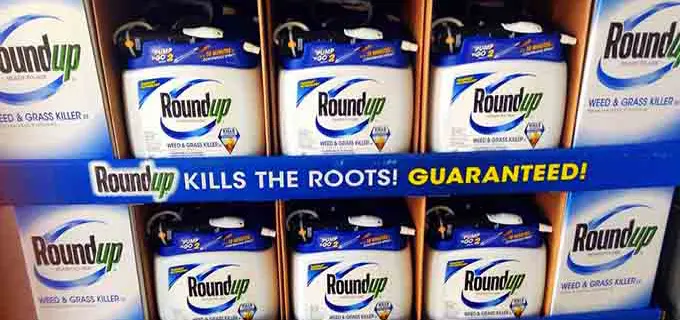
Thousands of people across the United States have filed lawsuits claiming that Roundup, a widely used weed killer manufactured by Monsanto (now owned by Bayer), caused them to develop non-Hodgkin lymphoma and other cancers. The lawsuits allege that glyphosate, the active ingredient in Roundup, is linked to cancer and that Monsanto failed to warn consumers about the risks.

Bayer acquired Monsanto in 2018 for $63 billion. Since then, the company has faced more than 181,000 Roundup-related claims and has paid approximately $11 billion in settlements. As of February 2026, more than 60,000 active lawsuits remain pending across federal and state courts, with new cases still being filed. If you used Roundup and were diagnosed with non-Hodgkin lymphoma or a related cancer, you can check if you pre-qualify for a Roundup cancer lawsuit here.

The litigation gained momentum after the International Agency for Research on Cancer (IARC), part of the World Health Organization, classified glyphosate as "probably carcinogenic to humans" in 2015. The U.S. Environmental Protection Agency (EPA) has maintained that glyphosate is not likely to cause cancer when used as directed, and this disagreement between agencies was at the center of the U.S. Supreme Court case that has now reshaped the entire litigation (see the ruling below).

Latest Roundup Lawsuit Developments (February 2026)

Several major developments have occurred in the Roundup litigation in recent months. Here is what has happened and what comes next.

In March 2025, a Cobb County, Georgia jury ordered Bayer to pay $2.1 billion to plaintiff John Barnes, who developed non-Hodgkin lymphoma after using Roundup on weeds around his home for over 20 years. The verdict included $65 million in compensatory damages and $2 billion in punitive damages. It was the largest single-plaintiff injury verdict in Georgia history.

In November 2025, Bayer settled the Barnes case for a confidential amount, avoiding a potentially lengthy appeal. A Monsanto spokesperson confirmed the settlement but said the specific terms are covered under existing company provisions.

On January 16, 2026, the U.S. Supreme Court announced it would review Monsanto v. Durnell, a case asking whether federal pesticide labeling law (FIFRA) blocks state-level failure-to-warn lawsuits. On June 25, 2026, the Court ruled 7-2 in Bayer's favor, holding that FIFRA preempts state failure-to-warn claims that would require warnings different from Roundup's EPA-approved label — a decision that blocks the core legal theory behind most pending Roundup cancer lawsuits, though design-defect and other non-label claims may survive.

The Trump administration has sided with Bayer on this issue. Solicitor General John Sauer filed a brief arguing that EPA-approved labeling should prevent state courts from imposing different warning requirements.

How Much Has Bayer Paid in Roundup Settlements?

Bayer has paid approximately $11 billion to settle Roundup lawsuits as of February 2026. The company set aside an initial $10.9 billion in 2020 to resolve roughly 100,000 claims, and has since added approximately $1.4 billion in additional provisions. The company has set aside a total of $5.9 billion in remaining legal provisions for cases that are still pending.

Individual settlement amounts are confidential, but jury verdicts that have been made public give some indication of what plaintiffs have been awarded at trial. These verdicts are often reduced on appeal. Bayer has stated that damages in cases reaching final judgment have been reduced by about 90% compared to original jury awards.

Largest Roundup Jury Verdicts

Several Roundup trials have resulted in large jury awards, though many have been reduced on appeal or settled for confidential amounts afterward. The following are among the largest reported verdicts:

$2.25 billion — January 2024, Philadelphia. Awarded to a plaintiff in a case tried by Arnold & Itkin LLP.

$2.1 billion — March 2025, Cobb County, Georgia. Awarded to John Barnes. Later settled for a confidential amount in November 2025.

$611 million — Missouri. Awarded to three plaintiffs. Upheld by the Missouri Court of Appeals in June 2025. The Missouri Supreme Court declined to review the case in October 2025.

$177 million — Pennsylvania. Awarded to Ernest Caranci. Upheld on appeal in May 2025.

$289 million — 2018, California. The first major Roundup verdict, awarded to Dewayne Johnson, a school groundskeeper. Later reduced to $78 million.

$86 million — California (Pilliod case). Originally a roughly $2 billion verdict. Reduced on appeal.

$28 million — California. Awarded to Mike Dennis. Upheld by a California appeals court in November 2025. Originally included $325 million in punitive damages, which was reduced post-trial.

It is important to note that Bayer has also won many trials. The company says it has prevailed in 17 of the last 25 Roundup-related trials that went to verdict.

How Did the Supreme Court Rule?

The U.S. Supreme Court agreed on January 16, 2026 to hear Monsanto v. Durnell, a Roundup case from Missouri. The central question was whether the federal pesticide labeling law known as FIFRA (Federal Insecticide, Fungicide, and Rodenticide Act) preempts state-level failure-to-warn claims. On June 25, 2026, the Court answered yes, ruling 7-2 for Monsanto/Bayer in an opinion by Justice Kavanaugh (Justices Jackson and Gorsuch dissented) and reversing the Missouri verdict for plaintiff John Durnell.

Bayer argues that because the EPA has approved Roundup's label without a cancer warning, state courts cannot require the company to add one. Several federal appeals courts have issued conflicting rulings on this question, creating what is known as a circuit split. The Third Circuit ruled in Bayer's favor in the Schaffner case, while the Ninth Circuit, Eleventh Circuit, and Missouri courts have allowed failure-to-warn claims to proceed.

The Court heard oral argument on April 27, 2026 and issued its decision on June 25, 2026. Because the ruling went in Bayer's favor, state-law failure-to-warn claims premised on Roundup's EPA-approved label are now preempted — effectively blocking the primary theory in thousands of pending and future Roundup lawsuits. Separately, Bayer has proposed a $7.25 billion settlement structure to resolve most remaining non-Hodgkin lymphoma claims; a Missouri state court granted preliminary approval, and the final approval hearing is set for August 19, 2026. For details on the ruling, see our full report on the Supreme Court's Roundup decision and the proposed $7.25 billion Bayer settlement.

Georgia and North Dakota have already passed state laws shielding pesticide companies from failure-to-warn claims when their labeling complies with EPA regulations.

Who Qualifies for a Roundup Lawsuit?

To qualify for a Roundup lawsuit, you generally must meet the following criteria:

You used, mixed, or applied Roundup or another glyphosate-based herbicide for an extended period, typically at least 40 to 50 hours over your lifetime.

You were diagnosed with non-Hodgkin lymphoma (NHL) or a related cancer subtype, such as chronic lymphocytic leukemia (CLL), diffuse large B-cell lymphoma, or follicular lymphoma.

Your claim is within your state's statute of limitations, which varies by state.

Both occupational users (farmers, landscapers, groundskeepers, agricultural workers) and residential users (home gardeners) have filed and won Roundup lawsuits.

Can I Still File a Roundup Lawsuit?

Yes. As of February 2026, new Roundup lawsuits are still being filed. There are more than 60,000 active cases, including 4,511 pending in the federal multidistrict litigation (MDL) in the Northern District of California.

The Supreme Court's June 25, 2026 ruling in Monsanto v. Durnell significantly changed the legal landscape: because federal law now preempts state failure-to-warn claims over EPA-approved labels, it is much harder to bring Roundup failure-to-warn lawsuits going forward. Claims built on other theories, such as design defect, were not directly decided.

Additionally, Georgia and North Dakota have enacted state laws that shield pesticide companies from failure-to-warn liability if their labels comply with EPA requirements. If more states follow, the window for filing may narrow further.

How Much Could a Roundup Settlement Be Worth?

Individual Roundup settlement amounts are confidential and vary widely based on the severity of illness, duration of exposure, and other factors. Jury verdicts have ranged from $1.25 million to over $2 billion, though large awards are typically reduced on appeal.

Based on publicly available information, individual Roundup settlements have been estimated in a range from tens of thousands of dollars to several million depending on the specific circumstances. The most significant factors include the type and stage of cancer, length and frequency of Roundup exposure, strength of medical evidence linking exposure to diagnosis, and whether the case goes to trial or settles.

There is no universal class action settlement fund that individual consumers can file claims against. Each Roundup case is handled individually or as part of grouped litigation. Bayer has paid about $11 billion total across roughly 100,000 resolved cases.

What Happens Next in the Roundup Litigation?

There are three key things to watch in 2026:

The Supreme Court ruled for Bayer in Monsanto v. Durnell on June 25, 2026 — the single most important event in the litigation's history, ending or severely limiting most pending and future failure-to-warn lawsuits. Attention now shifts to the proposed $7.25 billion settlement and its August 19, 2026 final approval hearing.

Ongoing state court trials. Bayer continues to face individual trials in courts across the country. Recent plaintiff wins in Georgia, Missouri, Pennsylvania, and California have resulted in large verdicts, although Bayer has also won a number of recent trials.

Potential legislative action. Bayer has lobbied for federal legislation that would protect pesticide companies from state failure-to-warn lawsuits when their labels comply with EPA rules. This effort may gain traction in a 2026 Farm Bill.

Is Roundup Still Being Sold?

Yes. Roundup is still available for purchase. However, Bayer stopped using glyphosate in Roundup products sold for residential lawn and garden use in the U.S. starting in 2023. The company reformulated residential products with different active ingredients. This change was made to reduce litigation risk, not because of any safety concerns, according to Bayer.

Glyphosate-based Roundup products remain available for agricultural and professional use in the United States and worldwide.

Is the Georgia $2 Billion Verdict Real?

Yes. On March 21, 2025, a Cobb County, Georgia jury ordered Monsanto to pay $2.065 billion to John Barnes following a three-week trial (Barnes v. Monsanto Co., No. 21-A-444, Georgia State Court, Cobb County). The verdict included $65 million in compensatory damages and $2 billion in punitive damages. Barnes claimed he developed non-Hodgkin lymphoma after using Roundup for more than 20 years.

In November 2025, Bayer settled the case for a confidential amount, avoiding a formal appeal. This is consistent with Bayer's pattern of settling large jury verdicts for reduced amounts rather than pursuing lengthy appeals.

What Is the Difference Between a Roundup Settlement and a Verdict?

A verdict is a jury's decision at the end of a trial. The jury determines whether the defendant is liable and how much to award in damages. Verdicts can be appealed and are frequently reduced by courts after trial.

A settlement is a negotiated agreement between the plaintiff and defendant to resolve the case without further litigation. Settlement amounts are typically confidential. Most Roundup cases are resolved through settlement rather than going to trial.

How Long Does a Roundup Lawsuit Take?

The timeline for a Roundup lawsuit varies. Cases that settle may resolve in one to three years. Cases that go to trial and through appeals can take significantly longer. The federal MDL in California has been ongoing since 2016, and many individual cases filed years ago remain pending.

The Supreme Court's ruling for Bayer means many pending failure-to-warn cases may now be dismissed or resolved through the proposed $7.25 billion settlement rather than tried. Whether individual claimants recover — and how much — will largely depend on the settlement's final approval and its claim criteria.

Does Roundup Cause Cancer?

This is a disputed question at the center of the litigation. The International Agency for Research on Cancer (IARC) classified glyphosate as "probably carcinogenic to humans" in 2015. A 2025 animal study published in Environmental Health found that glyphosate increased cancer rates in rats even at exposure levels considered safe by European regulators.

The U.S. EPA has maintained that glyphosate is not likely to be carcinogenic to humans when used as directed. Most other major regulatory agencies worldwide have reached similar conclusions.

U.S. juries have repeatedly found that Roundup was a substantial contributing factor in plaintiffs' cancer diagnoses. Bayer disputes these findings and points to its record of prevailing in many trials.

Roundup Lawsuit Case Summary

Product Roundup (glyphosate-based herbicide)
Manufacturer Monsanto (now owned by Bayer AG)
Total Claims Filed Over 181,000
Active Lawsuits Over 60,000 (as of Feb. 2026)
Federal MDL Cases 4,511 pending (N.D. Cal.)
Total Paid by Bayer Approximately $11 billion
Largest Jury Verdict $2.25 billion (Philadelphia, Jan. 2024)
Supreme Court Case Monsanto v. Durnell — decided June 25, 2026, 7-2 for Bayer (FIFRA preemption)
Injury Claimed Non-Hodgkin lymphoma and related cancers
Status Active — new lawsuits still being filed

Sources

CNN: Georgia jury orders Monsanto parent to pay nearly $2.1 billion
Atlanta Journal-Constitution: Monsanto settles $2B case
Bayer: U.S. Supreme Court to review Durnell case
PBS: Supreme Court will hear appeal by maker of Roundup
Bayer: Managing the Roundup Litigation

Class Action Notice: This page is for consumer information only. OpenClassActions.com is not a law firm and does not provide legal advice. If you believe you have a Roundup-related claim, consult with a qualified attorney. OpenClassActions is a participant in the Amazon affiliate advertising program and this post may contain affiliate links.


For more open class actions keep scrolling below.