Published
September 15, 2026
Voters casting mail ballots in the November 3, 2026 midterms will do so under their state’s existing rules, after the Supreme Court refused on September 14, 2026 to lift the injunction blocking the U.S. Postal Service’s Ballot Mail for Federal Elections rule. The order is an emergency ruling on who wins in the meantime, not a final decision on whether the rule is lawful.

What the Supreme Court Did
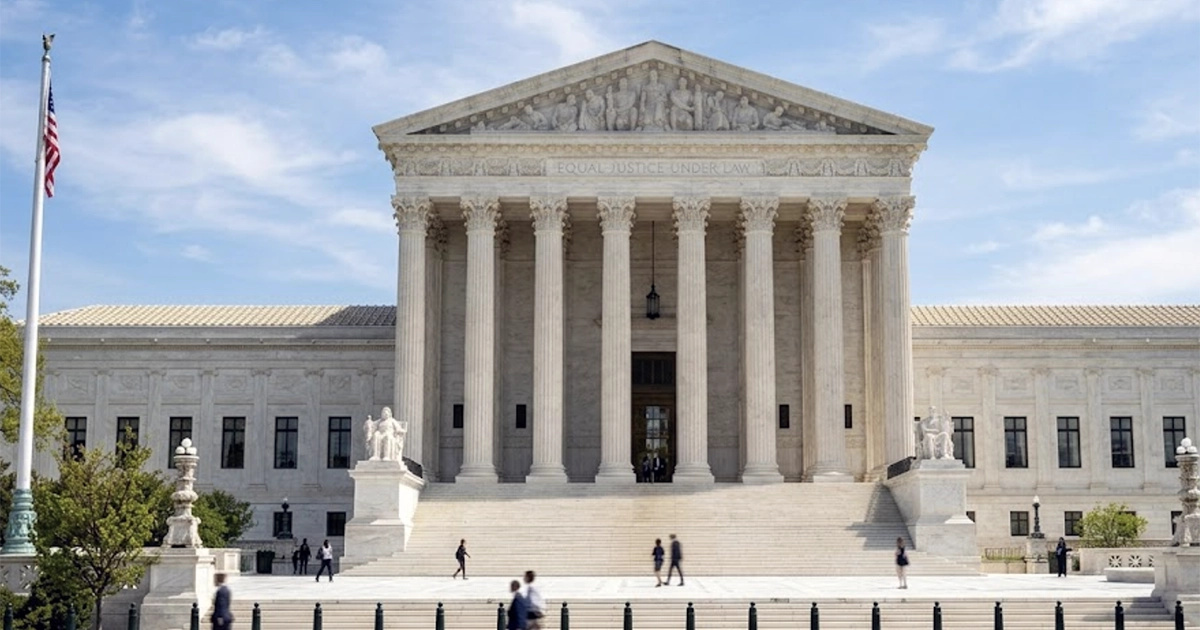
On September 14, 2026 the Supreme Court denied the government’s emergency application to stay a preliminary injunction that blocks the Postal Service from enforcing its new ballot mail rule. The application, docketed as No. 26A305 in United States Postal Service v. California, had been presented to Justice Ketanji Brown Jackson as Circuit Justice and referred by her to the full Court.The order is three sentences long. It says the application is denied, that “[t]he Government is unlikely to succeed on the merits of its challenge to the District Court’s preliminary injunction,” and that “the equitable factors applicable for obtaining emergency relief from this Court do not favor a stay.” Justice Brett Kavanaugh filed a concurrence. Justice Samuel Alito filed a dissent, joined by Justice Clarence Thomas. The order does not record how the remaining Justices voted, which is common on emergency applications.
What the order does not do is decide the case. A stay application asks only which side bears the risk while an appeal runs its course. The appeals of the injunction are still pending in the U.S. Court of Appeals for the First Circuit, and no court has issued a final judgment on whether the Postal Service had the authority to issue the rule.
Free settlement alerts
Get notified when new class actions open to claims
Join thousands of readers who get the latest class action settlements you may qualify for — delivered straight to your inbox.
Status
Stay Denied · September 14, 2026
the preliminary injunction stays in effect while the appeal proceeds
The Application
No. 26A305 — United States Postal Service v. California
Kavanaugh, J., concurring · Alito, J., dissenting, joined by Thomas, J. · no vote count recorded
The Rule at Issue
Ballot Mail for Federal Elections
promulgated August 21, 2026 · published at 91 Fed. Reg. 54,966 · blocked by two federal courts
Effect on November Voting
Mail Voting Runs Under Existing State Rules
the Postal Service cannot treat the rule as mandatory or refuse non-complying ballot mail
Can I Claim?
No — This Is a Court Order, Not a Settlement
no class action, no fund, no claim form and no deadline
What the Postal Service Rule Would Have Required
The rule, titled Ballot Mail for Federal Elections, amends the Postal Service’s Domestic Mail Manual by adding a new section governing mail that carries a federal ballot. It has four principal parts.- Envelope design. Outbound and return ballot envelopes would have to carry the official Election Mail logo, be compatible with automated processing equipment, and bear a unique Intelligent Mail barcode with specified information embedded in it. Election officials would design and print the envelopes and submit them to the Postal Service for design review.
- A federal enrollment portal. State and local election officials would have to submit each mail voter’s name and address, the barcodes on that voter’s outbound and return envelopes, and the voter’s state to a new Federal Ballot Mail Portal, generally at least 30 days before the election. The Postal Service would then return a state-specific list of enrolled participants on or about Election Day.
- Verification at acceptance. When outbound ballot mail was presented for mailing, the Postal Service would scan the barcode and confirm it matched the portal.
- Noncompliance. Ballot mail that could not be verified “will not be accepted” and would be returned to the sender, who would have to fix the errors and resubmit it.
The government has consistently described the rule as a modest regulation of the mail rather than of elections, stressing that states would keep full control over voter eligibility, ballot content, deadlines and counting. Challengers describe it as a federal overlay on state election administration imposed weeks before ballots were due to go out. The courts have not resolved that characterization dispute on a final basis.
How the Case Reached the Supreme Court
The dispute began in March 2026, when the President issued Executive Order 14,399, which directed the Postal Service to begin a rulemaking on absentee and mail-in ballot mail. Several states and voting organizations sued in the U.S. District Court for the District of Massachusetts.That litigation reached the Supreme Court once before. In Trump v. California, No. 26A124, the Court stayed an earlier injunction on August 24, 2026, reasoning that a challenge to a rule that had not yet been written was not ripe — the district court, it said, had to “engage in a string of speculations” to find the suit justiciable when nobody yet knew what a final rule would say.
The Postal Service then issued the rule. It published a proposal on June 2, 2026, took more than 200,000 comments, and promulgated the final rule on August 21, 2026, with publication in the Federal Register following on August 26. The plaintiffs returned to court against the actual rule this time, and on September 4, 2026 the district court entered preliminary injunctions in both consolidated cases. The injunctions let states use the envelope-review process and the portal voluntarily, but bar the Postal Service from treating the rule as mandatory, from verifying compliance before accepting ballot mail, and from taking further preparatory steps to implement the verification process for the November elections.
The government appealed to the First Circuit and asked that court for a stay, which it did not act on. The Solicitor General filed an application in the Supreme Court on September 3, withdrew it, and filed the replacement application at issue here on September 6. Justice Jackson ordered responses by September 9. More than a dozen amicus briefs followed from election officials, members of Congress, former governors, civil rights organizations, a postal workers union and others, on both sides and in support of neither party.
A Second Injunction, From a Court in Washington
While the application was pending, a second federal court blocked the same rule. On September 13, 2026, Judge Carl J. Nichols of the U.S. District Court for the District of Columbia granted preliminary injunctions in three consolidated cases — DSCC v. Trump, League of United Latin American Citizens v. Trump and NAACP v. Trump — and enjoined the Postal Service from implementing and enforcing the rule.That court concluded the plaintiffs were likely to succeed on a claim that issuing the rule was ultra vires, meaning outside the authority Congress gave the agency. It reasoned that nothing in the Postal Reorganization Act authorizes the Postal Service to impose election procedures on state officials, to build a data collection system for mail voters, or to refuse lawful mail for failing to meet those data requirements. Notably, the same opinion said it was “less clear” that the envelope-design requirements standing alone would exceed the agency’s authority — the Postal Service has broad power over how mail is prepared and labeled — and it declined to enjoin the executive order itself.
The government told the Supreme Court the next day that the Washington decision contained no materially new reasoning and was all the more reason to grant a stay, since a stay here would compel a parallel stay there. The Court denied the application that same day.
What Each Side Argued
The government’s position is that the Postal Service has long held statutory authority to adopt rules necessary to carry out its functions, and that this authority plainly covers envelope design and addressee information. It pointed to existing mandatory rules for mailing cremated remains and replica explosives as precedent for imposing special preparation requirements on a sensitive but perfectly mailable category of mail, and argued that states which choose to use the federal mails to run their elections cannot exempt that mail from postal regulation. It also argued that because Congress exempted the Postal Service from ordinary review under the Administrative Procedure Act, challengers face the much higher bar of showing the agency acted contrary to a specific statutory prohibition.The challengers — two dozen states and the District of Columbia on one side of the caption, and a coalition of voting organizations on the other — argued the rule is an election regulation wearing the clothes of a mail regulation, and that the Constitution assigns the time, place and manner of federal elections to the states and to Congress, not to a federal agency acting on its own.
On timing, the courts below credited evidence that states could not realistically comply before November: that redesigning and reprinting ballot envelopes weeks before a general election is not feasible for local election offices, that envelope review and portal readiness would slip, and that the result would be ballots delayed or rejected. One election official described having already bought envelopes that the rule would render noncompliant. The Washington court also observed that the government pointed to no record evidence that significant fraud would occur in the upcoming elections without the rule; the government’s answer is that preventing fraud and shoring up confidence in the mails is a legitimate objective regardless of how much fraud a court thinks would otherwise occur.
What It Means for Mail Voters in November
Practically, nothing changes for the voter. Ballots go out and come back the way each state already does it. The Postal Service cannot require states to enroll voters in the federal portal, cannot require the new envelope designs, and cannot refuse ballot mail that does not carry them, for as long as the injunctions stand.The scale is the reason the timing mattered to the courts. The Postal Service reported delivering at least 54.4 million ballots to and from voters around the 2022 midterms, and the Washington court expected more than 50 million pieces of federal ballot mail this cycle. Several states began mailing ballots in early September, and, as the government put it in its application, once those envelopes enter the mailstream there is no retrieving them.
Voters should follow the instructions from their own state or local election office. Deadlines for requesting, returning and postmarking a mail ballot are set by state law and are unaffected by this order.
What Happens Next
The appeals continue in the First Circuit, and the Washington injunction is separately appealable. Because a preliminary injunction is an interim measure, the district courts still have to reach final judgments, and either side can seek review afterward. The Supreme Court’s finding that the government is “unlikely to succeed” is a prediction made on an emergency timetable, not a holding that binds the merits — though it is the kind of signal lower courts read closely.For the November 3, 2026 elections, the realistic window for the rule to take effect has largely closed: the government’s own filings stressed that the preparatory steps would take time the calendar no longer allows. The larger question of whether the Postal Service may regulate election mail this way remains open for future elections.
Frequently Asked Questions
Did the Supreme Court strike down the USPS ballot mail rule?No. The Court denied an emergency request to pause a lower court’s injunction while the appeal goes forward. It said the government is unlikely to succeed on the merits of its challenge to that injunction, but it did not issue a final ruling on whether the rule is lawful. That question is still before the lower courts.
Does this change how I vote by mail in November 2026?
No. The practical effect is that mail voting proceeds under the rules your state already had. The Postal Service cannot require states to use the new envelope and portal system, or refuse ballot mail that does not comply with it, while the injunctions are in place. Follow the instructions your state or local election office provides.
What would the Postal Service rule have required?
Four things: standardized ballot envelope designs carrying the Election Mail logo and a unique Intelligent Mail barcode; enrollment of each mail voter’s name, address and barcode in a new Federal Ballot Mail Portal by state or local election officials; Postal Service verification that outbound ballot mail matched the portal; and a procedure under which non-matching ballot mail would not be accepted and would be returned to the sender to be corrected.
Was there a vote count in the Supreme Court’s order?
The order does not record one. It states that the application was denied, notes a concurrence by Justice Kavanaugh, and notes a dissent by Justice Alito joined by Justice Thomas. Orders on emergency applications often do not report how every Justice voted.
Is there anything to claim or file here?
No. This is litigation between governments and advocacy organizations over a federal regulation. There is no class action, no settlement fund, no claim form and no deadline for members of the public.
Is the case over?
No. The appeals of the preliminary injunctions remain pending, and the separate injunction from the federal court in Washington, D.C. is also in place. A preliminary injunction is an interim order based on how likely a court thinks each side is to win, not a final judgment.
The Government’s Stay Application (PDF)
The Solicitor General’s application asking the Supreme Court to stay the District of Massachusetts injunction, setting out the government’s statutory and constitutional defense of the rule.The Supplemental Brief and the Washington Injunction (PDF)
The government’s September 14 supplemental brief, filed to tell the Court about the parallel District of Columbia injunction. Its appendix carries Judge Nichols’s full memorandum opinion and the order granting that injunction.Sources
• Supreme Court of the United States, docket for United States Postal Service v. California, No. 26A305 — docket and order of September 14, 2026• Application for a Stay of the Injunction Issued by the United States District Court for the District of Massachusetts, No. 26A305 — stay application PDF
• Supplemental Brief in Support of Application for Stay, No. 26A305 (Sept. 14, 2026), with the D.D.C. opinion and order at App. 1a–26a — supplemental brief PDF
• Memorandum Opinion and Order granting preliminary injunction, DSCC v. Trump, No. 26-cv-01114 (D.D.C. Sept. 13, 2026) (consolidated with Nos. 26-cv-01132 and 26-cv-01151)
• U.S. Postal Service, Ballot Mail for Federal Elections, 91 Fed. Reg. 54,966 (Aug. 26, 2026); proposed rule at 91 Fed. Reg. 32,915 (June 2, 2026)
• Executive Order 14,399, Ensuring Citizenship Verification and Integrity in Federal Elections, 91 Fed. Reg. 17,125 (Apr. 3, 2026)
• Trump v. California, No. 26A124 (U.S. Aug. 24, 2026) (staying the earlier injunction on ripeness grounds)
About This Page
This page summarizes a Supreme Court order on an emergency stay application and the two preliminary injunctions it concerns. OpenClassActions.com is a consumer news site and is not a law firm, a party to this litigation, or counsel to any party. Nothing here is a final ruling on the legality of the Postal Service’s rule, and this page is for informational purposes only and does not constitute legal advice. For instructions on voting by mail, consult your state or local election office.
For more class actions keep scrolling below.
Status
Stay Denied — Injunction Remains in Effect
Application
United States Postal Service, et al. v. California, et al.
Docket Number
No. 26A305 (docketed September 6, 2026)
Court
Supreme Court of the United States
Date Decided
September 14, 2026
Opinions
Kavanaugh, J., concurring · Alito, J., dissenting, joined by Thomas, J.
On Appeal From
U.S. Court of Appeals for the First Circuit, Nos. 26-2029 and 26-2031
District Cases
California v. U.S. Postal Service, No. 26-cv-13917 · League of Women Voters of Massachusetts v. Trump, No. 26-cv-11549 (D. Mass.)
Parallel Case
DSCC v. Trump, No. 26-cv-01114 (D.D.C.), consolidated with Nos. 26-cv-01132 and 26-cv-01151
Rule at Issue
Ballot Mail for Federal Elections, 91 Fed. Reg. 54,966 (Aug. 26, 2026)
Supreme Court Docket
View the Docket at supremecourt.gov