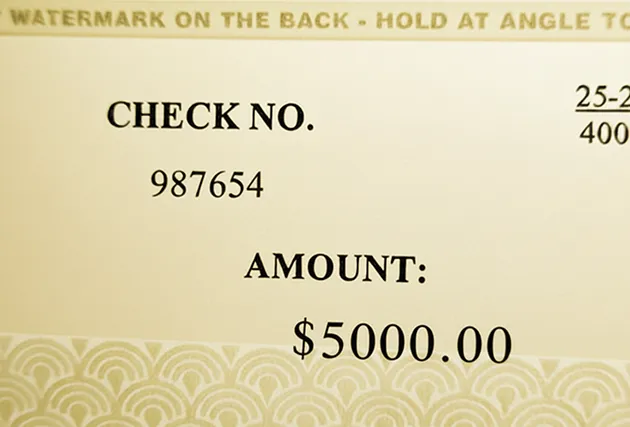
New Yorkers who receive a letter from the State Comptroller’s Office of Unclaimed Funds may have a check for up to $5,000 on the way without ever filing a claim. The check carries a claim ID that can be looked up on the Comptroller’s official site before it is deposited.

Why New York Is Mailing Checks Nobody Asked For
Old bank accounts, uncashed checks, utility deposits, insurance refunds, stock and unused gift cards are turned over to the New York State Comptroller after a period of inactivity, when the law treats them as abandoned property. Until recently the only way to get that money back was to search the state database and file a claim.A 2024 law (A.10219/S.9410), authored by Comptroller Thomas P. DiNapoli and signed by the Governor, changed that for some of the money. Starting in January 2025, the Office of Unclaimed Funds began sending certain newly received properties directly to owners it could verify on its own, without a claim. The program launched with a $250 cap. On April 30, 2026, the Comptroller’s Office announced the cap was rising to up to $5,000, after the program had issued more than 210,000 expedited checks totaling $48 million, an average of $229 per check.
The Comptroller’s Office reported returning $651 million in unclaimed funds in state fiscal year 2025–26, the most in a single year.
The Letter Comes First, Then the Check
The expedited process has two mailings. First, a notification letter from the Office of Unclaimed Funds says that a check is coming. According to the Comptroller’s verification page, the check should arrive within the next 10 days.The check itself arrives in a perforated envelope from the Office of the New York State Comptroller, the same style of sealed mailer used for a W-2 or a paycheck. Once it is opened, a section called the Remittance Advice sits above the check. That section shows two things worth reading before anything else:
• The origin of the funds — the bank, employer, insurer or other business that reported the money to the state.
• A unique claim ID assigned to the payment.
The Comptroller’s Office asks recipients to cash the check when it arrives, so the money does not drop back into the unclaimed funds system.
How to Verify the Check With the Claim ID
Every check from the Office of Unclaimed Funds carries its own claim ID. Entering that ID in the claim status search on the Comptroller’s Verify Your Unclaimed Funds Check page confirms whether the state actually issued it.A few habits keep the check from being confused with a fake:
• Reach the Comptroller’s site by typing osc.ny.gov into the browser, not by clicking a link or using contact details printed in a letter, text or email.
• Compare the origin of the funds in the Remittance Advice with accounts the recipient actually had. An old employer, landlord or bank from a past address is common.
• Treat any request for a fee, a gift card, a wire transfer or bank login details as a stop sign. The state does not charge to return unclaimed funds.
New York has dealt with fraud in this exact shape before. In 2012 the Comptroller warned of mailers carrying counterfeit New York State checks with a forged Comptroller signature, sent alongside a letter telling recipients to wire money to an agent to “activate” the check. A genuine expedited payment needs no activation and asks for nothing back.
Anyone who believes a letter arrived in error, or who wants to report a suspicious one, can reach the Office of Unclaimed Funds through the Contact Us page on the Comptroller’s website.
How to Cash a New York Comptroller Check
A check from the Office of Unclaimed Funds is an ordinary paper check drawn on the State of New York, and it can be cashed or deposited as soon as it arrives. The Comptroller’s Office pays unclaimed funds by check only: its claims page says direct deposit and prepaid cards are not available. When a claim covers several properties, the office usually sends one check for the total.• Deadline to cash it. For checks issued on an approved claim, the Comptroller’s Office says the check can be cashed until December 31 of the following calendar year. A check issued March 1, 2026 is good through December 31, 2027. After that, the owner has to file a new claim. The verification page for expedited checks does not list a separate date; it asks recipients to cash the check when it arrives.
• Where it can be cashed. The Comptroller’s Office does not publish a list of banks or check-cashing locations for these checks. Whether a bank cashes a check for someone who is not its customer, what identification it asks for, and any fee it charges are set by the bank or check-cashing business, not by the state.
• What the state charges. Nothing. The Comptroller’s Office describes claiming unclaimed funds as free, with no fee to release a payment.
• If something goes wrong. The Comptroller’s claims page says to contact the Office of Unclaimed Funds if more than 30 days have passed since a claim was approved without a check arriving, if an uncashed check is lost, or if the recipient is unable to cash it. The office can be reached through the Contact Us page on its official website.
Verifying the claim ID first, as described above, is the step that separates a real Comptroller check from a counterfeit one before it goes to a bank.
Who Gets a Check and Who Still Has to File
The expedited checks cover only part of what the state holds. They go to certain newly reported properties where the Comptroller’s Office can verify the owner from its own records. Amounts above the cap, older property already in the state’s database, and anything the office cannot match to an owner on its own still go through the regular claim process.That means a New Yorker who never received a letter may still have money waiting. A name search on the Comptroller’s unclaimed funds site is free. People who have lived or worked in more than one state can run the same search in each one; the state-by-state unclaimed money search guide links every state’s official program and the multi-state MissingMoney.com search in one place.
Where Class Action Settlement Money Fits In
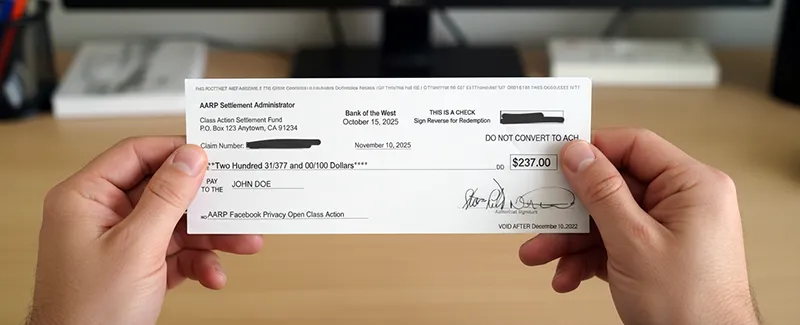
Uncashed class action settlement checks are one of the ways money ends up in a state unclaimed property fund. Most settlement checks carry an expiration date, often 90 to 180 days after they are issued. The Wells Fargo CARES Act settlement checks mailed to California borrowers this summer, for example, are void 90 days after issue.What happens to the money after a check expires depends on the settlement agreement and the court’s orders, not on a uniform rule:
• A second distribution, splitting leftover funds among class members who did cash their checks.
• A cy pres award to a court-approved charity or nonprofit connected to the case.
• Escheatment, where the uncashed amount is turned over to the unclaimed property program of the state where the class member last lived.
Only the third route puts settlement money into a state search like New York’s. When it does, the Remittance Advice on a later expedited check, or the holder name in a search result, may show a settlement administrator or a defendant as the source. A class member who moved and never got a settlement check, or who let one expire, can run the state search and check the settlement website before writing the money off. Guides on tracking down a missing settlement payment and how long settlement checks take cover the administrator side of that search.
The same caution applies to both kinds of money. Neither a state unclaimed funds program nor a court-appointed settlement administrator charges a fee to release a payment; the fee-scam warning signs for settlement claims are the same ones that mark a fake unclaimed funds letter.
What to Do With the Letter
• Keep the letter until the check arrives. If nothing shows up after about 10 days, check the claim status on the Comptroller’s site.• When the check arrives, find the claim ID in the Remittance Advice and verify it before depositing.
• Deposit or cash the check promptly so the money does not become unclaimed again.
• Run a full name search anyway. The expedited check may cover one property while others under the same name still require a claim.
Free settlement alerts
Get notified when new class actions open to claims
Join thousands of readers who get the latest class action settlements you may qualify for — delivered straight to your inbox.
Frequently Asked Questions
Is the New York unclaimed funds letter real?
It can be. Since January 2025 the New York State Comptroller’s Office of Unclaimed Funds has mailed notification letters to verified owners before sending an expedited check. A genuine letter says a check is coming and does not ask for a fee, a bank account number or a payment of any kind. To confirm, look up the claim ID printed with the check using the claim status search on the Comptroller’s official website, reached by typing osc.ny.gov into the browser rather than following a link or contact details in a letter or email.
How long after the letter does the check arrive?
The Comptroller’s Office says the check should arrive within 10 days of the notification letter. It comes in a perforated envelope from the Office of the New York State Comptroller, similar to a W-2 or a paycheck mailer.
Where is the claim ID on a New York unclaimed funds check?
Once the envelope is opened, the claim ID and the origin of the funds appear in the Remittance Advice section printed above the check itself.
Do I have to file a claim to get an expedited payment?
No. Under the Expedited Payment Program the Comptroller’s Office verifies the owner itself and mails the check without a claim being filed. The program applies only to certain newly received properties, and the cap was raised from $250 to up to $5,000 in April 2026. Money that does not qualify still requires a claim through the state’s free unclaimed funds search.
What happens if I do not cash the check?
The Comptroller’s Office advises cashing the check when it arrives so the money does not become unclaimed funds again. For checks issued on an approved claim, the office says the check can be cashed until December 31 of the following calendar year; after that the owner has to file a new claim to get the money back.
How long do I have to cash a New York unclaimed funds check?
The Comptroller’s Office says a check issued on an approved claim can be cashed until December 31 of the following calendar year, so a check issued March 1, 2026 is good through December 31, 2027. If it is not cashed by then, the owner has to file a new claim. For expedited checks, the office asks recipients to cash the check when it arrives.
Can New York unclaimed funds be deposited directly into a bank account?
No. The Comptroller’s Office pays unclaimed funds by paper check, and its claims page says direct deposit and prepaid cards are not available. The check itself can be deposited or cashed like any other check.
What if a bank will not cash a New York unclaimed funds check?
The Comptroller’s Office does not publish a list of banks that cash its checks, and each bank or check-cashing business sets its own rules and fees. The office’s claims page says to contact the Office of Unclaimed Funds through its official website if a recipient is unable to cash the check, has lost it, or has not received it more than 30 days after approval.
Can an uncashed class action settlement check end up as unclaimed funds?
Sometimes. Settlement checks usually expire after a set period, often 90 to 180 days. What happens to the money afterward is set by the settlement agreement and court orders: some agreements redistribute it to class members who cashed their checks, some send it to a court-approved charity, and some direct it to the unclaimed property program of the state where the class member last lived. Only in that last case would the money appear in a state search.
Does anyone charge a fee to release New York unclaimed funds?
The Comptroller’s Office does not charge to search for or return unclaimed funds. A letter, call or email that asks for money up front, gift cards or a wire transfer before a check can be released is a sign of fraud, and suspicious letters or checks can be reported to the Comptroller’s Office through its official website.
Sources
• Office of the New York State Comptroller — Verify Your Unclaimed Funds Check• Office of the New York State Comptroller — Claim Submitted—What’s Next?
• Office of the New York State Comptroller — Unclaimed Funds
• Office of the New York State Comptroller — Fast-Track Payment Program Returns $48 Million in Unclaimed Funds (April 30, 2026)
• Office of the New York State Comptroller — Expedited Payments of Unclaimed Funds
• Office of the New York State Comptroller — New Law Makes It Easier for Comptroller to Return Your Lost Money (November 2024)
• Office of Unclaimed Funds — Annual Report, State Fiscal Year 2025–26 (PDF)
• New York State Senate — DiNapoli Warns of Lottery Scam Using Fake Checks (2012)