People who told debt collector TrueAccord in writing to stop contacting them, including by replying “STOP” to a collection text, may be covered by two proposed class actions, filed October 30 and November 4, 2026, alleging TrueAccord kept sending collection messages anyway. No class has been certified and there is nothing to file yet.

Allegations Only · No Settlement Yet
This article describes a class action complaint. The statements below are unproven allegations. TrueAccord Corp. has not been found liable, there is no certified class, and nothing to claim at this time. This page is informational and is not legal advice.
What Is This About?
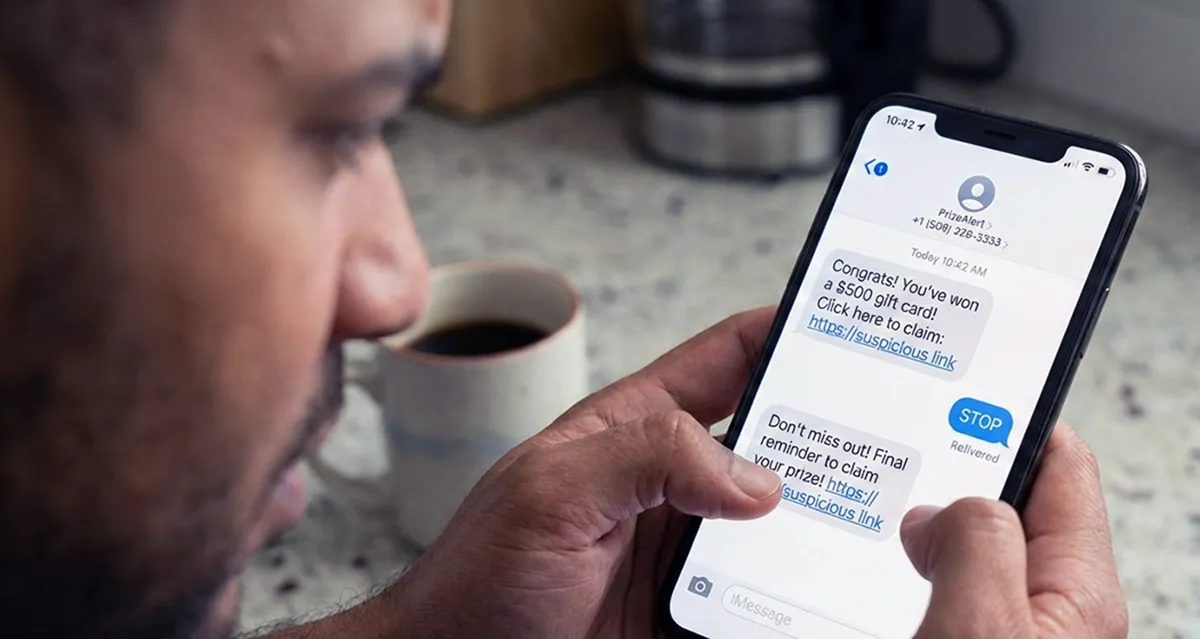
A proposed class action filed on October 30, 2026 alleges that TrueAccord Corp., a nationwide debt collector based in Lenexa, Kansas, kept sending collection messages to consumers after they told it in writing to stop. The case, Cartagena v. TrueAccord Corp., No. 2:26-cv-08322, is in the U.S. District Court for the Eastern District of Pennsylvania and is assigned to Judge Mia Roberts Perez.The plaintiff, a Philadelphia County resident, says TrueAccord began texting her in July 2025 about a $46.76 balance on a Klarna account. According to the complaint, she replied “stop” to the texts on or about July 21, 2025, and TrueAccord still emailed her on September 17, 2026 to collect the same debt. She alleges that this violated the Fair Debt Collection Practices Act (FDCPA). TrueAccord has not yet responded in court.
Free settlement alerts
Get notified when new class actions open to claims
Join thousands of readers who get the latest class action settlements you may qualify for — delivered straight to your inbox.
What Does the Complaint Allege?
The complaint says TrueAccord texts consumers from a short code and follows up by email, with messages that identify it as a debt collector, state a past-due balance and point to a website or phone number to pay. It alleges that the messages TrueAccord sent the plaintiff were substantially similar to messages it sent to other consumers across the country.The core claim is that TrueAccord either ignored written stop requests or did not put safeguards in place to honor them. The plaintiff alleges that the messages she received after replying “stop” wasted her time, annoyed her and invaded her privacy, and that other consumers who asked TrueAccord to stop received the same or similar messages.
What the FDCPA Says About Stop Requests
Section 1692c(c) of the FDCPA says that once a consumer notifies a debt collector in writing that the consumer refuses to pay a debt or wants the collector to stop communicating, the collector may not contact the consumer about that debt again, with three exceptions: to say it is ending its collection efforts, to say the collector or creditor may use a specific remedy it ordinarily uses, or to say it intends to use a specific remedy.The complaint argues that a “stop” reply to a collection text is a written request under that section, and that TrueAccord’s later email fit none of the three exceptions. TrueAccord has not yet filed a response, and the court has not ruled on that question in this case.
Who Could Be Covered?
The complaint proposes two groups. The nationwide class is everyone in the United States whom TrueAccord sent a collection text, call or email in the year before October 30, 2026, after that person had told TrueAccord in writing that they refused to pay or wanted it to stop contacting them. The Pennsylvania subclass covers the same contacts with Pennsylvania residents on consumer debts. TrueAccord and its employees are excluded.Klarna is named only as the original creditor on the plaintiff’s account and is not a defendant. TrueAccord collects for many creditors, so the proposed class is not limited to Klarna accounts.
What Is the Plaintiff Asking For?
The complaint asks the court to certify both classes and to award actual and statutory damages under the FDCPA, an order stopping the practice, and attorneys’ fees and costs. In a class action, the FDCPA limits statutory damages for the class to the lesser of $500,000 or 1% of the debt collector’s net worth, on top of the named plaintiff’s own award of up to $1,000. The plaintiff is represented by Kimmel & Silverman, P.C. and Shamis & Gentile, P.A.A Second Lawsuit, Filed in New Jersey
A second proposed class action making the same core claim was filed November 4, 2026 in the U.S. District Court for the District of New Jersey: Ricca v. TrueAccord Corp., No. 2:26-cv-14353. The plaintiff, a Passaic County, New Jersey resident, says TrueAccord texted him from short code 58469 about a consumer debt on August 3, September 7, September 11, September 14 and September 19, 2026. According to the complaint, he replied “STOP” on or about September 22, 2026, TrueAccord confirmed by text that he had unsubscribed and would no longer receive text messages, and it then emailed him on October 6, 2026 to collect the same debt.The New Jersey complaint brings a single count under the FDCPA’s cease-communication provision, 15 U.S.C. § 1692c(c). It proposes a nationwide class of people TrueAccord sent a collection text or email in the year before the November 4, 2026 filing, after they had told it in writing that they refused to pay or wanted it to stop contacting them, and it seeks actual and statutory damages, attorneys’ fees and a jury trial. The complaint does not name the original creditor. These are allegations; TrueAccord has not responded in court.
What Happens Next?
TrueAccord will have a chance to respond to each complaint, which could include a motion to dismiss. The plaintiff would later have to ask the court to certify a class. If the case settles or the plaintiff wins after certification, class members would be notified, and OpenClassActions.com will cover it.Questions
Who would be covered by the TrueAccord class action?
The complaint proposes a nationwide class of people TrueAccord sent a collection text, call or email in the year before October 30, 2026, after they had told it in writing that they refused to pay or wanted it to stop contacting them, plus a Pennsylvania subclass. No class has been certified.
Does replying STOP to a debt collection text count as a written request?
That is the plaintiff’s position in this case: the complaint argues that a STOP reply to a collection text is a written request to cease communication under the Fair Debt Collection Practices Act. TrueAccord has not yet responded in court, and no judge has ruled on the question in this case.
Is Klarna being sued?
No. Klarna is named in the complaint only as the original creditor on the plaintiff’s account. The only defendant is TrueAccord Corp., the debt collector.
Is there a TrueAccord settlement or claim form?
No. The first lawsuit was filed on October 30, 2026 in Pennsylvania and a second on November 4, 2026 in New Jersey. There is no settlement, certified class or claim form.
Sources
• Class action complaint, Cartagena v. TrueAccord Corp., No. 2:26-cv-08322 (E.D. Pa., filed October 30, 2026)• Docket, Cartagena v. TrueAccord Corp., via CourtListener
• Docket, Ricca v. TrueAccord Corp., No. 2:26-cv-14353 (D.N.J., filed November 4, 2026), via CourtListener
• 15 U.S.C. § 1692c, Fair Debt Collection Practices Act (Cornell Legal Information Institute)