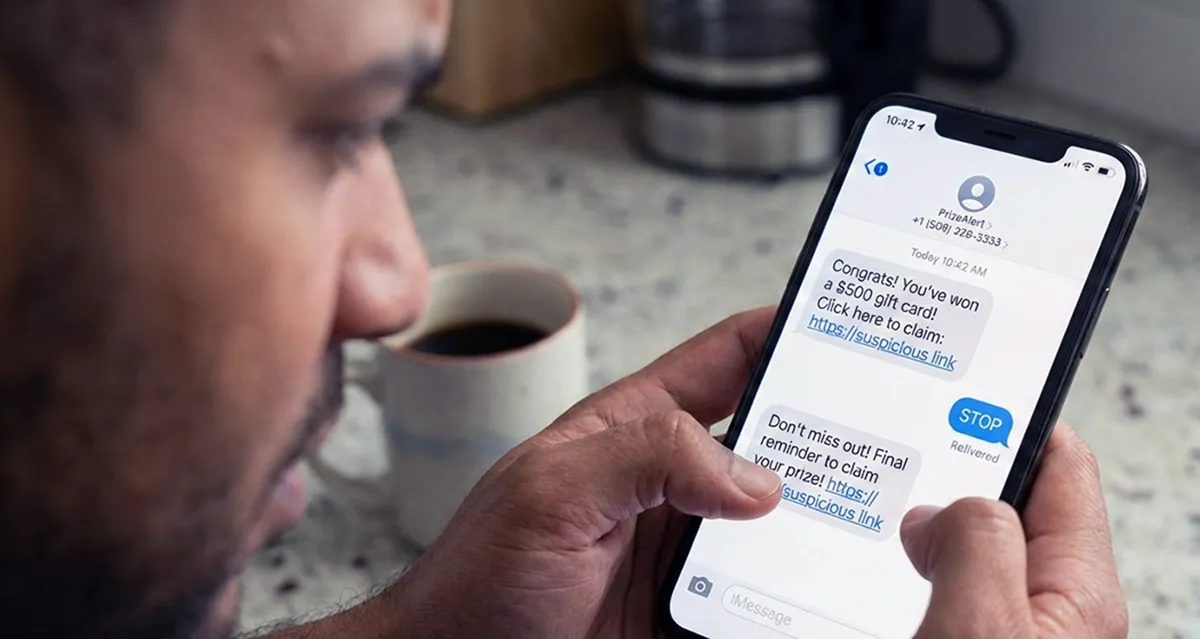
People on the National Do Not Call Registry who got more than one telemarketing call from Alexander Shunnarah Trial Attorneys may be covered by a proposed class action alleging the law firm placed those calls and did not show its name on caller ID. No class has been certified and there is nothing to file yet.


Allegations Only · No Settlement Yet
This article describes a class action complaint. The statements below are unproven allegations. Alexander Shunnarah Trial Attorneys has not been found liable, there is no certified class, and nothing to claim at this time. This page is informational and is not legal advice.
What Is This About?
Alexander Shunnarah Trial Attorneys, a personal injury law firm the complaint describes as headquartered in Birmingham, Alabama, is facing a proposed class action in the U.S. District Court for the Northern District of Illinois. The case, Rihani v. Alexander Shunnarah Trial Attorneys, No. 1:26-cv-12982, was filed October 21, 2026 by Perrong Law LLC. It is not a settlement: there is no fund, no administrator, no claim form and no deadline.The named plaintiff, a Cook County, Illinois resident, alleges that the firm made telemarketing calls to his personal phone number, which he says has been on the National Do Not Call Registry since 2010, without his consent. The complaint also claims the calls did not transmit the firm’s name as caller ID information. It brings two counts under the Telephone Consumer Protection Act (TCPA). As of October 22, 2026, the firm had not responded in court, and none of the allegations has been proven.
Free settlement alerts
Get notified when new class actions open to claims
Join thousands of readers who get the latest class action settlements you may qualify for — delivered straight to your inbox.
The Calls Described in the Complaint
The complaint says the calls arrived over two days in September 2025. On September 10, the plaintiff allegedly missed at least five calls, all from Chicago-area numbers sharing the same prefix. On September 11 he missed two more from the same group of numbers, then answered a call from a different number and was greeted by a caller who identified herself as “Diana” from “Shunnarah Law.” According to the complaint, he told her he was in a rush, asked her not to call or text him back and said he would reach out himself, then hung up.Later that morning, the complaint says, another call came from a caller who identified himself as “Sam” from Spartan Law. The plaintiff’s lawyer then called that number back and asked for the caller’s website; the complaint says he was given the website address of Alexander Shunnarah Trial Attorneys, and that its home page identified the firm by that name. A final call that day came from a caller named “Johnny,” who also said he was with Spartan Law. The plaintiff allegedly told him not to call or text and ended the call.
The complaint alleges that the plaintiff never did business with the firm, never knowingly gave it his number and never agreed to receive its calls. It characterizes the calls as telemarketing made to advertise the firm’s legal services and to sign the plaintiff up as a client. Spartan Law is not named as a defendant; the complaint attributes every call to Alexander Shunnarah Trial Attorneys.
The Caller ID Claim
The second part of the case is about what showed up on the plaintiff’s phone. According to the complaint, his lawyer ran a lookup of the caller name (CNAM) records for all eight numbers that called. Each returned “CHICAGO IL” rather than a business name, and each listed the same phone carrier, Commio. The complaint alleges that Commio lets its customers set the caller name to their own name and that, when a customer does not, the default setting sends something other than the caller’s name, which it says is what happened here.A Federal Communications Commission rule, 47 C.F.R. § 64.1601(e), requires anyone engaged in telemarketing to transmit caller identification information: a calling number and, when the telemarketer’s carrier makes it available, the telemarketer’s name. The rule also requires that the number shown allow the person called to make a do-not-call request during regular business hours. The complaint relies on a 2025 federal court decision in Michigan for its position that this caller ID rule can be enforced through the TCPA’s private right of action. Whether that reading applies here is a question for the court.
The Do Not Call Rule
The TCPA lets a person sue over more than one telephone solicitation within 12 months made in violation of the FCC’s telemarketing rules (47 U.S.C. § 227(c)(5)). One of those rules, 47 C.F.R. § 64.1200(c)(2), bars telephone solicitations to residential subscribers whose numbers are on the National Do Not Call Registry. The complaint alleges the plaintiff’s number is used only for personal and household purposes, was registered more than 31 days before the calls and was called repeatedly without consent. The TCPA explainer covers the statute’s other rules on calls and texts.Who Is in the Proposed Classes?
The complaint proposes two nationwide classes and says it brings the case under Federal Rule of Civil Procedure 23(b)(2), the provision used for classes seeking court orders that apply to everyone in the group.The National DNC Class covers people in the United States whose numbers had been on the National Do Not Call Registry for at least 31 days and who received more than one telemarketing call or text from or on behalf of the firm within a 12-month period, from four years before the complaint was filed through trial.
The Telemarketing Caller ID Class covers people in the United States who were sent two or more telemarketing calls by the firm, or a third party acting for it, within a 12-month period during the four years before the complaint was filed, where the call did not transmit a calling number together with the firm’s or telemarketer’s name, did not transmit a valid calling number at all, or transmitted a number that could not be used to make a do-not-call request during regular business hours.
Both classes exclude the lawyers in the case, the firm and entities it controls, its agents and employees, and any judge assigned to the case along with the judge’s staff and immediate family. The complaint estimates the classes number at least in the hundreds and says members can be identified through the firm’s dialer records and other phone records. A court would have to certify a class before anyone is formally part of the case.
What the Lawsuit Seeks
The complaint asks for an injunction barring the firm from making telemarketing calls to numbers on the National Do Not Call Registry, to numbers that have asked it to stop, or without the caller ID information the rules require. It also asks for statutory damages of $500 per violation, increased to as much as $1,500 per violation if the court finds the violations were willful or knowing, along with class certification, appointment of the plaintiff’s lawyers as class counsel, and attorneys’ fees and costs. It demands a jury trial. These are requests; no court has awarded anything.What Happens Next
As of October 22, 2026, the complaint was the only entry on the public docket. The firm must be served and given time to respond, which can take the form of an answer or a motion to dismiss. Whether a class is certified is a separate, later question. If the case ever produces a class settlement, a court-approved notice would describe who qualifies and how any claims would be handled. Other robocall and telemarketing cases, including settlements still accepting claims, are listed on the TCPA class actions page.Is There Anything to File?
There is nothing to file. At the complaint stage there is no claim form, settlement website or deadline, and people who fit the proposed class definitions are not required to take any step for the case to move forward. If a class is certified or a settlement is reached, the court would approve a notice explaining who is covered and what options, if any, are available.Questions
Is there a class action against Alexander Shunnarah Trial Attorneys?
A proposed class action, Rihani v. Alexander Shunnarah Trial Attorneys, No. 1:26-cv-12982, was filed on October 21, 2026 in the U.S. District Court for the Northern District of Illinois. It is at the complaint stage. No class has been certified, the firm has not responded in court, and there is nothing to claim.
What does the complaint say about caller ID?
The complaint says the plaintiff’s lawyer looked up the caller name data for the eight numbers that called him and that each returned a location, Chicago, Illinois, rather than the name of a business. It alleges the calling carrier allowed customers to set an accurate caller name and that the default setting was used instead.
Why does the complaint mention Spartan Law?
According to the complaint, two of the callers said they were with Spartan Law, while an earlier caller said she was with Shunnarah Law. The complaint says that when the plaintiff’s lawyer called one of the numbers back and asked for a website, he was given an address for Alexander Shunnarah Trial Attorneys. Spartan Law is not named as a defendant.
How much money does the Shunnarah TCPA lawsuit seek?
The complaint asks for statutory damages of $500 per violation and up to $1,500 per violation if the court finds the violations were willful or knowing, plus an order barring the calls described. Those are requests, not amounts anyone has been awarded.
Is there anything to file in the Alexander Shunnarah case?
Nothing can be filed at this stage because there is no settlement, claim form or deadline. People who fit the proposed class definitions are not required to take any step for the case to proceed. If a class is certified or the case settles, a court-approved notice would explain who is covered and any options and deadlines.
Sources
• Class Action Complaint, Rihani v. Alexander Shunnarah Trial Attorneys, No. 1:26-cv-12982 (N.D. Ill., filed October 21, 2026): complaint (PDF) and docket.• Telephone Consumer Protection Act, 47 U.S.C. § 227(c)(5).
• FCC Do Not Call rule: 47 C.F.R. § 64.1200.
• FCC caller ID rule for telemarketing: 47 C.F.R. § 64.1601.