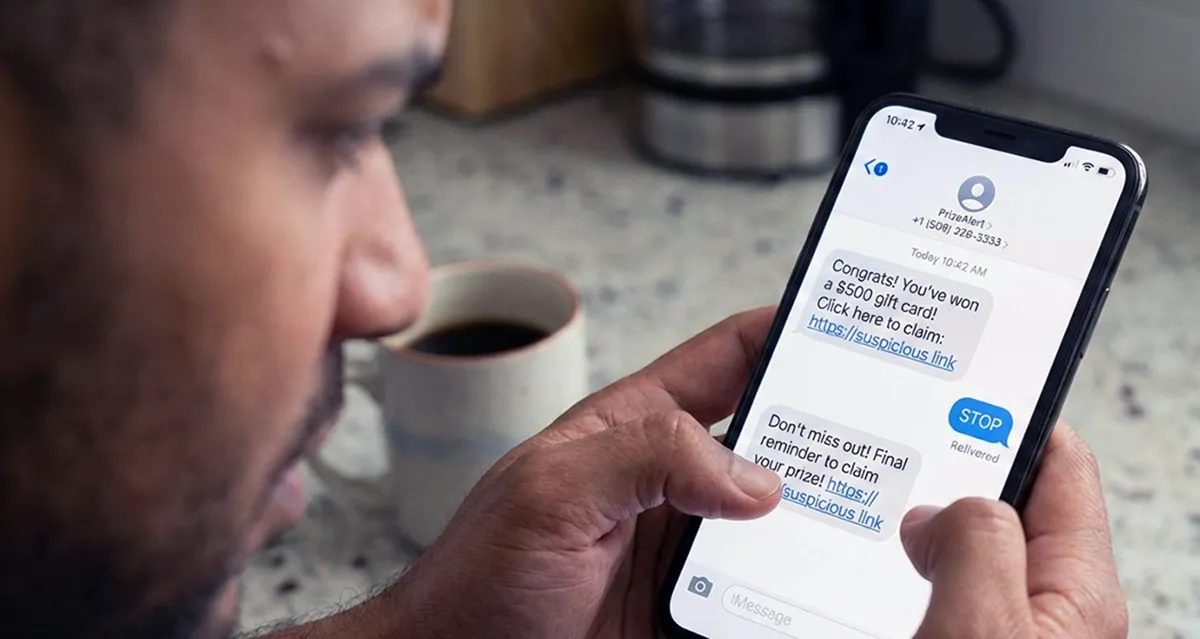
People in the U.S. who received Groupon marketing texts after asking not to get them may be covered by a proposed class action alleging Groupon ignored those stop requests in violation of the Telephone Consumer Protection Act. No class has been certified and there is nothing to file yet.

Allegations Only · No Settlement Yet
This article describes a class action complaint. The statements below are unproven allegations. Groupon has not been found liable, there is no certified class, and nothing to claim at this time. This page is informational. It is not legal advice.
What the Groupon Lawsuit Is About
A proposed class action accuses Groupon, Inc., the Chicago-based online marketplace for local deals, of sending promotional text messages to people who had already told the company to stop. The case, Freund v. Groupon, Inc., was filed June 12, 2026 in the U.S. District Court for the Northern District of California as No. 3:26-cv-05733.On October 14, 2026, Judge Jacqueline Scott Corley granted Groupon’s motion to transfer the case to Illinois, based on a forum selection clause in Groupon’s Terms of Use. The Northern District of Illinois received it on October 16, 2026 as No. 1:26-cv-12735, assigned to Judge Charles P. Kocoras. Groupon has not answered the complaint, and none of its allegations have been decided.
Free settlement alerts
Get notified when new class actions open to claims
Join thousands of readers who get the latest class action settlements you may qualify for — delivered straight to your inbox.
What the Complaint Alleges
According to the complaint, the named plaintiff’s cell phone serves as his residential line and is used only for personal matters. He alleges that on June 3, 2026 he told Groupon to stop sending marketing messages and revoked any earlier consent, and that Groupon kept texting him anyway, including on June 5 and June 11, 2026. The complaint says those texts promoted discounted deals, such as a massage and a Father’s Day gift.The plaintiff argues that his request to stop was a directive to put his number on Groupon’s internal do-not-call list, and that continued texts show Groupon either lacked the required do-not-call procedures or did not follow them. The complaint estimates the class at least in the thousands.
The Rules the Complaint Relies On
The single count is brought under the Telephone Consumer Protection Act, 47 U.S.C. § 227(c)(5), and the FCC rule at 47 C.F.R. § 64.1200(d). That rule bars businesses from making telemarketing calls, which courts and the FCC have applied to text messages, unless they keep a list of people who ask not to be contacted. It also requires a written do-not-call policy available on demand and training for anyone involved in telemarketing.Unlike claims based on the National Do Not Call Registry, an internal do-not-call claim turns on whether the business honored a request made directly to it. OpenClassActions.com tracks other cases built on the same theory on its TCPA class actions page.
Who Is in the Proposed Class?
The complaint proposes one class, which it calls the Internal Call List Class:All persons within the United States who received one or more messages from Defendant promoting its goods and/or services, who had previously requested not to receive telemarketing messages, within four years of the filing of this action.
The class excludes Groupon, entities it controls, its agents and employees, and the assigned judge and court staff. The complaint says class members can be identified from phone records and Groupon’s own records. A court has not certified the class, and the definition can change.
Why the Case Moved to Chicago
Groupon asked the California court to transfer the case to Illinois or, in the alternative, to send it to arbitration. The order summarizes Groupon’s evidence that the plaintiff’s phone number was signed up for Groupon texts through a promotional web page stating that clicking the button meant agreeing to Groupon’s Terms, including arbitration, and that the Terms in effect at the time required disputes to be filed in Cook County, Illinois or the Northern District of Illinois. Groupon’s records, as described in the order, also show a STOP reply about 15 minutes after that sign-up, which Groupon confirmed by text.Judge Corley found the sign-up page gave reasonably conspicuous notice of the Terms, making the forum clause enforceable, and found the plaintiff had not shown that public-interest factors overwhelmingly weighed against transfer. Because she granted the transfer, the order did not decide Groupon’s alternative request to compel arbitration.
What the Lawsuit Seeks
The complaint asks the court to certify the class and appoint the plaintiff’s lawyers, KJC Law Group, as class counsel. It seeks $500 in statutory damages for each negligent violation and up to $1,500 for each knowing or willful violation, a declaration that Groupon’s practices violate the TCPA, an injunction against future violations, attorneys’ fees, and a jury trial.What Happens Next
The case now proceeds before Judge Kocoras in Chicago. Groupon has not yet filed an answer. The arbitration question that the California court left open could come back in Illinois, and the outcome would affect whether the case continues as a class action in court at all. Class certification, discovery and any settlement talks would come later. OpenClassActions.com will update this page as the docket develops.This case is separate from the Groupon website accessibility class action, which raises different claims.
Questions
Is there a Groupon text message settlement?
There is no settlement in Freund v. Groupon, Inc. As of October 17, 2026 the case is a proposed class action at the complaint stage. No class has been certified, Groupon has not been found liable, and there is no claim form.
Why was the Groupon lawsuit moved to Illinois?
Groupon’s Terms of Use say disputes must be brought in state or federal court in Cook County, Illinois. On October 14, 2026 Judge Jacqueline Scott Corley of the Northern District of California found that Groupon’s text sign-up page gave reasonably conspicuous notice of those terms, enforced the forum clause, and transferred the case to the Northern District of Illinois.
What rule does the lawsuit say Groupon broke?
The complaint relies on 47 C.F.R. § 64.1200(d), an FCC rule under the Telephone Consumer Protection Act that requires businesses sending telemarketing calls or texts to keep an internal do-not-call list, maintain a written policy and train staff to honor stop requests. It sues under 47 U.S.C. § 227(c)(5), which provides a private right of action for those violations.
How much money does the TCPA allow per text?
Section 227(c)(5) of the TCPA sets statutory damages of $500 per violation, which a court may increase to as much as $1,500 per violation if it finds the violation was willful or knowing. The Groupon complaint seeks those amounts for the proposed class, but nothing has been awarded.
Is this the same as the Groupon website accessibility lawsuit?
No. The text message case is a separate lawsuit about marketing texts under the TCPA. OpenClassActions.com covers the earlier Groupon website accessibility class action on its own page.
Sources
- Freund v. Groupon, Inc., No. 1:26-cv-12735 — docket, U.S. District Court for the Northern District of Illinois (CourtListener)
- Order granting motion to transfer venue, October 14, 2026 (CourtListener)
- Freund v. Groupon, Inc., No. 3:26-cv-05733 — original docket and complaint, U.S. District Court for the Northern District of California (CourtListener)