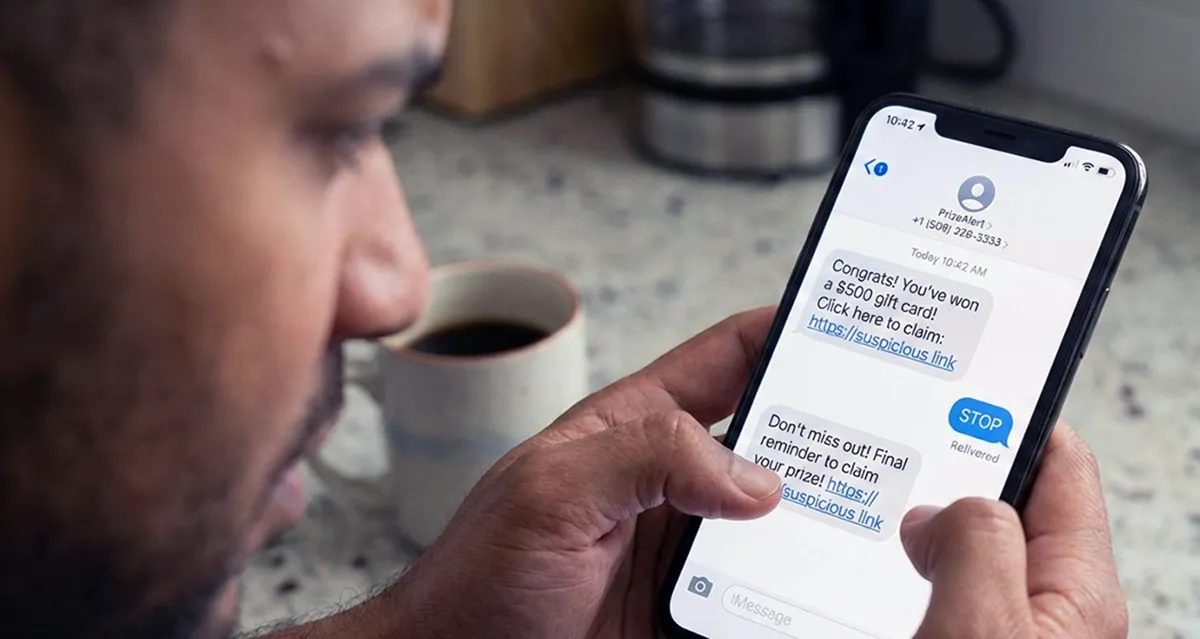
People who got Fender marketing texts while their number was on the National Do Not Call Registry, or after asking Fender to stop, may be covered by a proposed class action alleging Fender Musical Instruments Corporation sent marketing texts without consent and ignored do-not-call requests. No class has been certified and there is nothing to file yet.

Allegations Only · No Settlement Yet
This article describes a class action complaint. The statements below are unproven allegations. Fender Musical Instruments Corporation has not been found liable, there is no certified class, and nothing to claim at this time. This page is informational and is not legal advice.
What Is This About?
Fender Musical Instruments Corporation, the Scottsdale, Arizona–based guitar maker, was sued on October 13, 2026 in the U.S. District Court for the District of Oregon, Portland Division. The case is Kliewer v. Fender Musical Instruments Corporation, No. 3:26-cv-02238.The complaint, brought by a Portland resident who says he has never been a Fender customer, claims Fender sent him dozens of marketing texts without his consent, kept texting after he put his number on the National Do Not Call Registry, and kept texting after two written requests to stop. It says that violates the federal Telephone Consumer Protection Act (TCPA) and Oregon’s Unlawful Trade Practices Act. Fender has not responded, and the court has not ruled.
This is a different case from the Fender website cookie-tracking class action filed in California in June 2026, which concerns tracking on fender.com rather than text messages.
Free settlement alerts
Get notified when new class actions open to claims
Join thousands of readers who get the latest class action settlements you may qualify for — delivered straight to your inbox.
What the Lawsuit Alleges
According to the complaint:- Fender sent the plaintiff at least 58 texts promoting its products from SMS short code 71642, which the complaint lists by date from September 5, 2025 to February 25, 2026 and calls a non-exhaustive list
- He never consented to Fender’s marketing and has never bought from Fender; the number is a personal cell phone he has used for more than 10 years as his residential line
- On November 10, 2025 he sent Fender a letter asking to be put on its do-not-call list, and the texts kept coming
- He registered his number on the National Do Not Call Registry on November 13, 2025
- On December 29, 2025 he sent a second letter, telling Fender he worked long hours as a flagger and the texts were distracting him on the job; Fender sent more than two similar texts more than 10 days after receiving it
- None of the texts identified the legal name of the seller or of the company sending them
None of the allegations has been tested in court.
The Rules the Complaint Relies On
The TCPA’s do-not-call provisions bar telephone solicitations to residential numbers on the National Do Not Call Registry, and the Federal Communications Commission’s telemarketing rules require companies that telemarket to keep an internal do-not-call list, record stop requests, and identify themselves. The complaint says a stop request must be honored within no more than 10 business days. A separate FCC caller ID rule requires telemarketers to transmit a number a consumer can use to make a do-not-call request during business hours. The TCPA lets a person who receives more than one violating call in 12 months sue for up to $500 per violation, and a court may treble that to $1,500 if the violation was willful or knowing.The complaint treats each text as a “call.” Courts have split on that point. On July 14, 2026, in Steidinger v. Blackstone Medical Services, the Seventh Circuit held that a text message is not a “telephone call” under the TCPA provision these do-not-call claims are brought under, as explained in OCA’s report on that ruling. Oregon is in the Ninth Circuit, where that decision is not binding, and the complaint cites a July 2025 decision from the District of Oregon that let similar text-message claims go forward.
The Oregon claim rests on ORS 646.569, which bars telephone solicitation of a number on the federal Do Not Call Registry. Under ORS 646.608(1)(ff), a violation of that statute is also an unlawful trade practice, and ORS 646.638 lets a person who suffers an ascertainable loss from a willful violation recover actual damages or $200, whichever is greater; in a class action, statutory damages require a reckless or knowing violation.
Who Is in the Proposed Classes?
The complaint proposes three nationwide classes, each reaching back four years before the case was filed:- Do Not Call Registry class: people whose residential numbers had been on the National Do Not Call Registry for at least 31 days and who received more than one Fender telemarketing call within 12 months (the complaint counts each text as a call)
- Caller ID class: people who received Fender telemarketing without caller ID showing the seller’s name or a number they could call during business hours to make a do-not-call request
- Procedures class: people who were not Fender customers, had asked Fender to stop, and still received two or more Fender telemarketing calls or texts within 12 months
It also proposes an Oregon class of state residents who, on or after January 1, 2026 and within a year before the suit, received a Fender text or call encouraging a purchase while their number had been on the Do Not Call Registry for at least 31 days. Fender, its agents and employees, and the assigned judges are excluded. The complaint estimates the classes at least in the thousands. A court would have to certify a class before anyone is formally part of the case.
What the Lawsuit Seeks
The complaint brings six TCPA counts, an Oregon Unlawful Trade Practices Act count and a count for injunctive relief. It asks for statutory damages of $1,500 per TCPA violation, $200 per Oregon violation for the plaintiff and $200 per member of the Oregon class, punitive damages under Oregon law, actual damages, an order barring Fender from further violations, and attorney fees and costs. Those are requests, not amounts anyone has been awarded.What Happens Next
Fender must be served and respond to the complaint, which in similar cases has often meant a motion to dismiss. Whether a class is ever certified is a separate, later question. If this case reaches a class settlement, a court-approved notice would explain who qualifies and how to file a claim. Similar suits over texts that kept coming after a stop request have been filed against LA Fitness and TikTok, and every TCPA case OCA follows is listed on the TCPA class actions page.Questions
Is there a Fender text message class action?
Yes. Kliewer v. Fender Musical Instruments Corporation, No. 3:26-cv-02238, was filed on October 13, 2026 in the U.S. District Court for the District of Oregon, Portland Division. It is at the complaint stage. No class has been certified, there is no settlement, and there is nothing to claim yet.
What does the Fender text message lawsuit claim?
The complaint says Fender sent a Portland man at least 58 marketing texts from short code 71642 between September 2025 and February 2026, although he had never been a Fender customer, never consented, put his number on the National Do Not Call Registry, and twice sent Fender written do-not-call requests. It argues this violated the Telephone Consumer Protection Act, FCC telemarketing rules and Oregon’s Unlawful Trade Practices Act.
Who is in the proposed Fender classes?
The complaint proposes three nationwide classes covering the four years before filing: people on the National Do Not Call Registry who got more than one Fender telemarketing call or text in 12 months; people who got Fender telemarketing without caller ID that identified the seller or allowed a do-not-call request; and non-customers who got two or more Fender calls or texts in 12 months after asking them to stop. It also proposes an Oregon class for Do Not Call Registry numbers texted or called on or after January 1, 2026. A court has not certified any class.
How much money is the Fender lawsuit seeking?
The complaint asks for statutory damages of $1,500 per TCPA violation, which is the trebled amount the TCPA allows for willful or knowing violations, plus $200 per Oregon Unlawful Trade Practices Act violation for the plaintiff and $200 per Oregon class member, punitive damages, and an order stopping the conduct. They are requests, not amounts anyone has been awarded.
Is this the same as the Fender cookie tracking lawsuit?
No. Ewart and Johnston v. Fender Musical Instruments Corp., filed in June 2026 in the Northern District of California, is about third-party tracking cookies on fender.com. The October 2026 Oregon case is about marketing text messages. They are separate cases with different plaintiffs, courts and proposed classes.
Sources
• Class Action Complaint, Kliewer v. Fender Musical Instruments Corporation, No. 3:26-cv-02238 (D. Or., filed October 13, 2026): complaint (PDF) and docket.• FCC telemarketing rules: 47 C.F.R. § 64.1200.
• Oregon Revised Statutes chapter 646, including ORS 646.569, 646.608 and 646.638: Oregon State Legislature.