Companies that bought MDI or TDI chemicals directly from BASF, Covestro, Dow, Huntsman or Wanhua since January 1, 2016 may qualify to claim a pro rata share of $37.65 million from the diisocyanates price-fixing class action settlements. Claims close October 13, 2026 for the Wanhua settlement, October 19, 2026 for Dow and Huntsman, and November 2, 2026 for BASF and Covestro.

Current Status
Claims are open. Five settlements totaling $37,650,000 have been reached in In re: Diisocyanates Antitrust Litigation, and each carries its own filing deadline: October 13, 2026 for Wanhua Chemical (America), October 19, 2026 for Dow and Huntsman, and November 2, 2026 for BASF and Covestro. The same dates are the exclusion and objection deadlines for those settlements. The court has scheduled a fairness hearing for December 7, 2026 at 1:00 p.m. ET, and has not yet decided whether to grant final approval, so no payment date has been announced. A direct purchaser who has not yet filed should submit a Claim Form by the earliest deadline that applies to its purchases.Free settlement alerts
Get notified when new class actions open to claims
Join thousands of readers who get the latest class action settlements you may qualify for — delivered straight to your inbox.
What Changed Recently?
The Dow and Huntsman settlement, executed July 29, 2026, is the most recent of the five and the largest: Dow agreed to pay $14,000,000 and Huntsman International $6,000,000. It followed settlements with BASF Corporation ($2,900,000, plus $100,000 toward the cost of notifying the class), Covestro LLC ($7,000,000) and Wanhua Chemical (America) ($7,750,000). With those agreements in place, every company named as a defendant in the consolidated case has reached a settlement, and the notice program that opened the current claim windows is underway.The underlying case is a multidistrict antitrust litigation in which the plaintiffs allege that the manufacturers conspired to fix prices and restrict the supply of methylene diphenyl diisocyanate (MDI) and toluene diisocyanate (TDI) sold in or shipped to the United States, in violation of Section 1 of the Sherman Act. The complaint alleges the conspiracy was carried out through coordinated price-increase announcements and planned manufacturing shutdowns that tightened supply. Each settling defendant denies the allegations and denies any liability or wrongdoing; the settlements were reached to avoid the costs and risks of continued litigation, without any admission. The court has not ruled on the merits and has not decided in favor of either side.
Who Qualifies?
The settlement classes cover all persons and entities in the United States, its territories and the District of Columbia that purchased or received MDI or TDI products directly — including through controlled subsidiaries, agents, affiliates or joint ventures — from the defendants, from Covestro AG, Wanhua Chemical Group Co., Ltd., Mitsui Chemicals, Inc., Mitsui Chemicals America, Inc., MCNS or MCNS Polyurethanes USA Inc., or from the subsidiaries, affiliates or successors of any of those companies, at any time during the class period.The class period starts January 1, 2016 and runs through the execution date of each individual settlement, which is why the classes do not all end on the same day: April 2, 2026 for BASF, May 8, 2026 for Covestro, July 9, 2026 for Wanhua and July 29, 2026 for Dow and Huntsman. "Products" means every kind of MDI and TDI regardless of the trade name it was sold under.
Excluded are the defendants and any companies named in the complaints, the alleged co-conspirators and their parents, subsidiaries and affiliates; state and federal government entities; the judicial officers presiding over the action, their immediate families and staff, and any juror assigned to the case; and any class member who timely and validly excludes itself. Indirect buyers are not covered — a company that bought polyurethane foam, insulation, coatings or finished goods made with MDI or TDI, rather than the chemicals themselves, is not part of these classes.
What Are MDI and TDI?
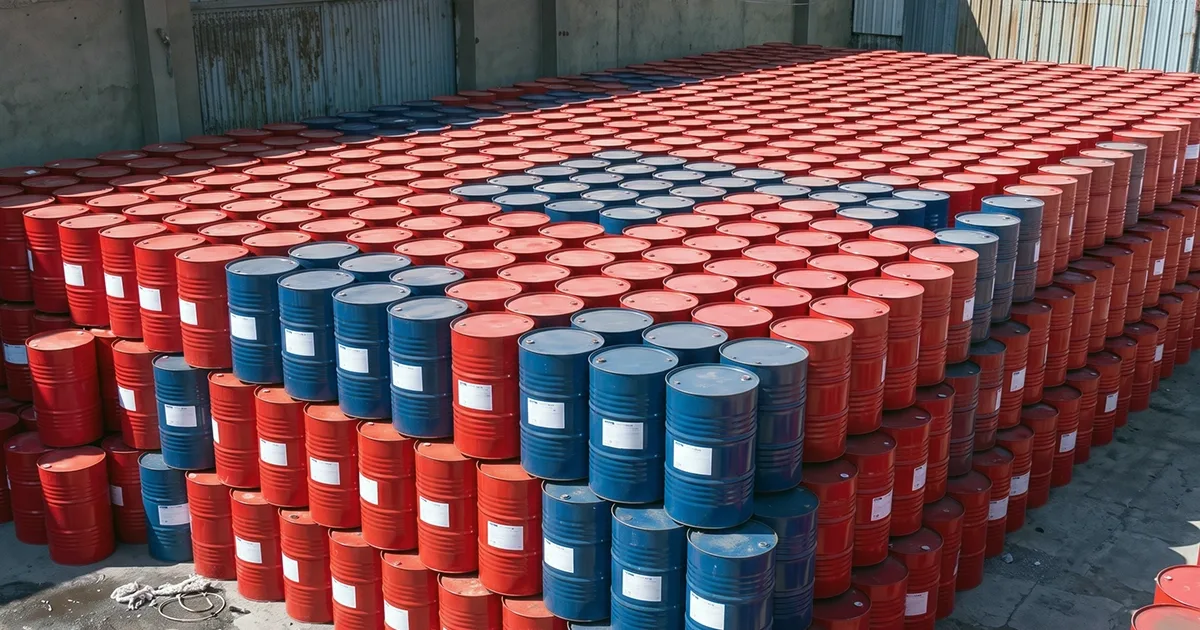
MDI and TDI are the two aromatic diisocyanates at the center of this case. Both are industrial chemical building blocks rather than finished goods: they are reacted with polyols to produce polyurethane, the material behind foam cushioning, rigid insulation, coatings, adhesives, sealants and elastomers. Neither is sold at retail. Buyers are manufacturers, formulators, systems houses and distributors that take the chemical by drum, tote, tank truck or railcar, which is why the settlement classes here are made up of companies rather than consumers.MDI — Methylene Diphenyl Diisocyanate
MDI is combined with polyether polyols to make rigid and semi-rigid polyurethane plastics and foams, along with some flexible foam. Its largest end markets are building insulation, refrigeration and consumer appliances, automotive components and shoe soles. It is sold in several forms — pure or monomeric MDI, polymeric MDI and prepolymer blends — under a long list of manufacturer trade names. The complaint describes an industry that roughly doubled over a decade, from about 3.3 million metric tons produced in 2005 to about 6.4 million metric tons in 2016.TDI — Toluene Diisocyanate
TDI is the diisocyanate used mainly for flexible polyurethane foam. Its typical end uses are mattresses and furniture cushioning, automotive seating and packaging foam, and it also goes into some coatings and elastomers. It is generally supplied as an 80/20 blend of two isomers. The complaint puts global TDI production capacity at roughly 2.98 million metric tons as of 2013 — a smaller market than MDI, and one with fewer producers.Why the Chemistry Matters to This Case
MDI and TDI of the same chemical composition are effectively commodity products: one producer's material substitutes for another's, so suppliers compete primarily on price. The plaintiffs allege that this structure — a concentrated group of producers, high barriers to entry, interchangeable products and buyers with no real alternative to polyurethane chemistry — is what made a price-fixing and supply-restriction conspiracy both possible and profitable. The settling defendants deny those allegations.That same reasoning shapes who gets paid. The settlements define "Products" as any and all kinds of MDI and TDI, no matter the trade name under which the product was sold, so a purchase counts whether it was invoiced as polymeric MDI, pure MDI, a TDI isomer blend or a branded grade — what matters is that the chemical was bought directly from a covered seller during the class period.
How Much Can You Get?
No per-claimant estimate has been published, and none can be calculated in advance because payments depend on how many class members file and on the volume each one purchased. The five settlement amounts combine into a fund of $37,650,000, and BASF separately agreed to pay $100,000 toward notice costs.Approved claims share what is left of the fund after the court approves deductions for attorneys' fees, costs and expenses, service awards to the class representatives, and notice and administration costs. Class counsel has said it will ask the court to approve fees, costs and expenses of up to one-third of the fund, along with service awards of $25,000 per class representative from the BASF and Covestro settlements and $15,000 per class representative from the Wanhua and the Dow and Huntsman settlements. The court decides those amounts at the fairness hearing and may award less.
What remains is the Net Fund, and it is divided pro rata according to the court-approved Plan of Allocation and the amount of MDI and TDI each class member purchased. A larger documented purchase volume means a larger share; a small purchaser should expect a correspondingly small payment.
What Proof or Notice ID Is Required?
The online claim portal opens on a login screen that asks for a Class Member ID and treats it as a required field, so filing online depends on an identifier the administrator issued. That ID appears on the Class Notice mailed to purchasers the administrator identified from the defendants' transaction records. A company that cannot find its ID can request it through the official settlement website.Documentation of purchases is a separate question. Each notice explains that the Claim Form already lists the MDI and TDI amounts the defendants' records show that class member bought. A company that agrees with those figures needs no supporting documents at all — it completes, signs and submits the form. A company that wants to amend or supplement the figures must file a Purchase Audit Request Form and attach supporting records such as purchase orders or sales receipts. Filing nothing extra means the payment is calculated from the amounts printed in the notice.
What Is the Deadline?
There are three filing deadlines, one per settlement group. Claim Forms and Purchase Audit Request Forms for the Wanhua settlement are due October 13, 2026; for the Dow and Huntsman settlement, October 19, 2026; and for the BASF and Covestro settlements, November 2, 2026. Each of those dates is also the deadline to ask for exclusion from that settlement and the deadline to file an objection with the court. The notices give dates only and do not specify a cutoff time or timezone.A class member that submitted a Claim Form or Purchase Audit Request Form in connection with an earlier settlement in this case does not need to file again for the later ones. A class member that has never filed should work to the earliest deadline that applies to its purchases rather than to the latest. A class member that asks to be excluded may revoke that request in writing and stay in the class, as long as the revocation reaches the administrator by December 3, 2026.
How Do You Take Action?
Claim Forms and Purchase Audit Request Forms are filed on the official settlement website, DiisocyanatesAntitrustLitigation.com, using the Class ID number printed on the Class Notice. The form walks through payment selection, class member information, the purchase amounts and an attestation that has to be signed under penalty of perjury. A company that needs a Claim Form, a Purchase Audit Request Form or a replacement Class ID number can request it through that same website.Objections must be filed with the Clerk of Court for the Western District of Pennsylvania and copies sent to class counsel, counsel for the settling defendants and the administrator by the deadline for that settlement. An objection has to identify the case, state the specific grounds, include proof of class membership, say whether the objector intends to appear at the fairness hearing, and be signed.
What Happens Next?
The next milestone is the fairness hearing on December 7, 2026 at 1:00 p.m. ET at the United States District Court for the Western District of Pennsylvania in Pittsburgh, where the court will consider objections and decide whether the settlements are fair, reasonable and adequate, how much to award in attorneys' fees, costs and expenses, and what service awards to approve. The notices warn that the date and time of the hearing can change without further notice.If the court grants final approval, appeals are still possible, and the notices state that the Plan of Allocation will be implemented and payments distributed as soon as possible only after approval becomes final and any appeals are resolved. No payment date has been announced as of September 13, 2026.
Sources and Verification
• Official Settlement Website• Long-Form Class Notice (PDF)
• Long-Form Class Notice (PDF)
• Long-Form Class Notice (PDF)
• Covestro LLC settlement agreement, executed May 8, 2026, In re: Diisocyanates Antitrust Litigation, Master Docket Misc. No. 18-1001, MDL No. 2862 (W.D. Pa.)
• Consolidated Second Amended Class-Action Complaint, ECF No. 377, filed September 10, 2020
Questions
Do I need the Class ID number to file a claim?
The online claim portal opens with a login screen that treats the Class Member ID as a required field, and that ID is printed on the Class Notice the administrator mailed to purchasers it identified from the defendants' records. A company that cannot locate its ID can request it through the official settlement website.
What if the purchase totals on my claim form are wrong?
The Claim Form is pre-populated with the MDI and TDI purchase amounts the defendants' records show. A class member who agrees with those figures files the form as is. A class member who wants to amend or supplement them must file a Purchase Audit Request Form with supporting documentation such as purchase orders or sales receipts; without it, the payment is calculated from the figures in the notice.
Do I have to file a separate claim for each settlement?
No. According to the Wanhua and the Dow and Huntsman notices, a class member who already submitted a Claim Form or Purchase Audit Request Form in connection with the earlier settlements does not need to file again. A class member who has not filed at all must submit by the earliest deadline that applies to them.
What is the difference between MDI and TDI?
Both are aromatic diisocyanates reacted with polyols to make polyurethane, but they go into different products. MDI (methylene diphenyl diisocyanate) is used mostly for rigid and semi-rigid foams and plastics such as building insulation, appliances, automotive parts and shoe soles, while TDI (toluene diisocyanate) is used mostly for flexible foam such as mattresses, furniture cushioning and automotive seating. Both are covered by these settlements, in every grade and under every trade name.
Are consumers who bought foam mattresses or furniture included?
No. The class is limited to persons and entities that purchased or received MDI and TDI products directly from the defendants, the other manufacturers named in the class definition, or their subsidiaries, affiliates or successors. Buying a finished polyurethane product made with those chemicals does not make a purchase direct.
How much will a claim pay?
No per-claimant estimate has been published. Each approved claim receives a pro rata share of what remains of the combined fund after court-approved attorneys' fees, costs and expenses, service awards and notice and administration costs are deducted, allocated according to the court-approved Plan of Allocation and the volume of MDI and TDI purchased.