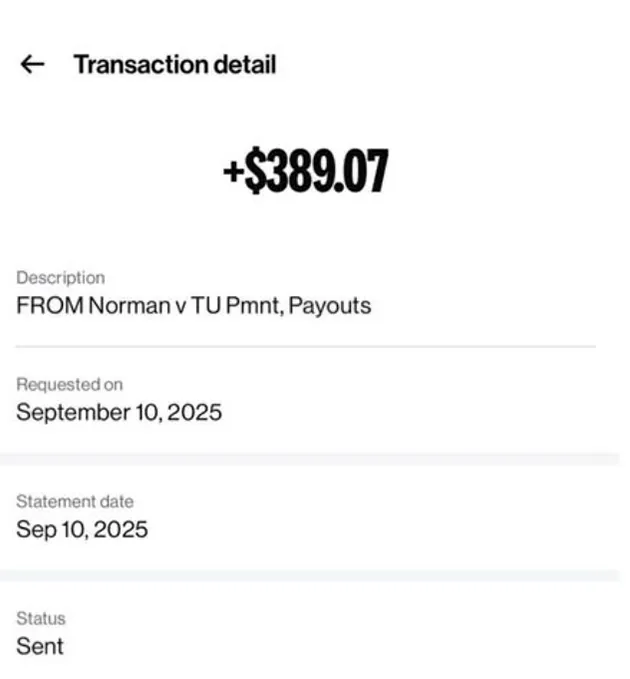
Patients, lawyers, law firms and insurers who paid HealthPort Technologies — now Datavant — the maximum statutory fees for copies of Pennsylvania medical records between July 15, 2005 and September 3, 2012 may qualify to claim 35% of what they paid from the HealthPort/Datavant class action settlement. Claims close November 30, 2026, and the final approval hearing is set for October 16, 2026.


Current Status
Claims are open. The Court of Common Pleas of Allegheny County, Pennsylvania has preliminarily approved the settlement for settlement purposes only, and the final fairness hearing before Judge Alan D. Hertzberg is set for October 16, 2026 at 9:00 AM. Nothing has been paid yet: the notice states that payments follow final approval and the resolution of any appeals, which can take more than a year.A Proof of Claim must be received by November 30, 2026 — the notice is explicit that a claim counts only when the Settlement Administrator actually receives it, no matter when it was mailed. Class members who want no part of the settlement had to mail a written exclusion request by October 1, 2026. Filing online requires the Notice ID and PIN from the mailed notice, so the first practical step for most people is finding that notice.
Free settlement alerts
Get notified when new class actions open to claims
Join thousands of readers who get the latest class action settlements you may qualify for — delivered straight to your inbox.
What Changed Recently?
A settlement website and claim portal are now live for the HealthPort half of a fee dispute that has been in the Allegheny County court since 2009. The lawsuit claims HealthPort Technologies failed to comply with the version of the Pennsylvania Medical Records Act in force until September 3, 2012, and breached an implied contract by charging requesters the maximum statutory fees instead of its estimated actual and reasonable expenses for locating, retrieving, reproducing and transmitting records.HealthPort, now Datavant, denies the allegations. Its position, as set out in the notice, is that the Medical Records Act authorized it to charge the statutory rates without regard to actual expenses, that requesters paid voluntarily and with full knowledge of the charges, and that the charges it assessed were in fact based on its own estimated actual and reasonable expenses. Neither side has won: the court has not ruled for the plaintiff or the defendant, and the class has been certified for settlement purposes only.
One point causes real confusion, because two nearly identical settlements are running at the same time in the same courtroom. This case covers charges billed by HealthPort Technologies, LLC, Case No. GD-09-012923. A coordinated case covering charges billed by IOD Incorporated is Case No. GD-09-012922 and has its own notice, its own class list and its own claim portal — see the IOD/Datavant medical records fee settlement for that one. The two companies were competitors until IOD merged into HealthPort at the end of 2015; HealthPort renamed itself Ciox Health in 2016, and Ciox Health became Datavant in 2023, which is why a single company now stands behind both cases. A requester who used both vendors has to file separately in each.
Who Qualifies?
The class covers patients, patient representatives and patient designees — including insurance companies and attorneys of any kind, whether prosecuting, defense or plaintiffs' counsel — who were designated by a patient or a patient's agent to obtain medical records, along with others who served a subpoena without being designated by a patient. The request has to have gone to a Pennsylvania healthcare provider or facility, and the requester has to have been charged and to have paid HealthPort Technologies or its subsidiaries the maximum basic, search-and-retrieval and/or reproduction fees set by 42 Pa.C.S. § 6152(a)(2)(i) as that section stood between July 15, 2005 and September 3, 2012, with payment made in that same window.There is one more requirement that is easy to miss and that narrows the class considerably: the definition reaches only requesters who were sent Mail Notice. The class is a fixed list drawn from HealthPort's own invoice records, not an open population.
Several categories are carved out. The class does not include record requests that did not require a patient authorization, or requests where the maximum statutory fees were not both charged and paid. The notice gives four examples: requests for radiological images; insurance companies performing auditing functions under a written contract; healthcare providers and facilities; and governmental entities. Also excluded are any present or former counsel for the defendant in this litigation, the Court, the Court's immediate family and staff, and Class Counsel.
The settlement also recognizes a second route for people who are not themselves on the class list. A Patient Requestor Beneficiary or Successor Settlement Class Member is someone who becomes aware of a notice sent to a class member and certifies on the Proof of Claim that they hold all rights to that class member's benefit — a former law firm, business or company that has since changed hands, for instance. The Settlement Administrator may require additional information to validate those claims.
How Much Can You Get?
An approved claim pays 35% of what the class member paid HealthPort in basic fees, search-and-retrieval fees and per-page copying fees for each covered record request made between 2005 and 2012. It is a percentage of actual invoiced charges, not a flat payment, so the amount varies enormously between a patient who ordered one chart and a law firm that ordered thousands.Nobody has to reconstruct their own billing history. Datavant maintains HealthPort's records of the basic, search-and-retrieval and per-page fees invoiced to and paid by each identified class member, and the total benefit available to each person is calculated from those records. That figure is printed on the mailed notice and appears again on the Proof of Claim inside the class member's portal account. The portal also shows a Transaction List: the individual invoices HealthPort attributes to the class member, with the invoice number, the invoice date, whose records were requested, which provider the request went to, the amount HealthPort's records show was paid, and the settlement benefit attributable to that payment.
Payment depends on final approval and on any appeals being resolved first. The notice does not promise a payment date and warns that appeals can take more than a year.
What Proof or Notice ID Is Required?
Proof Required: Yes. Filing online means logging in with a Class Member ID — the Notice ID and PIN printed on the mailed notice, or the QR code on it. Without that credential the portal will not open the Proof of Claim or the Transaction List, and the class definition itself is limited to requesters who were sent Mail Notice, so this is not a gate that a member of the general public can work around.No receipts, invoices or bank records have to be uploaded. The dollar figures come from Datavant's own records rather than from anything the claimant supplies, and the Proof of Claim has to be signed. Patients who requested their own records, and people who requested records on a patient's behalf for non-commercial purposes, received a paper Proof of Claim with their mailed notice and can file on paper or online. Non-patient requesters — law firms, insurers, businesses — can only file through the settlement website; no paper form is provided to them.
Anyone who believes they are a class member but never received a notice, or who cannot find the Notice ID, is directed by the settlement website to contact the Settlement Administrator for that information well before the deadline.
What Is the Deadline?
A completed and signed Proof of Claim must be received by November 30, 2026, whether it is submitted through the settlement website or mailed. The notice states plainly that claims must be timely received regardless of any postmark date — mailing on the last day does not preserve a claim, and there is no grace period for transit time.The deadline to exclude yourself was October 1, 2026, and the same received-not-postmarked rule applied. Exclusion requests had to be made in writing by mail; the notice says class members cannot opt out by phone or email. A separate request was required for each class member, beneficiary or successor seeking exclusion, and anyone who excluded themselves gets no payment and cannot object.
Objections follow their own procedure and their own date, both set out in the court-approved Long Form Notice embedded below. Objecting and excluding yourself are not the same thing: an objector stays in the class, remains bound by the outcome and keeps the right to file a claim, while someone who excludes themselves leaves the class entirely.
How Do You Take Action?
Start at the official settlement website, HealthPort Settlement PA, and go to the claim submission page. Logging in takes the Notice ID and PIN from the mailed notice, or the QR code printed on it. Once inside, the portal shows the Transaction List of record requests Datavant attributes to the class member; the claim process asks the filer to select the eligible transactions being claimed, then to complete and sign the Proof of Claim.Patients who requested their own records, and people who requested records for a patient for non-commercial reasons, can instead mail the paper Proof of Claim that came with their notice, using the address printed on that form. Non-patient requesters do not have a paper option and must file online. The settlement website is also where address changes, name changes and claims on behalf of a deceased class member are handled.
One question the notice raises for professional requesters is worth settling before filing. A class member who paid HealthPort but was reimbursed by someone else should consider whether the settlement benefit has to be passed on to whoever reimbursed them; the notice adds that attorneys reimbursed by a client may have an ethical obligation to hold the funds in a client trust account and return them to the client. The settlement does not resolve that question — it points to it.
What Happens Next?
Judge Hertzberg will hold the final fairness hearing on October 16, 2026 at 9:00 AM to decide whether the settlement is fair, reasonable and adequate, and to rule on any objections and on Class Counsel's request for fees and costs. A hearing is not an approval: the court can approve, withhold approval or ask for changes.If the settlement is approved, appeals may follow, and the notice cautions that resolving them can take more than a year. Payments are made only after approval is final and any appeals are resolved. If the settlement is not approved, the court will have to decide separately whether the case should proceed as a class action on the merits — the certification granted so far is for settlement purposes only.
The claim deadline of November 30, 2026 falls after the fairness hearing, so class members who have not yet filed still have time regardless of what happens on October 16.
Sources and Verification
This page is based on the court-approved Long Form Class Notice, the settlement website's Case Home, Frequently Asked Questions and claim-submission pages, and the Electronic Proof of Claim flow at HealthPort Settlement PA. The case is David M. Landay v. Datavant LLC, successor to HealthPort Technologies, LLC., Case No. GD-09-012923, in the Court of Common Pleas of Allegheny County, Pennsylvania, before Judge Alan D. Hertzberg.The class definition, the 35% benefit, the class period, the carve-outs and every deadline quoted above come from the notice itself. The relationship between the two coordinated cases, and the corporate history linking HealthPort, IOD, Ciox Health and Datavant, is drawn from the notices in both matters. The full Long Form Notice is embedded below.
Questions
How is this different from the IOD settlement in the same court?
They are two coordinated cases with the same named plaintiff and the same court, but different defendants and different case numbers. This page covers record requests billed by HealthPort Technologies, LLC, Case No. GD-09-012923. Requests billed by IOD Incorporated are Case No. GD-09-012922 and have their own notice, claim portal and class list. A requester who used both vendors would need to file separately in each case.
Can I file if HealthPort never mailed me a notice?
The class definition is limited to requesters who were sent Mail Notice, and the online claim portal will not open without the Notice ID and PIN printed on that notice. If you believe you paid HealthPort for Pennsylvania medical records in the class period but did not receive a notice, the settlement website directs you to contact the Settlement Administrator for your Class Member ID before the claim deadline.
How much does the settlement pay?
An approved claim pays 35% of the basic fees, search-and-retrieval fees and per-page copying fees the class member paid HealthPort for each covered record request between 2005 and 2012. The total available to each class member is calculated from HealthPort's own invoice records and is printed on the mailed notice and on the Proof of Claim in the class member's portal account, along with a Transaction List of the underlying invoices.
I am a lawyer whose client reimbursed the records charge. Who keeps the money?
The notice raises this directly. It says a class member who paid HealthPort but was reimbursed by someone else should consider whether the settlement benefit has to be passed on to whoever reimbursed them, and that attorneys reimbursed by a client may have an ethical obligation to hold the funds in a client trust account and return them to the client. The settlement does not decide that question; it is left to the class member and the applicable rules of professional conduct.
What is the claim deadline and does a postmark count?
A completed Proof of Claim must be received by November 30, 2026, whether it is filed through the settlement website or mailed. The notice states that a claim must be timely received regardless of any postmark date, so mailing on the deadline does not preserve the claim. The same received-not-postmarked rule applies to the October 1, 2026 exclusion deadline.