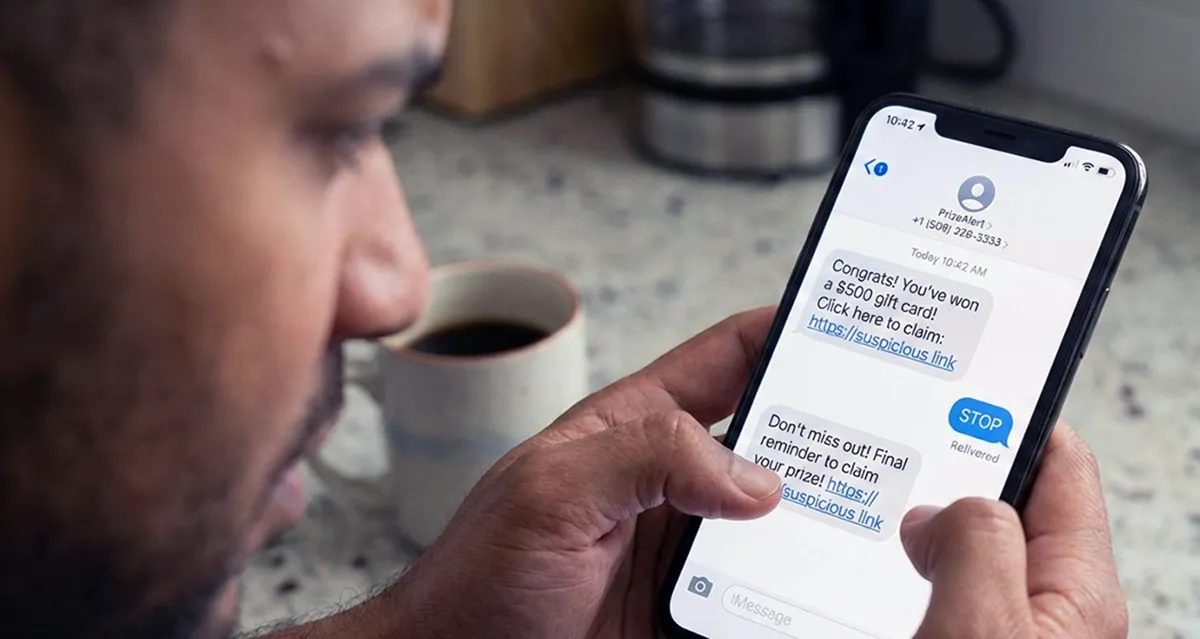
People who kept receiving Sugared + Bronzed text messages after replying STOP may qualify to claim an estimated $110 to $222 from the $750,000 TCPA class action settlement, with no receipts or screenshots required. Claims are open through October 2, 2026.

Current Status
Claims are open. Claim forms must be submitted online or postmarked by October 2, 2026 — the Notice gives that date without a time of day or an official timezone, so treat it as a firm date rather than waiting for the final hours. The Court entered its order preliminarily approving the settlement on July 17, 2026 and notice went out on August 17, 2026. The Final Approval Hearing is scheduled for November 20, 2026 at 10:00 a.m. PST in Los Angeles. No final approval order has been entered and no payment date had been announced as of August 28, 2026. October 2, 2026 is also the deadline to exclude yourself and to object, so one date decides all three choices.What Changed Recently?
The case behind this settlement is Grippo v. Sugared + Bronzed, LLC, Case No. 8:24-cv-01792-AB-DFM, in the United States District Court for the Central District of California, before Judge André Birotte Jr. The named plaintiff filed it on August 14, 2024 and amended the complaint on December 5, 2025, alleging that the company violated the federal Telephone Consumer Protection Act and the Virginia Telephone Privacy Protection Act by sending marketing texts through the Klaviyo platform to phone numbers that had already sent an inbound message asking the texts to stop.The Court preliminarily approved a settlement on July 17, 2026, which is the event that opened the claim process, and the Claims Administrator mailed notice on August 17, 2026. Sugared + Bronzed has agreed to establish a non-reversionary $750,000 fund, and eligible class members can file for a share until October 2, 2026.
Sugared + Bronzed strongly denies any wrongdoing. According to the Notice, the company says it had prior consent for all of its marketing communications, denies that it violated any law or duty, denies that it has any liability to the named plaintiff or the class, and says it agreed to settle to avoid the burden and cost of further litigation. No court has found the company liable, and the Notice states plainly that it does not imply any court has found or would have found a violation. The parties reached the agreement after formal discovery, depositions and third-party subpoenas, and a mediation before a professional mediator, retired Judge Andrew J. Guilford.
Free settlement alerts
Get notified when new class actions open to claims
Join thousands of readers who get the latest class action settlements you may qualify for — delivered straight to your inbox.
Who Qualifies?
The Court has certified a single Settlement Class for settlement purposes: all persons throughout the United States who were sent two or more telemarketing text messages in a twelve-month period, using the Klaviyo platform, after Sugared + Bronzed or Klaviyo had received an inbound stop message from the number that was texted.The Notice identifies the qualifying stop messages specifically. They are STOP, UNSUBSCRIBE, NOOFFERS, NO OFFERS, OPT OUT, END and QUIT. The class period runs from August 14, 2020 through July 17, 2026, the date the Court granted preliminary approval.
Two things have to line up. First, your number sent one of those inbound stop messages. Second, at least two Sugared + Bronzed marketing texts arrived at that number afterward, within a single twelve-month window. Current and former employees, officers, directors, agents and legal representatives of the company and its affiliated entities are excluded, as are class members who submit a valid request for exclusion.
Membership is determined from the company's own records rather than from anything you submit. The parties entered the settlement on an estimate of roughly 18,389 class members, drawn from an analysis of records obtained from Klaviyo and another vendor. If a postcard about this settlement reached you, it is because those records show your number. You do not need to still be a customer, and you do not need to remember the dates.
The class is narrow by design — it reaches Sugared + Bronzed messages sent through Klaviyo and nothing else. If the texts that kept arriving after your stop request came from a different business, this fund is not yours to claim, but the conduct falls under the same statute, and OCA's investigation into ignored STOP requests is where to take that.
How Much Can You Get?
Sugared + Bronzed will establish a non-reversionary $750,000 Settlement Fund. Notice and administration costs capped at $51,000, attorneys' fees, litigation costs and an incentive award of up to $10,000 come out of that fund first, all subject to the Court's approval, and every approved claim then takes an equal pro rata share of what remains.The Notice estimates that each participating and approved class member will receive between $110 and $222. That is an estimate published by the administrator, not a guaranteed amount: the Notice states the actual figure may be more or less depending on how many timely, valid and approved claims come in. Because the split is pro rata across claimants, a heavier response drives each payment down and a lighter one drives it up.
One structural point is worth knowing before you file. Payment does not scale with how many texts you received. The Settlement Agreement states that a class member may submit only one claim regardless of how many messages that member received, so someone texted a dozen times after their stop request is in line for the same share as someone texted twice. That is a different design from settlements that pay per message, and it means there is nothing to gain from documenting a high message count.
The official documents give two different numbers for attorneys' fees, and the discrepancy is worth flagging because it moves the payout. The Notice's summary of settlement benefits describes an award not to exceed twenty-five percent of the fund. The section on how Class Counsel will be paid, and the Settlement Agreement itself, describe a request of up to $250,000 or 33.33% of the fund, plus documented litigation costs anticipated not to exceed $40,000. Class Counsel's fee petition was due September 25, 2026 and is posted on the settlement website. Only the Court's order settles the figure, and it may award less than either number.
Working from the higher of the two, the arithmetic lines up with the published range: $750,000 less $250,000 in fees, $40,000 in costs, $51,000 in administration and a $10,000 incentive award leaves roughly $399,000 for class payments, which produces $110 to $222 a head at somewhere between about 1,800 and 3,600 approved claims out of an estimated 18,389 class members. Treat that as an illustration of how the range was likely built, not as a projection of what the Court will do.
Nothing goes back to Sugared + Bronzed. Settlement checks expire 120 days after issue, and if enough is left from uncashed checks to send everyone who cashed a first check at least $5 more, the administrator issues a second pro rata round. Whatever remains after further distribution is no longer economically feasible goes to the Electronic Privacy Information Center as a cy pres award.
What Proof or Notice ID Is Required?
No receipts, screenshots, phone bills or carrier records are required. Nothing you upload establishes eligibility — the Claims Administrator works from the message records already in the case.The online claim form opens with a login screen asking for the LoginID and PIN printed on the notice that was mailed to you. That screen also carries a separate link to file a claim without a LoginID and PIN, and the mailed paper claim form does not ask for them either. Because a class member who never received a notice, or who threw it away, can still file, this page treats the settlement as Proof Required: No. The credentials are a convenience that ties your submission straight to your record, not a gate on the benefit.
The claim form itself asks for your name, your signature, the date, an email address and — this is the field that matters — the telephone number at which you received the messages. Give the number the texts actually went to, even if you no longer use it, because that is what ties your claim to the records.
What Is the Deadline?
Claim forms must be submitted online or postmarked no later than October 2, 2026. The Notice gives that date without a time of day or an official timezone, so this page publishes only the date.October 2, 2026 is also the deadline to request exclusion from the class and the deadline to object. The three windows closing together is unusual — on many settlements the exclusion window shuts weeks before claims do — and it means there is no later opportunity to reconsider once the date passes.
How Do You File a Claim?
Filing online is the fastest route. Open the official settlement website, SB TCPA Settlement, and start the claim form. If you have the notice, enter the LoginID and PIN printed on it. If you do not, use the link on the same screen to file a claim without those credentials. If you received a postcard notice with a detachable claim form, you can instead complete, sign and mail the paper form, which must be postmarked by October 2, 2026.Whichever route you take, keep a copy of what you submit. If you would rather file online and cannot find your LoginID and PIN, use the contact page on the settlement website to ask the Claims Administrator for them rather than guessing at a code.
The Settlement Agreement, the Notice and the other case documents are posted on the settlement website's Important Documents page if you want to read the underlying filings before you decide.
What If You Want Out — or Want to Object?
Excluding yourself means you receive nothing from the fund but keep the right to sue Sugared + Bronzed on your own over the claims this settlement covers — the route individual TCPA text claims normally take, where the statute sets damages at $500 per message and up to $1,500 where a court finds the violation willful or knowing. A request for exclusion must be mailed to the Claims Administrator, postmarked no later than October 2, 2026, and the Notice requires it to contain your full name, your address, the telephone number Sugared + Bronzed texted through Klaviyo between August 14, 2020 and July 17, 2026, and a clear and unambiguous statement that you want to be excluded. You have to sign it personally; anyone signing for you must attach a valid power of attorney. Group or "mass" exclusions submitted on behalf of multiple class members are not accepted. Unusually, the Notice does allow you to change your mind: a request for exclusion can be withdrawn in writing up to fourteen days after the Final Approval Hearing.Objecting is different: you stay in the class, keep your right to a payment if you also file a valid claim, and tell the Court why you think the settlement should not be approved. A written objection must go to the Clerk of the Court by October 2, 2026, with copies mailed to Class Counsel and to defense counsel, and it must be served on the Claims Administrator as well if you intend to appear and speak at the hearing. The Notice requires the objection to state the name and case number of the lawsuit; your full name, address and mobile telephone number; all grounds for the objection with any legal support; copies of any papers the objection relies on; whether you intend to appear at the Final Approval Hearing; and, if you will appear through counsel at your own expense, the attorneys who will appear. A class member who does not serve an objection waives the right to appeal any order or judgment related to the settlement.
If you want to appear at the hearing, there is a second step: a notice of intention to appear must be provided to the Claims Administrator and filed with the Clerk of the Court no later than thirty days before the hearing, or as the Court otherwise directs.
If you do nothing, you stay in the class, receive no money, and are bound by the release.
What Am I Giving Up?
Unless you exclude yourself, you release claims arising out of, relating to, or in connection with the text messages at issue and the administration of the settlement. In practical terms you cannot sue, or join another lawsuit against, Sugared + Bronzed or the other Released Parties over those claims, and you are bound by the Court's orders and by the Agreement. The release binds you whether or not you ever file a claim.The Released Parties are broader than the defendant alone. The Settlement Agreement extends the release to the company's parents, affiliates, subsidiaries, successors and predecessors and their officers, directors, employees, agents, attorneys, insurers and vendors, and names Klaviyo specifically. Klaviyo is not a defendant and is not funding the settlement, but it is covered by the release. The release also includes a waiver of California Civil Code section 1542, expressly limited to claims arising from the transmission of the messages the case is about.
What Happens Next?
The claim, exclusion and objection windows all close October 2, 2026. Ten days before the hearing, the Claims Administrator files a sworn declaration reporting the number of claims, objections and opt-outs. The Final Approval Hearing is scheduled for November 20, 2026 at 10:00 a.m. PST in Courtroom 7B of the United States District Court for the Central District of California in Los Angeles, where the Court will decide whether the settlement is fair, reasonable and adequate and will rule on the fee application and the incentive award. Class members are not required to attend, and the Notice warns that the hearing date may change — the settlement website is where any change is posted.The schedule in the Notice contemplates Sugared + Bronzed funding the settlement on January 3, 2027, within fourteen days after the judgment becomes final as the Settlement Agreement defines that term, with the administrator issuing payments to approved claimants after that. A hearing being held is not the same as approval being granted, approval is not the same as a judgment becoming final, and none of those is the same as checks going out. No final approval order had been entered and no payment date had been announced as of August 28, 2026.
Sources and Verification
• Official settlement website — SB TCPA Settlement• Official settlement website — Frequently Asked Questions
• Notice of Proposed Class Action Settlement and Settlement Agreement (PDF)
• Official case documents — Settlement Agreement, Notice and claim form
• Grippo v. Sugared + Bronzed, LLC, Case No. 8:24-cv-01792-AB-DFM, U.S. District Court for the Central District of California
• National Do Not Call Registry (FTC)
• FCC — Telemarketing and robocall rules under the TCPA
Questions
I never got a notice, or I lost the LoginID and PIN. Can I still file?
Yes. The settlement website's login screen carries a separate link to file a claim without a LoginID and PIN, and mailing the paper claim form does not require them either. The credentials speed up the online form because they identify you in the records the administrator already has; they are not a gate on filing. If you would rather file online with your credentials and cannot find them, use the contact page on the official settlement website to ask the Claims Administrator, rather than guessing at a code.
Does it matter how many texts Sugared + Bronzed sent me after I replied STOP?
Not for the size of your payment. The Settlement Agreement states that a Settlement Class Member may submit only one claim regardless of how many text messages that member received, and every approved claim takes an equal pro rata share of what is left in the fund. The message count matters only for eligibility: the class is defined by having been sent two or more telemarketing texts in a twelve-month period after an inbound stop message.
Where does the estimated $110 to $222 range come from, and could I get less?
It is the administrator's own estimate, published in the Notice, and it is an estimate rather than a promise. Every approved claim shares equally in whatever is left of the $750,000 fund after the Court rules on attorneys' fees, litigation costs, notice and administration costs capped at $51,000, and an incentive award of up to $10,000. Because the split is pro rata across however many valid claims arrive, a heavier-than-expected response pushes each payment down and a lighter one pushes it up. The Notice says the actual amount may be more or less than the range.
The Notice gives two different attorneys' fee figures. Which one applies?
Both appear in the official documents and neither is settled until the Court rules. The benefits summary describes an award of attorneys' fees not to exceed twenty-five percent of the settlement fund, while the section on how Class Counsel will be paid, and the Settlement Agreement itself, describe a request of up to $250,000 or 33.33% of the fund plus documented litigation costs anticipated not to exceed $40,000. The fee petition was due September 25, 2026 and is posted on the settlement website. Only the Court's order decides the number, and it may award less than either figure.
What is Klaviyo doing in this case, and is it paying anything?
Klaviyo is the cloud marketing platform Sugared + Bronzed contracted with to send its SMS marketing, so the class is defined by messages sent through that platform. Klaviyo is not a defendant and is not funding the settlement. It is named in the Settlement Agreement as one of the Released Parties, which means class members who do not exclude themselves release the covered claims against it as well as against Sugared + Bronzed.
When would payments actually go out?
Not before the Court rules and the judgment becomes final. The Final Approval Hearing is set for November 20, 2026, and the schedule in the Notice contemplates Sugared + Bronzed funding the settlement on January 3, 2027, within fourteen days of the judgment becoming final, with checks issued afterward. A hearing being held is not the same as approval being granted, and approval is not the same as money being released. No final approval order had been entered and no payment date had been announced as of August 28, 2026.
Why is a Virginia law involved in a nationwide settlement?
The complaint pleaded two counts: the federal Telephone Consumer Protection Act and the Virginia Telephone Privacy Protection Act. The federal count is what makes the class nationwide, and the settlement class is defined as all persons throughout the United States who meet the message criteria. The state count reflects the named plaintiff's own circumstances and does not narrow the class or add a residency requirement. Sugared + Bronzed denies violating either law.
What happens to money nobody claims?
The fund is non-reversionary, so unclaimed money does not return to Sugared + Bronzed. Settlement checks expire 120 days after they are issued. If enough is left from uncashed checks to send everyone who cashed a first check at least $5 more, the administrator issues a second round of pro rata checks. Whatever remains after that, once further distribution is no longer economically feasible, goes to the Electronic Privacy Information Center as a cy pres award.