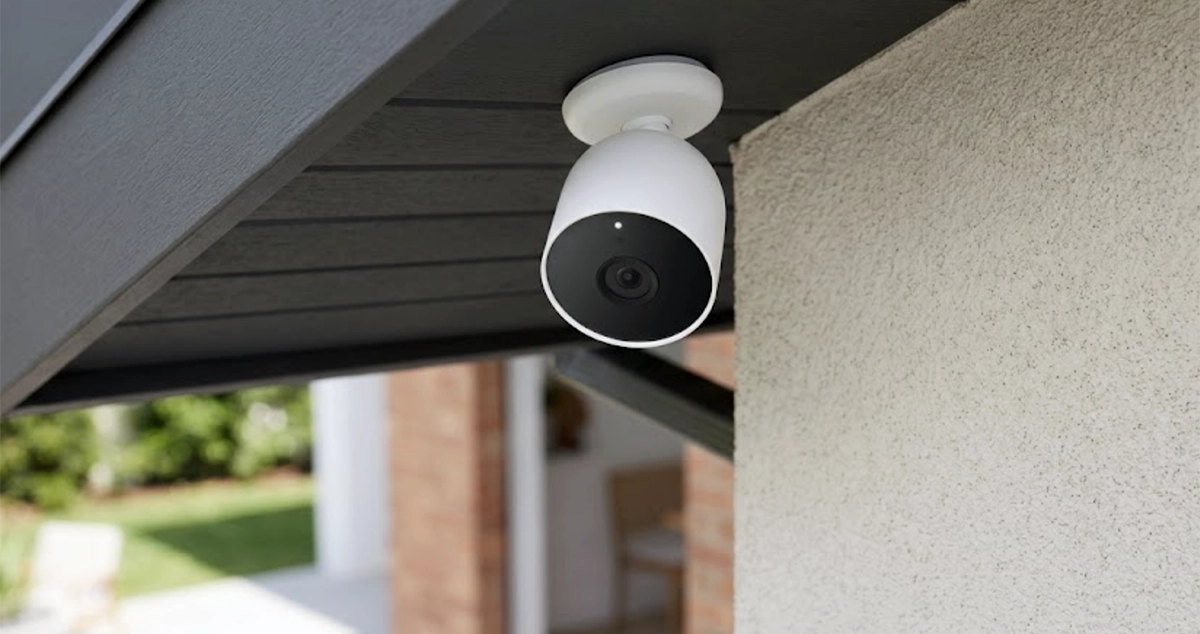
Three class actions over Google Nest’s “Familiar Face Detection,” the camera feature that recognizes visitors, have been combined into one case, In re Nest Privacy Litigation. The suits say it also scans and stores the faceprints of every passerby, neighbor and child who walks by, none of whom ever consented. They are lawsuits, not settlements, so there is nothing to claim yet.

Allegations Only · No Settlement Yet
This article describes a class action complaint. The statements below are unproven allegations. Google has not been found liable, there is no certified class, and nothing to claim at this time. This page is informational and is not legal advice.
What Is This About?
Google is facing a proposed class action alleging that the "Familiar Face Detection" feature on its Google Nest security cameras and video doorbells uses facial recognition to scan and store the biometric "faceprints" of people who walk in front of a Nest device — including visitors, neighbors, delivery workers, and children who never consented and never knew it was happening.This page first covered Miller v. Google, LLC, Case No. 5:26-cv-07441-NW, filed on July 17, 2026 in the U.S. District Court for the Northern District of California, where Google is headquartered. The named plaintiff is described as a California resident who alleges her face was captured and analyzed, without her knowledge or consent, as she walked through neighborhoods and visited homes with Nest cameras installed. She seeks to represent a proposed nationwide class and a California subclass. Google has not been found liable, and the claims remain unproven.
Miller was not the first. Two earlier suits in the same court make the same core claim: Fennessy v. Google, LLC, Case No. 5:26-cv-06534, filed June 29, 2026, and Trevino v. Google LLC, Case No. 5:26-cv-06694, filed July 1, 2026. U.S. District Judge Edward J. Davila, who has the Fennessy case, found both later suits related to it, and on September 4, 2026 he consolidated all three as In re Nest Privacy Litigation, No. 5:26-cv-06534-EJD. The plaintiffs are due to file one consolidated amended complaint by October 19, 2026. The Trevino complaint is summarized below.
What Is "Familiar Face Detection"?
Google sells security cameras and smart video doorbells under its Google Nest brand. According to Google's own descriptions cited in the complaint, Familiar Face Detection "teach[es] your Google Nest camera to recognize faces of people that you know" and notifies the owner if it detects someone it doesn't recognize. The feature is activated through a Google Home Premium subscription, and the complaint alleges Google markets it as a primary benefit of Nest devices, driving both device sales and subscriptions.The lawsuit's core argument is that the owner's choice to turn the feature on does nothing for the people on the other side of the lens. The complaint alleges that once the feature is active, the device photographs and analyzes the face of every person who appears in its field of view — not just the labeled contacts an owner has saved — comparing each captured image against the camera's "familiar face" library and storing it for further review whether or not it matches a known face. A visitor, neighbor, delivery driver, or passerby whose face is scanned never receives notice and has no way to consent or decline.
Free settlement alerts
Get notified when new class actions open to claims
Join thousands of readers who get the latest class action settlements you may qualify for — delivered straight to your inbox.
What the Miller Lawsuit Alleges
According to the complaint, when a person passes in front of a Nest camera with Familiar Face Detection enabled, Google's AI system allegedly captures their image, creates a faceprint from their facial geometry, and saves it in the camera's library. Because people often travel the same routes repeatedly, the suit alleges the same devices capture and process a person's face on multiple occasions, and that Google's system — built to recognize returning faces — associates facial geometry across those encounters.The complaint alleges this scanning is indiscriminate and includes children, with no system in place to identify and exclude minors or obtain parental consent. It also alleges Google does not disclose how long it retains the images of "unfamiliar" faces. The plaintiff alleges she received no notice, was given no opportunity to opt in or out, and had no way to identify which devices scanned her.
A central allegation is that Google knows the practice is legally sensitive. The complaint alleges Google disables Familiar Face Detection entirely in Illinois — the one state whose Biometric Information Privacy Act (BIPA) gives consumers a private right of action to sue over unauthorized biometric collection — while leaving it switched on everywhere else. The suit also points to Google's May 2025 agreement to pay Texas $1.375 billion to resolve state claims that its products, including Nest cameras, captured biometric data without consent, and alleges Google nonetheless continues to offer the feature in Texas without obtaining consent from the people it scans.
Based on those allegations, the complaint brings six claims on behalf of the proposed class:
• Intrusion upon seclusion (California common law)
• Invasion of privacy under Article I, Section 1 of the California Constitution
• Violation of the California right of publicity (Cal. Civ. Code § 3344, which allows statutory damages of $750 per person)
• Unlawful and unfair business practices under California's Unfair Competition Law (Bus. & Prof. Code § 17200)
• Commercial misappropriation (California common law)
• Unjust enrichment
For relief, the plaintiff seeks actual, statutory, and punitive damages, restitution and disgorgement of Google's profits, injunctive relief to stop or change the practice, and a jury trial, with the combined claims of the proposed class alleged to exceed $5 million. As with any complaint, these are allegations only. A court has not ruled on whether Google's feature is unlawful or whether Google did anything wrong.
The Trevino Complaint
Trevino v. Google LLC was filed on July 1, 2026 by a Glendale, California resident who says she regularly walks through her neighborhood for exercise past homes with Nest doorbells and cameras pointed at the sidewalk, and that she never consented to having her face scanned or stored. It is now part of the consolidated case before Judge Davila in San Jose, with discovery referred to Magistrate Judge Susan van Keulen.Its allegations overlap with Miller’s, with a few points of its own:
- A “Familiar Faces Library.” The complaint says each device builds a library that stores a photo and a facial map of every passerby, along with non-biometric details such as clothing and body size, so people can be matched even when their face is hidden, and that owners can scroll through it.
- Google’s own warning. It quotes Google’s Home and Nest help page telling owners to “use familiar face detection in compliance with the law” and that they “might need to get consent,” and says the devices give owners no way to get that consent from passersby.
- Google’s access. It alleges, on information and belief, that Google can access the libraries at least while they sit on or pass through its cloud servers.
- Scale. It cites reporting that about 33 million U.S. households use smart cameras and a 2020 estimate that Nest held about 24% of the video doorbell market.
- Commercial benefit. It says Google profits through Google Home Premium subscription fees, device sales and the value of training its AI on the data.
How the three suits came together, from the court records: on July 1, Magistrate Judge Nathanael Cousins referred Trevino to the judge then assigned to Fennessy to decide whether the two were related. Judge Davila, who took over Fennessy, related Trevino on July 22, and on August 19 signed a related-case order finding Miller related and reassigning it to himself. On September 4, he signed an order consolidating the cases and setting the schedule. No order appointing lead or interim class counsel appears on the public docket.
Is There a Google Nest Settlement Yet?
No. The Google Nest facial recognition cases are lawsuits, not settlements.That means:
• There is no settlement fund.
• There is no claim form.
• There is no payout, and no deadline to act.
• There is nothing to “join” at this stage.
The filing of a complaint is the very beginning of a case. Google has not been found liable simply because a lawsuit was filed, and the case remains pending unless and until a newer docket entry says otherwise. If the case is ever resolved through a settlement, or a class is certified, a formal claims process with its own eligibility rules and deadlines would be announced separately. Be cautious of any website that claims you can "file a claim" for this matter today.
Who Could Be Affected?
The Miller and Trevino complaints both describe a proposed nationwide class of people in the United States whose facial and biometric data were allegedly collected by a Google Nest device without their consent, plus a California class. Because no class has been certified yet, the exact class definition — including which states, time periods, and circumstances are covered — is not final and could change as the case proceeds.People most likely to follow this case include:
• Anyone who has walked, delivered, or visited near a Google Nest camera or doorbell with Familiar Face Detection turned on
• Visitors to homes that use Nest video doorbells or cameras
• Delivery drivers and gig workers who regularly approach residential doors
• Parents concerned that children's faces may have been scanned
• People generally concerned about facial-recognition and biometric privacy
There is nothing to file right now. Following the docket is the main action available at this stage.
What Happens Next?
The September 4 consolidation order sets the first round of deadlines:- October 19, 2026: the plaintiffs file a consolidated amended complaint, which will replace the three separate complaints.
- December 1, 2026: Google responds, most likely with a motion to dismiss.
- January 15, 2027: the plaintiffs’ opposition is due.
- March 1, 2027: Google’s reply is due.
OpenClassActions.com will continue watching the docket for any major updates, including a motion to dismiss, class certification activity, settlement talks, or any future claim form. For related privacy litigation, see our coverage of the Amazon Ring "Familiar Faces" facial recognition class action, the Disney facial recognition biometric class action, and the Clearview AI facial recognition privacy settlement. For background on how biometric identifiers are treated under the law, see our glossary entry on a biometric data breach.
Read the Trevino Complaint
Frequently Asked Questions
Is there a Google Nest facial recognition settlement yet?
No. The cases are proposed class action lawsuits filed in June and July 2026. There is no settlement, no fund, and no claim form. Google has not been found liable just because a lawsuit was filed.How many Google Nest facial recognition lawsuits are there?
Three, now combined into one case. Fennessy v. Google, LLC, No. 5:26-cv-06534, was filed June 29, 2026; Trevino v. Google LLC, No. 5:26-cv-06694, on July 1; and Miller v. Google, LLC, No. 5:26-cv-07441, on July 17. U.S. District Judge Edward J. Davila related Trevino to Fennessy on July 22 and Miller on August 19, and on September 4 consolidated them as In re Nest Privacy Litigation. A consolidated amended complaint is due October 19, 2026. No class has been certified.What does the lawsuit allege?
According to the complaint, Google Nest's Familiar Face Detection scans and stores a biometric faceprint of everyone who passes a compatible camera — including bystanders and children who never consented and never received notice. The allegations are unproven.Why is the feature disabled in Illinois?
The complaint alleges Google turns Familiar Face Detection off in Illinois because Illinois' BIPA gives individuals a private right of action to sue over unauthorized biometric collection. It is the only state whose biometric privacy law lets consumers sue directly. The suit alleges Google leaves the feature on in every other state.Is there anything to file?
No. Because this is a lawsuit and not a settlement, there is nothing to claim and no deadline. If a settlement or certified class ever produces a claims process, deadlines and eligibility would be announced then.Sources
• Court records — Miller v. Google, LLC, No. 5:26-cv-07441-NW (N.D. Cal., filed July 17, 2026)• Trevino v. Google LLC, No. 5:26-cv-06694 (N.D. Cal., filed July 1, 2026) — Class Action Complaint (ECF No. 1), sua sponte judicial referral (ECF No. 7) and docket entries through September 4, 2026, via the CourtListener docket
• In re Nest Privacy Litigation (originally Fennessy v. Google, LLC), No. 5:26-cv-06534-EJD (N.D. Cal., filed June 29, 2026) — sua sponte judicial referral (July 1, 2026), Order Relating Cases (July 22, 2026), Related Case Order as to Miller (Aug. 19, 2026) and Order Consolidating Cases and Setting Scheduling Deadlines (Sept. 4, 2026), CourtListener docket
• Google — "Learn more about familiar face detection"
• The Verge — "Google Home will soon get better at recognizing you"
• Reuters — Google to pay Texas $1.375 billion to settle data-privacy claims