A proposed class action says Target covered its tariff bill by raising prices across the store — including on American-made goods that were never tariffed — and is now in line to collect the government refund on top. If you shopped at Target during 2025, this case is about your money, but there is no settlement or claim form yet.

Allegations Only · No Settlement Yet
This article describes a class action complaint. The statements below are unproven allegations. Target Corporation has not been found liable, has not yet responded to the complaint, there is no certified class, and nothing to claim at this time. This page is informational and is not legal advice.
What Is This About?
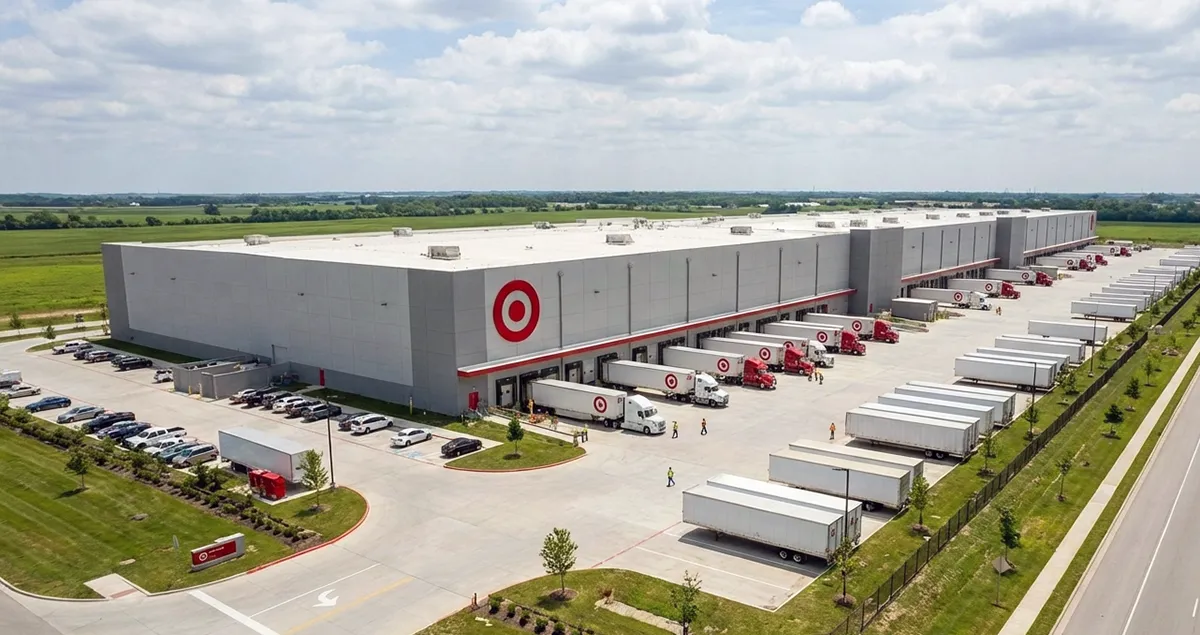
Target is facing a proposed class action alleging that it raised prices to recover the tariffs it paid at the border, and is now positioned to recover those same tariffs a second time as a federal refund — while the shoppers who absorbed the cost at the register have no path to get their money back. The case is captioned Cavallaro v. Target Corporation (Case No. 7:26-cv-06165, U.S. District Court for the Southern District of New York), filed on July 21, 2026 by a New York shopper.The claim that makes this one stand out from the rest of the tariff cases: the complaint alleges Target did not confine the price increases to imported goods. It alleges Target spread its tariff costs across the entire assortment, so shoppers who bought American-made products they believed were untouched by tariffs still paid part of the bill. Target has not yet responded, and the allegations are unproven.
The Tariff "Double Recovery" Problem
This case joins a wave of consumer suits built on the mechanics of U.S. tariff law, alongside tariff-refund cases already filed against Amazon, Zara, IKEA, Ford, and the maker of Folgers. When a tariff is imposed, the importer of record pays the duty at the border and typically raises prices to recover that cost, so the shopper effectively pays part of the tariff at checkout.When the tariff is later struck down, the refund runs back to whoever paid the duty at the border — the importer — not to the customer who paid the higher shelf price. The complaint argues this lets a company collect the tariff once from consumers during the tariff period and again from the government afterward, and asks the court to order Target to return the money.
The scale here is what distinguishes Target from most defendants in the cluster. The complaint cites Target's own annual report: roughly $104.8 billion in net sales in fiscal 2025, sourcing offices in 13 countries, and about half its merchandise sourced from outside the United States, with China the largest single origin. On that basis it estimates Target paid, and stands to recover, tens or hundreds of millions of dollars in IEEPA duties.
Free settlement alerts
Get notified when new class actions open to claims
Join thousands of readers who get the latest class action settlements you may qualify for — delivered straight to your inbox.
The US-Sourced Goods Theory
Most of the tariff suits are about imported products. This complaint pleads a second subclass covering people who bought American-made goods from Target — and the reasoning is worth understanding, because it is the most consequential thing in the filing.The allegation is that Target did not simply mark up the tariffed items. It allegedly spread the cost across categories, raising prices on goods that were never subject to a tariff in order to protect price points on goods that were. If that is what happened, then a shopper who deliberately bought domestic products still paid a share of duties on imports they never touched.
The complaint's support for this comes from Target itself. It quotes chief commercial officer Rick Gomez, speaking publicly on March 4, 2025, describing the approach in plain terms: "We have $3 Christmas ornaments. We don't want to have $3.60 Christmas ornaments. We want to keep them at $3. That means we have to think about margin elsewhere. So maybe we'll take pricing up a little bit on stockings to cover where we are in Christmas ornaments." The complaint says the same logic was applied to apparel, with pricing on dresses reconsidered to protect $5 tees.
Read one way, that is a retailer explaining ordinary category margin management. Read the plaintiff's way, it is an admission that untariffed goods were repriced to absorb tariff costs. Which reading prevails is exactly what the litigation would decide, and no court has weighed in.
What Else the Complaint Points To
Many tariff pass-through suits rest largely on inference — the tariff went up, the price went up. This one leans heavily on Target's own disclosures and public statements.• The complaint says Target's 2025 Form 10-K stated that tariffs on goods from China, India, Vietnam and Bangladesh "have resulted, and could continue to result, in us incurring substantial additional costs" and in "raising prices on certain products."
• It cites the then-CEO telling CNBC on March 4, 2025 that shoppers would likely see produce price increases within days, and that "if there's a 25% tariff, those prices will go up."
• It points to a Q2 2025 disclosure that ending inventory reflected higher product costs "driven by tariffs and other pressures," and to management saying it would "take price as a last resort" and was "limiting the impact on our pricing" — language the complaint reads as confirming prices were in fact affected.
• It cites third-party pricing data from the research firm DataWeave, reporting that prices at Target rose 1.7 percent from the start of 2025 through late September 2025, with apparel up 3.3 percent.
• It notes Target announced roughly 3,000 price cuts on food and essentials in late 2025, which the complaint frames as proof Target could have adjusted prices back at any point and chose not to.
These are the plaintiff's characterizations of Target's statements, not findings by any court. A company forecasting that prices will rise is not the same as a company conceding it overcharged anyone, and Target has not responded to the complaint on the public record.
The IEEPA Tariffs and the Supreme Court Ruling
Beginning in February 2025, the federal government imposed tariffs on imports from numerous countries by invoking the International Emergency Economic Powers Act. On February 20, 2026, the U.S. Supreme Court ruled 6–3 that IEEPA does not authorize the President to impose tariffs, invalidating those duties in Learning Resources, Inc. v. Trump, 607 U.S. ___ (2026). The complaint notes the ruling treated the tariffs as invalid from the start rather than only going forward.On March 4, 2026, the Court of International Trade ordered that all importers of record are entitled to the benefit of that ruling, directing Customs and Border Protection to process entries without regard to IEEPA duties. A CBP official estimated the total collected under IEEPA at roughly $166 billion. Importers can now apply to recover what they paid — for example, through CBP's tariff-refund portal — but consumers who shouldered the cost through higher prices have no direct government mechanism to get theirs back. Our report on where the tariff refunds are actually going covers that gap across the economy.
The complaint also quotes Target's 2025 Form 10-K acknowledging it is the importer of record for certain merchandise previously subject to IEEPA tariffs, that it is "evaluating the ruling and potential actions available to us," and that the process, timing and amount of any recovery remain uncertain. The complaint's grievance is what those disclosures do not say: nothing about returning any part of a recovery to shoppers.
The Legal Claims
The complaint brings four counts. Two arise under New York consumer protection law — General Business Law section 349, covering deceptive acts and practices, and section 350, covering false advertising — both pleaded on behalf of the entire proposed class rather than a New York subclass. The remaining two are equitable: unjust enrichment, and money had and received, an older claim for the return of funds that in good conscience belong to someone else.One thing to flag for readers who go looking at the filing itself. The two New York counts assert that Target failed to disclose it "did not intend to seek a refund" of the IEEPA tariffs. That sits awkwardly against the complaint's own factual section, which says the opposite — that Target disclosed it is evaluating and expects to pursue refunds, and that the objection is Target keeping them rather than declining to seek them. Whether that is a drafting slip or a distinct theory is not clear from the face of the complaint, and it is the kind of thing an amended pleading or a motion to dismiss would sort out.
The complaint seeks certification, an injunction, declaratory relief requiring Target to return tariff-related amounts with interest, restitution or a proportionate share of any tariff refunds Target recovers, damages including punitive and statutory damages, attorneys' fees and costs. These are requests for relief tied to unproven allegations; no money has been awarded and no finding of liability has been made.
Who Could Be Affected?
The complaint proposes two nationwide subclasses, both covering purchases between February 4, 2025 and February 20, 2026:• Imported Product Subclass — people who bought a good from Target that was itself subject to IEEPA tariffs, at a price Target raised to pass those tariffs through.
• US-Sourced Product Subclass — people who bought a US-sourced good from Target that was not subject to the tariffs, at a price Target raised to spread its tariff costs across the product line.
Target and its officers, directors and affiliates are excluded, along with the assigned judges and governmental entities. The complaint estimates tens of millions of class members and argues they can be identified from Target's own records — point-of-sale data, online order histories, Target Circle loyalty records and Target Circle Card transactions. That last point matters practically: unlike most consumer class actions, this one would not depend on shoppers producing receipts.
No class has been certified, so the definitions and time period could change — or the case could be dismissed. If you shopped at Target during that window, keeping order history and card statements costs nothing and could matter later. There is nothing to file right now.
Is There a Target Settlement Yet?
No. This is important: Cavallaro v. Target Corporation is a pending lawsuit, not a settlement.That means:
• There is no settlement fund.
• There is no claim form.
• There is no payout, and no deadline to act.
• Shoppers do not need to do anything at this stage.
The filing of a complaint is the beginning of a case, not the end. Target has not been found liable simply because a lawsuit was filed. If the case is ever resolved through a settlement, or a class is certified, a formal claims process with its own eligibility rules and deadlines would be announced separately.
Beware of Target Tariff Refund Scams
Important: when a class action is filed against a household-name retailer, scammers follow with fake "tariff refund" texts, emails and calls asking shoppers to click a link, confirm bank details, or pay a small "processing fee." There is no Target tariff refund claim form right now, and Target has not announced any consumer refund program. A legitimate claims process — if one ever exists — would be run by a court-appointed settlement administrator, would be free to participate in, and would never ask for your banking passwords, gift cards, or up-front fees.What Happens Next?
Target is expected to respond to the complaint, most likely with a motion to dismiss. The arguments to watch are whether a price increase can be a deceptive act under New York law when the price was disclosed at the register, whether the plaintiff can trace any particular price increase to tariffs rather than to inflation or ordinary merchandising, and whether the equitable counts survive alongside the statutory ones. The US-sourced subclass will draw particular scrutiny, since it requires showing that goods with no tariff exposure were repriced because of tariffs.If the case clears that stage it moves into discovery — where Target's internal pricing decisions become the central question — and then to class certification. Each step can take months, and the case could be amended, narrowed, consolidated with other tariff suits, or resolved along the way.
OpenClassActions.com will keep watching the docket for major updates, including a ruling on any motion to dismiss, class certification activity, settlement talks, or any future claim form.
Frequently Asked Questions
Does this mean I was overcharged at Target?
That is what the complaint alleges, and it has not been proven. The complaint's position is that Target's 2025 price increases carried IEEPA tariff costs the Supreme Court has since held were never lawfully imposed. Target has not conceded that any particular price included a tariff component, and no court has decided the question.Why can Target get a refund but I can't?
Tariff refunds run to the importer of record — the party that actually paid the duty to U.S. Customs and Border Protection. A shopper who paid a higher shelf price is not the importer and has no standing in that refund process. Closing that gap through a consumer claim is the entire point of this lawsuit and the others like it.I only buy American-made products at Target. Does this affect me?
Under the complaint's theory, yes — that is what the second proposed subclass is for. It alleges Target raised prices on US-sourced goods to offset tariff costs incurred on imports, so buyers of domestic products bore part of the burden anyway. That theory is untested and is likely to be one of the most contested parts of the case.How much money would an individual shopper get?
Unknown, and possibly nothing. There is no settlement, no fund, and no calculation of any per-person amount. Even if the case succeeds, any recovery would depend on what a court or settlement determines the tariff component of prices actually was, spread across a proposed class the complaint estimates in the tens of millions.Should I do anything now?
Nothing is required. Keeping order history and card statements costs nothing and could matter later if a class is certified, but there is no form to submit, no deadline, and no one legitimate asking you for money or account details today.Sources
• Class Action Complaint, Cavallaro v. Target Corporation, No. 7:26-cv-06165 (S.D.N.Y., filed July 21, 2026).• Learning Resources, Inc. v. Trump, 607 U.S. ___ (U.S. Feb. 20, 2026).
• Atmus Filtration, Inc. v. United States, No. 1:26-01259 (U.S. Ct. Int'l Trade, Mar. 4, 2026) — order directing refunds to importers of record.
• CourtListener — Target Corporation federal docket search
• Target Corporation, Annual Report on Form 10-K for fiscal 2025 (filed March 11, 2026), and Q1–Q3 2025 earnings call transcripts, as cited in the complaint.
• Federal Reserve — The Slow Climb: How Tariffs Gradually Raised Retail Prices in 2025
• Yale Budget Lab — Tracking the Economic Effects of Tariffs