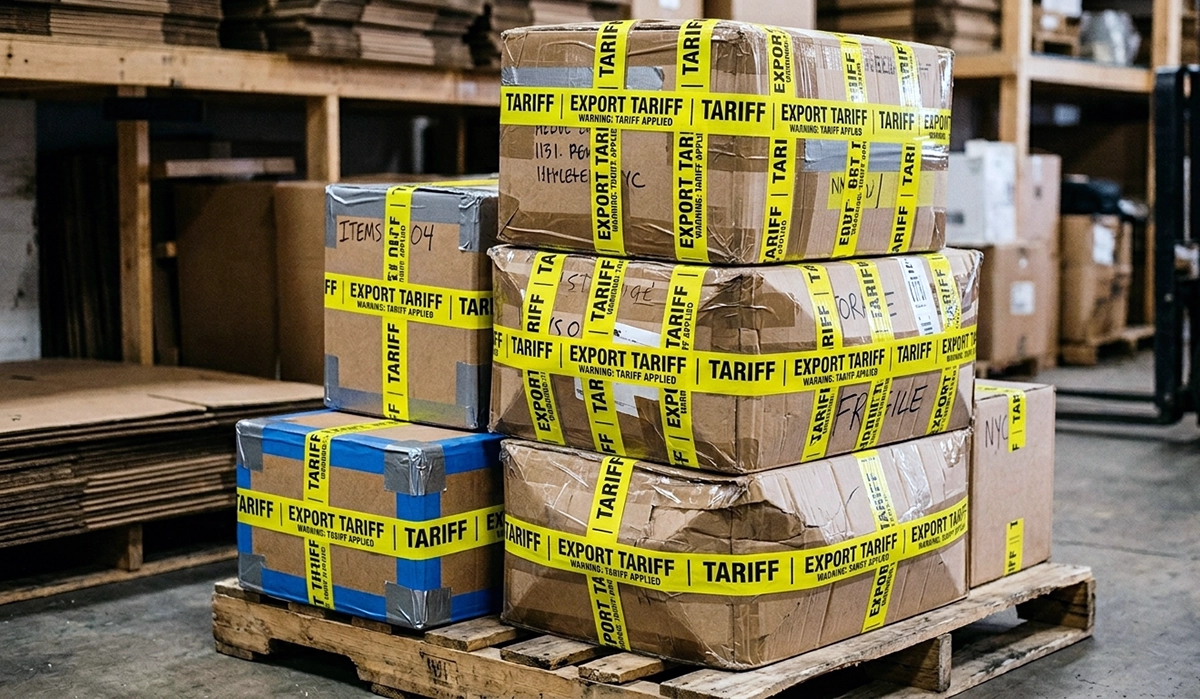
This proposed class action claims Toyota built billions of dollars in import-tariff costs into the prices buyers paid for vehicles and parts, and now that those IEEPA tariffs were struck down and refunds are flowing to importers, that Toyota should share the refunds with buyers rather than keep them. The allegations are unproven, and there is no settlement or claim form yet.


Allegations Only · No Settlement Yet
This article describes a class action complaint. The statements below are unproven allegations. Toyota Motor North America, Inc. has not been found liable, there is no certified class, and nothing to claim at this time. This page is informational and is not legal advice.
What Is This About?
Toyota Motor North America, Inc. is facing a proposed class action lawsuit alleging that the automaker built import-tariff costs into the prices of the vehicles and parts it sells, and now stands to collect government refunds of those same tariffs — while the buyers who allegedly paid the inflated prices have no comparable path to get their money back. Toyota has not been found liable, and the allegations remain unproven.The case is captioned Cornejo v. Toyota Motor North America, Inc. and was filed in early May 2026 in the U.S. District Court for the Central District of California. According to the complaint, Toyota acted as the importer of record that paid tariffs at the border on vehicles and parts brought in from Japan, Canada, and Mexico, then set the prices its customers paid. The suit, brought by the firm Ahdoot & Wolfson, PC, is built on theories such as unjust enrichment, restitution, and money had and received, together with California consumer-protection law. Toyota has not been found liable, and the claims remain unproven.
The Tariff "Double Recovery" Problem
The lawsuit fits a wave of consumer cases built on how U.S. tariff law works, alongside similar tariff-refund suits already filed against other major companies — including a parallel auto case, the Ford tariff refund lawsuit, as well as suits against Sony, Nintendo, Amazon, and Five Below. When a tariff is imposed, the importer of record — here, Toyota, for the vehicles and parts it brings in — pays the duty at the border and typically raises prices to recover that cost, so the buyer effectively pays part of the tariff at the point of sale.When a tariff is later struck down, the refund mechanism gives importers of record — not retail consumers — the direct path to seek reimbursement from the government. The refund flows back to whoever paid the duty at the border, not to the buyer who paid the higher price. The complaint argues this lets a large automaker collect higher prices from consumers during the tariff period and then collect a refund afterward, recovering twice for the same economic burden. It asks the court to require Toyota to return the tariff costs it allegedly passed on to customers, or a proportionate share of any tariff refunds Toyota recovers.
Free settlement alerts
Get notified when new class actions open to claims
Join thousands of readers who get the latest class action settlements you may qualify for — delivered straight to your inbox.
Toyota's Reliance on Imported Vehicles and Parts
A central theme of the complaint is Toyota's use of imported vehicles and components. The suit alleges that Toyota brings a significant volume of its cars and parts into the United States from Japan, Canada, and Mexico, and that as the importer of record it paid the IEEPA tariffs assessed on those imports at the border. According to the complaint, Toyota then passed those costs along by raising the prices buyers paid for tariffed vehicles and parts.On that basis, the complaint alleges that as a direct result of Toyota's pricing, the named plaintiff and proposed class members paid more for tariffed products than they would have absent the tariffs. The complaint estimates that Toyota built roughly $9 billion in tariff costs — it cites a figure of about $9.7 billion — into the prices it charged, an amount the suit says buyers ultimately bore. Whether Toyota in fact set these prices to recover tariffs is a question the court has not decided.
What Toyota Stands to Recover — and What It Has Said
The complaint's core theory turns on what happens now that the tariffs have been invalidated. After the Supreme Court struck down the IEEPA tariffs, the refund process gives importers of record a path to recover the duties they paid at the border. The suit alleges Toyota, as the importer, is positioned to recover or keep refunds of the same tariffs whose cost it allegedly passed to buyers.According to the complaint, Toyota has not announced any consumer price cut, refund, or credit tied to the money it stands to recover. The suit contends that if Toyota collects a federal refund on those tariffs while holding onto the tariff-inflated prices buyers already paid, it would effectively be paid twice for the same cost. That gap — between the buyers who absorbed the tariff through higher prices and the importer who can seek the refund — is what the complaint frames as unjust enrichment. Toyota has not been found liable, and these allegations are unproven.
The IEEPA Tariffs and the Supreme Court Ruling
Beginning in February 2025, the federal government imposed tariffs on imports from numerous countries by invoking the International Emergency Economic Powers Act (IEEPA). On February 20, 2026, the U.S. Supreme Court ruled that IEEPA does not authorize the President to impose tariffs, invalidating those duties in Learning Resources, Inc. v. Trump, 607 U.S. 229 (2026). Shortly after, the President issued an order terminating the tariffs, and U.S. Customs and Border Protection stopped collecting them as of February 24, 2026. The complaint therefore defines the relevant period as February 1, 2025 through February 24, 2026.After the ruling, the Court of International Trade ordered that entries subject to IEEPA tariffs be liquidated "without regard to the IEEPA duties," opening the door for importers of record to recover what they paid. Importers can apply to recover the duties through U.S. Customs and Border Protection's CAPE tariff-refund portal — but consumers who shouldered the cost through higher prices have no direct government mechanism to get their money back. For more on where those refunds are flowing, see our explainer on how tariff refunds are going to companies, not consumers. That gap between who paid and who can recover is what the lawsuit targets.
What the Lawsuit Seeks
The complaint is built on theories such as unjust enrichment, restitution, and money had and received, together with California consumer-protection law, and asks the court to:• Certify the case as a class action and appoint the named plaintiff and his counsel to represent the class.
• Order Toyota to disgorge and return the IEEPA-related costs embedded in the elevated prices class members paid, with interest.
• Declare that a business's pursuit or receipt of a government tariff refund is not a precondition for consumers to seek a refund of the tariff-related amounts they paid.
• Award restitution, damages, pre- and post-judgment interest, and attorneys' fees and costs.
All of these are requests for relief tied to unproven allegations; Toyota has not been found to have done anything unlawful, and no money has been awarded.
Is There a Toyota Settlement Yet?
No. This is important: Cornejo v. Toyota Motor North America, Inc. is a newly filed lawsuit, not a settlement.That means:
• There is no settlement fund.
• There is no claim form.
• There is no payout, and no deadline to act.
• Consumers do not need to do anything at this stage.
The filing of a complaint is the very beginning of a case, not the end. Toyota has not been found liable simply because a lawsuit was filed, and the case remains pending unless and until a newer docket entry says otherwise. If the case is ever resolved through a settlement or a class is certified, a formal claims process with its own eligibility rules and deadlines would be announced separately.
Who Could Be Affected?
The complaint proposes a class of everyone in the United States who purchased or leased a Toyota product — vehicles or parts — through any retail channel during the period the complaint identifies as February 1, 2025 through February 24, 2026, the window it says the tariffs were in effect.No class has been certified, and the final class definition, if any, could change. If you bought or leased a Toyota vehicle, or bought Toyota parts, during that window, it may be worth holding on to your purchase and lease paperwork in case a class is later certified and a claims process opens. There is nothing to file right now.
Beware of Toyota Tariff Refund Scams
Important: whenever a class action is filed against a household-name brand, scammers send fake "tariff refund" texts, emails, and calls asking buyers to click a link, confirm bank details, or pay a small "processing fee." There is no Toyota tariff refund claim form right now, and Toyota has not announced any consumer refund program. A legitimate claims process — if one ever exists — would be run by a court-appointed settlement administrator, would be free to participate in, and would never ask for your banking passwords, gift cards, or up-front fees.What Happens Next?
From here, the case will move through the normal early stages of federal litigation. Toyota may file a response to the complaint or a motion to dismiss, the parties may exchange information in discovery, and the plaintiff would, at some point, ask the court to certify a class. Any of these steps can take months, and the case could also be amended, narrowed, or resolved along the way.OpenClassActions.com will continue watching the docket for any major updates, including a motion to dismiss, settlement talks, class certification activity, or any future claim form.
Frequently Asked Questions
What does the Toyota lawsuit allege?
According to the complaint, Toyota built IEEPA tariff costs into the prices of vehicles and parts and, as the importer of record, stands to collect government refunds of those same tariffs after they were struck down — while its buyers have no comparable refund process. The allegations are unproven.Is there anything to claim right now?
No. There is no settlement, no fund, and no claim form. Anyone asking you to file a claim or pay a fee for a Toyota tariff refund today is running a scam.Who could be covered?
Generally, U.S. buyers who purchased or leased a Toyota vehicle or Toyota parts through any retail channel between February 1, 2025 and February 24, 2026. The exact class definition is not final because no class has been certified.Sources
• Class Action Complaint, Cornejo v. Toyota Motor North America, Inc., No. 2:26-cv-04729 (reported) (C.D. Cal., filed May 2026).• Learning Resources, Inc. v. Trump, 607 U.S. 229 (U.S. Feb. 20, 2026).
• Reuters, Carscoops, The Drive, and Autoblog coverage of the Toyota tariff class action (May 2026).
• U.S. District Court, Central District of California — docket for Cornejo v. Toyota Motor North America, Inc. (filed May 2026), via CourtListener: CourtListener Docket Search