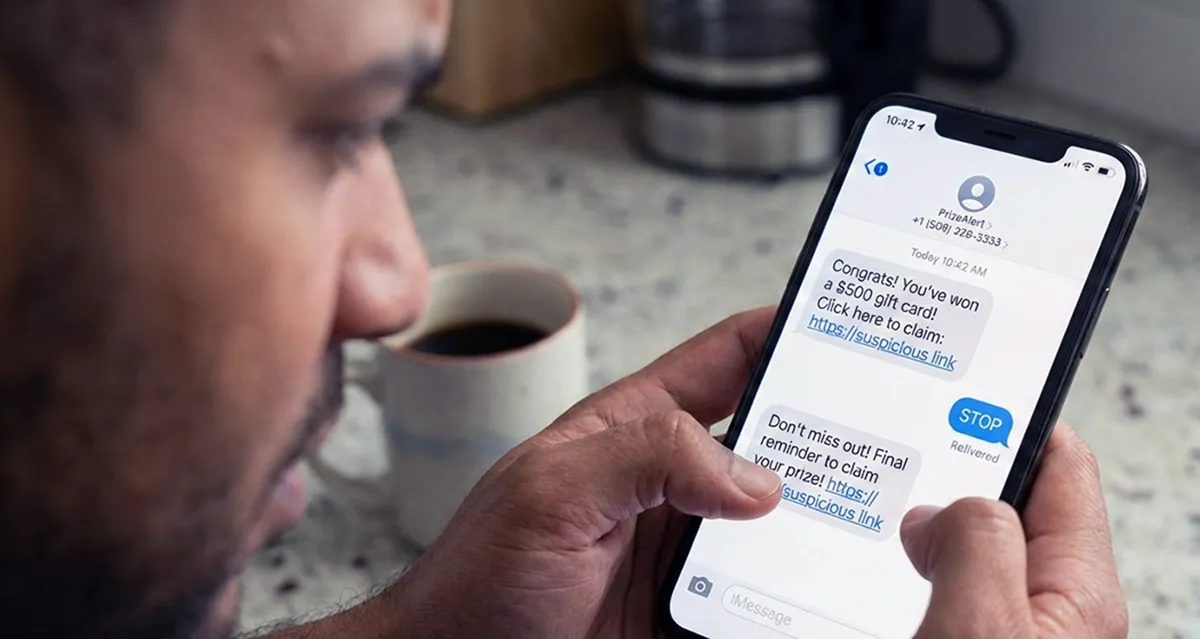
People who got Lovepop marketing texts before 8 a.m. or after 9 p.m., or while their number was on the National Do Not Call Registry, may be covered by a proposed class action alleging Lovepop, Inc. violated two federal telemarketing rules. No class has been certified and there is nothing to file yet.

Allegations Only · No Settlement Yet
This article describes a class action complaint. The statements below are unproven allegations. Lovepop, Inc. has not been found liable, there is no certified class, and nothing to claim at this time. This page is informational and is not legal advice.
Overview
Lovepop, Inc., the company known for pop-up greeting cards, has been sued over the timing and the recipient of its promotional text messages. A man from Winchester, in Riverside County, California, says Lovepop sent him twelve marketing texts over roughly six months, nearly all of them before 8 a.m., even though his cell number had been on the National Do Not Call Registry since at least August 29, 2025.The proposed class action, Ibarra v. Lovepop, Inc., No. 2:26-cv-13496, was filed November 19, 2026 in the U.S. District Court for the Central District of California. The complaint describes Lovepop as a Delaware corporation authorized to do business in California. Lovepop has not responded, and the claims are unproven.
Free settlement alerts
Get notified when new class actions open to claims
Join thousands of readers who get the latest class action settlements you may qualify for — delivered straight to your inbox.
A Dozen Texts, Most Around 7 a.m.
The plaintiff says he uses his cell phone as his residential line, never gave Lovepop written consent to contact him, and had no business relationship with the company. According to the complaint, the texts came from a short code, named Lovepop, promoted its products and did not include instructions for opting out. The complaint lists these send times, all Pacific:- December 1, 2025 — 6:02 a.m.; December 26, 2025 — 7:09 a.m.
- January 29, 2026 — 7:41 a.m.; February 16, 2026 — 7:17 a.m.
- March 12, 2026 — 8:16 a.m.; March 17, 2026 — 7:08 a.m.
- April 1, 2026 — 7:03 a.m.; April 6, 2026 — 7:06 a.m.
- April 20, 2026 — 7:09 a.m.; April 28, 2026 — 7:10 a.m.
- June 1, 2026 — 7:14 a.m.; June 6, 2026 — 7:11 a.m.
Two Federal Rules at Issue
The calling-hours rule. Under 47 C.F.R. § 64.1200(c)(1), a telephone solicitation may not be made to a residential subscriber before 8 a.m. or after 9 p.m., judged by local time where the recipient is located. The rule targets marketing; informational messages fall outside it.The Do Not Call Registry rule. Under 47 C.F.R. § 64.1200(c)(2), telemarketers generally may not send telephone solicitations to a residential subscriber who has put a number on the National Do Not Call Registry. The rule has exceptions, including for a seller with an established business relationship with the person or the person’s permission given in a signed written agreement. The complaint alleges neither exception applies here.
The FCC has treated text messages as calls under these rules. The TCPA, at 47 U.S.C. § 227(c)(5), lets a person sue after receiving more than one solicitation in a 12-month period that violates them. Whether Lovepop’s texts qualify is a question the court has not reached.
The Two Proposed Classes
The complaint seeks to represent two nationwide groups, each covering the period from four years before the filing through class certification:- TCPA After-Hours Class — people who received more than one Lovepop telemarketing text within a 12-month period on a wireless number used as a residential line, with at least one text arriving before 8 a.m. or after 9 p.m. local time.
- TCPA National Do-Not-Call Registry Class — people who received more than one such text within a 12-month period on a residential-use wireless number that had been on the Registry for at least 30 days before the first text.
Status and Related Filings
The docket shows the complaint, a civil cover sheet, a notice of interested parties and a request for a summons, all filed November 19, 2026, along with a same-day clerical notice transferring the case within the district. As of November 22, 2026, it showed no issued summons, no assigned judge and no response from Lovepop, which had not commented publicly.The plaintiff’s lawyer, Vinit R. Venkatesh of PLG Damage Attorneys, filed a quiet-hours complaint the same day in the Southern District of California against the company doing business as Iberostar Beachfront Resorts; that case is summarized on the Iberostar text message lawsuit page. The firm also brought a quiet-hours case covered on the Loveseat text lawsuit page. Each case is separate and turns on its own facts.
Questions
What is the Lovepop text message lawsuit about?
A Riverside County, California man alleges Lovepop, Inc. sent him 12 marketing text messages between December 2025 and June 2026 without his consent, most of them shortly after 7 a.m., while his number was on the National Do Not Call Registry. He claims the texts broke two TCPA rules: the 8 a.m. to 9 p.m. calling window and the Do Not Call Registry rule. Lovepop has not been found liable.
Were all of the Lovepop texts sent before 8 a.m.?
The complaint says each text arrived outside the permitted hours, but one of the twelve times it lists, 8:16 a.m. on March 12, 2026, falls after 8 a.m. The other eleven listed times range from 6:02 a.m. to 7:41 a.m. Pacific time. The court has not addressed the discrepancy.
Who could be part of the proposed Lovepop classes?
The complaint proposes two nationwide classes covering the four years before filing through class certification: people who got more than one Lovepop marketing text in a 12-month period with at least one sent before 8 a.m. or after 9 p.m. local time, and people who got more than one such text in a 12-month period at a number listed on the Do Not Call Registry at least 30 days before the first one. Neither class has been certified.
Has Lovepop responded to the lawsuit?
As of November 22, 2026, the docket showed no answer, motion or public statement from Lovepop, Inc. There is no settlement and nothing to claim.
Sources
• Docket and complaint, Ibarra v. Lovepop, Inc., No. 2:26-cv-13496 (C.D. Cal., filed November 19, 2026), via CourtListener• 47 C.F.R. § 64.1200, FCC telemarketing and Do Not Call rules (eCFR)
• 47 U.S.C. § 227, Telephone Consumer Protection Act (Cornell Legal Information Institute)