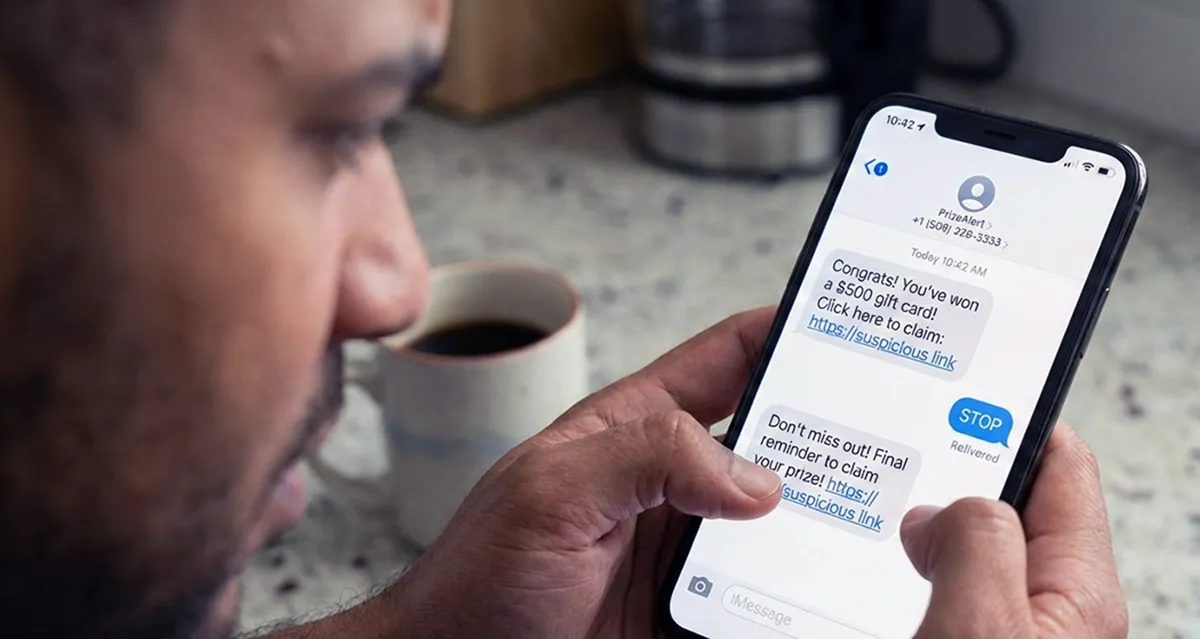
People who received Iberostar Beachfront Resorts marketing texts before 8 a.m. or after 9 p.m. may be covered by a proposed class action alleging Visit Us, Inc., which does business under that name, broke the federal telemarketing quiet-hours rule. No class has been certified and there is nothing to file yet.


Allegations Only · No Settlement Yet
This article describes a class action complaint. The statements below are unproven allegations. Visit Us, Inc. has not been found liable, there is no certified class, and nothing to claim at this time. This page is informational and is not legal advice.
What the Lawsuit Says
A San Diego County resident has filed a proposed class action claiming a resort marketer texted him too early on one day and too late on another. The defendant is Visit Us, Inc., which the complaint describes as a Florida corporation authorized to do business in California that operates under the name Iberostar Beachfront Resorts. The case is Cann v. Visit Us, Inc., No. 3:26-cv-06556-WQH-JLB, filed November 19, 2026 in the U.S. District Court for the Southern District of California.The plaintiff says he never consented to the messages and never had a business relationship with the company. His only legal claim is that the texts violated the Telephone Consumer Protection Act’s limits on when telemarketers may contact people. Visit Us has not responded in court, and none of the allegations has been proven.
Free settlement alerts
Get notified when new class actions open to claims
Join thousands of readers who get the latest class action settlements you may qualify for — delivered straight to your inbox.
Two Texts, Two Ends of the Day
The complaint’s factual core is brief. It says the plaintiff uses his cell phone as his home line and that both texts named the defendant and promoted its goods or services. It identifies the sender only as an unknown number. The two messages it describes:- Tuesday, February 17, 2026, 7:01 a.m. — one minute before the federal window opens, according to the plaintiff.
- Monday, July 6, 2026, 9:31 p.m. — about half an hour after it closes, the complaint says.
The TCPA’s Quiet-Hours Rule
Federal Communications Commission rules bar telephone solicitations to a residential subscriber before 8 a.m. or after 9 p.m., measured by the local time where the recipient is (47 C.F.R. § 64.1200(c)(1)). A telephone solicitation, in general terms, is a call or message meant to encourage someone to buy goods, services or property. The FCC has applied the TCPA’s calling rules to text messages, and the plaintiff argues these marketing texts are covered the same way.The TCPA itself, at 47 U.S.C. § 227(c)(5), allows a private lawsuit by someone who receives more than one solicitation within any 12-month period in violation of these rules. Here, the two texts arrived about five months apart. Whether a cell phone counts as a “residential” line, and whether these particular messages were solicitations, are questions the court has not addressed in this case.
Who Is Being Sued
The only defendant is Visit Us, Inc. Hotels around the world carry the Iberostar name, but the complaint does not explain how, or whether, Visit Us is connected to any of them, and it names no other company. The complaint’s allegations are aimed at Visit Us and anyone acting on its behalf in sending the texts.The plaintiff is represented by Vinit R. Venkatesh of PLG Damage Attorneys. The same firm filed a separate complaint that day against Lovepop, over early-morning texts to a Do Not Call number, and it is also behind the Loveseat quiet-hours text lawsuit. A separate quiet-hours complaint over late-night texts was filed against Simplilearn. Each case is separate.
Proposed Class and Damages Sought
The complaint proposes one nationwide group, the “TCPA After-Hours Class.” As drafted, it would cover people in the United States who, from four years before the filing through class certification, received more than one telemarketing text within a 12-month period from Visit Us or someone acting for it, on a wireless number used as a residential line, with at least one of the texts arriving before 8 a.m. or after 9 p.m. local time. A judge has not certified the class.The TCPA lets a successful plaintiff recover actual losses or up to $500 per violation, whichever is greater, and a court may raise that to as much as three times the amount for knowing or willful violations. The complaint also asks for an order stopping the challenged texting and demands a jury trial.
Where the Case Stands
The case is assigned to U.S. District Judge William Q. Hayes and Magistrate Judge Jill L. Burkhardt. The court issued a summons on November 19, 2026. As of November 22, 2026, the docket showed no answer or motion from Visit Us, and the company had not commented publicly.Early steps in cases like this usually include service of the complaint, a deadline to respond, and sometimes a motion to dismiss. Class certification, if it happens, would come later. OpenClassActions.com will update this page if the case produces a ruling or a settlement.
Questions
Who is the defendant in the Iberostar text message lawsuit?
The defendant is Visit Us, Inc., which the complaint describes as a Florida corporation authorized to do business in California and doing business as Iberostar Beachfront Resorts. The complaint does not describe any relationship between Visit Us and other businesses that use the Iberostar name, and no other company is named as a defendant.
What times were the Iberostar texts allegedly sent?
The complaint lists two marketing texts: one on February 17, 2026 at 7:01 a.m. and one on July 6, 2026 at 9:31 p.m., both Pacific time. The plaintiff alleges each fell outside the 8 a.m. to 9 p.m. window that federal telemarketing rules allow. The court has not ruled on these allegations.
Does the Iberostar lawsuit include a Do Not Call Registry claim?
No. The complaint pleads a single count under the TCPA’s quiet-hours rule, and its only proposed class is an after-hours class. It does not allege that the plaintiff’s number was on the National Do Not Call Registry.
Has Iberostar Beachfront Resorts responded to the lawsuit?
As of November 22, 2026, the docket showed a summons issued on November 19, 2026 and no answer or motion from Visit Us, Inc. The company had not commented publicly on the case. There is no settlement and nothing to claim.
Sources
• Docket and complaint, Cann v. Visit Us, Inc., No. 3:26-cv-06556 (S.D. Cal., filed November 19, 2026), via CourtListener• 47 C.F.R. § 64.1200, FCC telemarketing rules (eCFR)
• 47 U.S.C. § 227, Telephone Consumer Protection Act (Cornell Legal Information Institute)