Waymo, the Alphabet-owned robotaxi company, has recalled its driving software three times since December 2025 — for passing stopped school buses, driving into flooded roads and entering freeway work zones. Here is what each recall actually covered, which fixes are still disputed, and why none of it gives a rider anything to file.

What Happened?
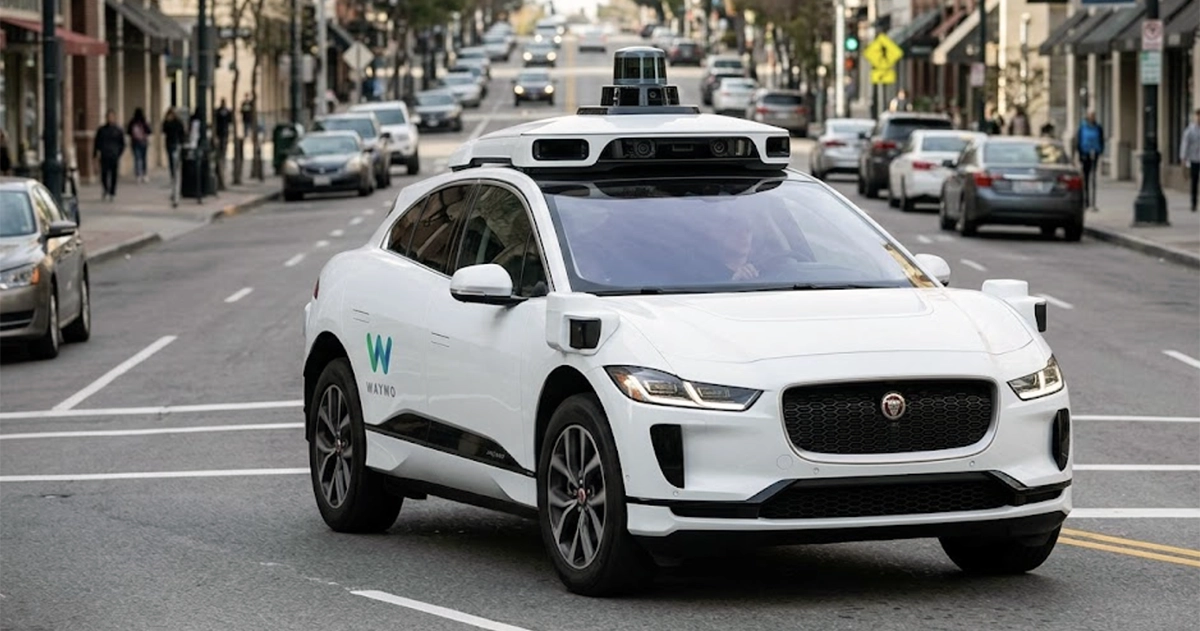
Waymo's driverless fleet grew faster than any robotaxi operation in the country over the past year and a half — from a few hundred vehicles to roughly 4,000, spread across 15 metropolitan areas and carrying about half a million paid trips a week. Its recall record grew with it. The company has filed six software recalls with the National Highway Traffic Safety Administration since February 2024, and three of those landed in the eight months beginning December 2025.Each of the three recent recalls followed the same shape: a behavior nobody scripted the cars for, a regulator or a local institution noticing it, a voluntary filing with NHTSA, and a software update pushed over the air. Waymo characterizes the filings as proactive. Regulators, a Texas school district and a handful of city officials have been less satisfied, and at least two federal investigations remain open. Nothing below is a finding of liability against Waymo, and no court or agency has concluded that the company broke the law.
Recall One: Passing Stopped School Buses
The first of the three was also the most alarming in principle. In October 2025, NHTSA opened investigation PE25013 after footage circulated of a Waymo vehicle maneuvering around a stopped school bus in Atlanta — red lights flashing, stop arm out, crossing arm extended. No crash or injury was reported in that incident.Waymo filed recall campaign 25E084 with NHTSA in December 2025, covering 3,067 vehicles running fifth-generation Automated Driving System software released between August 20 and November 5, 2025. The defect description was blunt: the software could let a vehicle that had stopped for a school bus start moving again before the bus withdrew its stop arm and switched off its flashing lights. NHTSA noted the obvious risk — a car passing a stopped school bus raises the chance of striking a pedestrian, and the pedestrians around school buses are children.
Waymo updated the software free of charge and reported that every affected vehicle had been repaired by November 17, 2025, before the recall paperwork was even filed.
Free settlement alerts
Get notified when new class actions open to claims
Join thousands of readers who get the latest class action settlements you may qualify for — delivered straight to your inbox.
Why the School Bus Fix Is Still Contested
This is the part of the story that has not closed, and it is worth separating carefully from the recall itself.Austin Independent School District says its buses kept recording Waymo vehicles passing an extended stop arm after the software update went out. Local investigative reporting by KXAN, which reviewed district bus-camera footage, put the count at roughly two dozen recorded passes over the school year, with a number of them occurring after the recall. In some of the clips, according to that reporting, a vehicle drove past the bus's first stop sign, halted alongside the bus, and then continued past the second. District officials have taken the position that Waymo should not operate around its buses during service hours.
Waymo disputes the characterization that nothing changed, saying it has seen material improvement in performance since the update. Both things can be true — a fix can reduce a behavior substantially without eliminating it — and no agency has yet ruled on whether the remedy was adequate.
One NTSB finding complicates the "software bug" framing in an important way. Investigating a January 12, 2026 incident in Austin, the board reported that the vehicle's system actually flagged its own uncertainty and contacted a remote human assistant, asking whether it was looking at a school bus with active signals. The remote agent — working from another state — answered that it was not, and the car proceeded past the bus. Video reportedly showed the bus displaying flashing red lights with two stop arms deployed at the time.
That detail matters because it points at the human-in-the-loop layer rather than the perception software alone, and because it is the same layer safety researchers have questioned: when an automated system is unsure, handing the call to a remote operator who is looking at a video feed is only as reliable as that operator's judgment in that moment.
Recall Two: Driving Into Flooded Roads
On April 20, 2026, an unoccupied Waymo in San Antonio came to a section of roadway that was flooded during heavy rain. Rather than stopping or rerouting, the vehicle slowed and drove in. It was carried off by the water and ended up in a creek. Because nobody was aboard, no one was hurt.Waymo filed recall 26E026 in early May 2026, covering 3,791 vehicles — its fifth- and sixth-generation driving systems, effectively the entire fleet. The recall report described the defect as the software slowing, but not stopping, in response to detecting a potentially untraversable flooded lane on higher-speed roads. Driving into standing water at speed can cause a loss of control.
The remedy was another over-the-air update, deployed as vehicles returned to depots for routine charging and maintenance, so the wider service was not interrupted. Waymo did pause passenger service in San Antonio, and said it was adding software safeguards, refining how it operates in extreme weather, and limiting access to areas where flash flooding is likely.
Recall Three: Freeway Construction Zones
The third recall is the one OCA covered in detail when it was filed. Between April and May 2026, Waymo vehicles entered freeway construction zones they should have stayed out of on 13 occasions — six in the Phoenix area, seven in the San Francisco Bay Area. In some cases the cars drove past ramp-closure signage into pre-planned closures; in others they threaded between cones into an active lane closure. Waymo says none of the 13 produced a collision or an injury.The company restricted freeway operations in May while it built a fix, then filed campaign 26E035000 in June covering 3,871 vehicles. Construction zones are genuinely one of the hardest problems in automated driving: the painted lanes stop matching the real ones, cones appear where the map says open road, and human flaggers give instructions that were never designed to be read by a sensor.
That recall has since progressed past where our earlier coverage left it. Waymo deployed the update to the affected vehicles and began restoring freeway service at the end of July 2026, starting with Phoenix — which brought back airport runs to Sky Harbor after roughly two months off the highways — and extending to other markets including the Bay Area, Los Angeles and Miami. Our freeway work-zone recall page has the full campaign detail.
Why Federal Regulators Are Paying Closer Attention
The recalls are only part of what has put Waymo in front of regulators. NHTSA administrator Jonathan Morrison wrote in a July 8, 2026 letter that the agency had identified what he called a clear pattern of autonomous vehicles interfering with police, firefighters and paramedics, and pushed back on the industry's habit of filing such events under "edge cases" — his point being that emergency scenes are a routine feature of driving in a city, not a rare anomaly. The agency has summoned driverless-car developers to present fixes and has begun work on federal safety standards for automated vehicles.Individual incidents have kept the pressure on. A December 2025 power outage in San Francisco left roughly 1,600 Waymos immobilized for at least two minutes. During the city's July 4, 2026 fireworks, Waymos contributed to gridlock near the waterfront, several had to be towed after their batteries ran down in stalled traffic, and at least two drove over fireworks that had been lit in the roadway, one of which caught fire. In Austin, a Waymo was reported to have blocked an ambulance responding to a shooting.
Two federal investigations remain open — a NHTSA preliminary evaluation into traffic-law violations and an NTSB highway investigation. An open investigation is a question, not an answer: neither has produced a finding that Waymo's vehicles are defective or that the company is liable for anything.
For its part, Waymo points to a safety record it says shows substantially fewer serious-injury crashes than human drivers over comparable miles, and describes the recall filings as the system working as intended — identify a behavior, restrict operations, notify the regulator, ship a fix. Independent researchers have questioned how well an automated system can recognize that it is in a situation it has never seen. Both positions are in the public record, and the disagreement between them has not been resolved.
Why a Robotaxi Recall Is Not Like a Car Recall
If you have been through an ordinary vehicle recall — the Ford roll-away campaign, say, or the Honda rear-suspension recall — the pattern is familiar: a letter arrives, you book a dealer appointment, the repair is free, and if the manufacturer handled it badly a class action sometimes follows over diminished value or out-of-pocket costs.None of that applies here. Waymo owns every vehicle in the recalled fleet. There is no owner to notify, no dealership step, and no consumer who paid for a defective product. The people affected are passengers on a service and pedestrians, cyclists and other drivers sharing the road with the fleet — none of whom have a recall remedy, because a recall remedy runs to owners.
So the practical answer for readers is short: there is no Waymo settlement, no fund, no claim form and no deadline attached to any of these three recalls. A robotaxi recall is a regulatory and engineering event. It is worth following because it tells you what the technology is getting wrong and how quickly it gets fixed, not because there is money at the end of it.
What If a Waymo Actually Hurt You?
That is a different question from the recalls, and the recalls do not resolve it. Someone struck by an autonomous vehicle, or whose car or property was damaged by one, is looking at an ordinary injury or property-damage claim against the operator — not a recall remedy and not a class action.The useful steps are the same as after any collision: get the incident documented at the scene, keep any police or agency report, photograph the damage, keep your trip record if you were a passenger, keep medical records if you were treated, and talk to a licensed attorney in your state about whether you have a claim and how long you have to bring it. Recall records and open federal investigations can become relevant evidence in that kind of case, which is one reason the filings above are worth knowing about. This page is informational and is not legal advice.
For the litigation side of automated driving, OCA also tracks the Tesla Autopilot wrongful-death suit and connected-car data cases like the GM OnStar Smart Driver lawsuits.
Frequently Asked Questions
How many times has Waymo recalled its robotaxis?
Waymo has filed six software recalls since February 2024. Three of them came in an eight-month stretch beginning in December 2025: stopped school buses, flooded roadways and freeway construction zones. The earlier three covered a collision with an improperly towed pickup, a collision with a utility pole, and low-speed contact with gates, chains and similar stationary obstacles.
Can Waymo riders file a claim over these recalls?
No. Waymo owns and operates every recalled vehicle, so there is no owner to send a recall notice to, no dealership visit, and no claim form. The remedy in each case was a free software update Waymo pushed to its own fleet. A robotaxi recall is a safety and regulatory event, not a consumer-remedy one.
Did the Waymo school bus recall fix the problem?
That is disputed. Waymo reported that all affected vehicles were updated by November 17, 2025 and has said it has seen material improvement since the update. Austin Independent School District says its buses recorded stop-arm violations by Waymo vehicles after the recall, and local investigative reporting says bus camera footage captured roughly two dozen such passes during the school year. The National Transportation Safety Board is examining specific incidents. No agency has issued a final finding on whether the remedy was adequate.
What did the Waymo flood recall cover?
NHTSA campaign 26E026 covered 3,791 vehicles running Waymo's fifth- and sixth-generation Automated Driving System. According to the recall report, on higher-speed roads the software could slow but not stop when it detected a potentially untraversable flooded lane. It followed an April 20, 2026 incident in San Antonio in which an unoccupied Waymo drove into a flooded roadway during heavy rain and was carried into a creek. No one was injured. The remedy was an over-the-air software update.
Are Waymo's freeway robotaxis running again?
Yes. Waymo paused freeway operations in May 2026 while it worked on the construction-zone fix, then began restoring freeway service at the end of July 2026, starting with Phoenix and extending to other markets including the San Francisco Bay Area, Los Angeles and Miami. The company said the software update was deployed to the affected vehicles and validated before service resumed.
What should I do if a Waymo vehicle injured me or damaged my property?
That is a separate matter from the recalls, and none of these recall campaigns creates a payout. Document what happened, keep any trip records, photos, police or incident reports and medical records, and speak with a licensed attorney in your state about your options. This page is informational and is not legal advice.
Sources
- NHTSA — Part 573 Safety Recall Report 25E084 (Waymo ADS, stopped school buses).
- NHTSA — Part 573 Safety Recall Report 26E026 (Waymo ADS, flooded roadways).
- NHTSA — Recall Campaign 26E035000 (Waymo ADS, freeway construction zones).
- NHTSA — Preliminary Evaluation PE25013 (school bus passing) and PE26001 (traffic-law violations).
- NTSB — Highway Investigation HWY26FH008.
- KXAN Austin — Austin ISD says Waymo continued passing its buses after the recall, and NTSB findings on the January 12, 2026 Austin incident.
- NPR — Waymo software recall over stopped school buses (December 2025).
- The New York Times — Waymo's expansion and its recurring "edge cases" (August 10, 2026), including the July 8 NHTSA letter and the July 4 San Francisco incidents.
- NHTSA — Federal framework for automated vehicles.