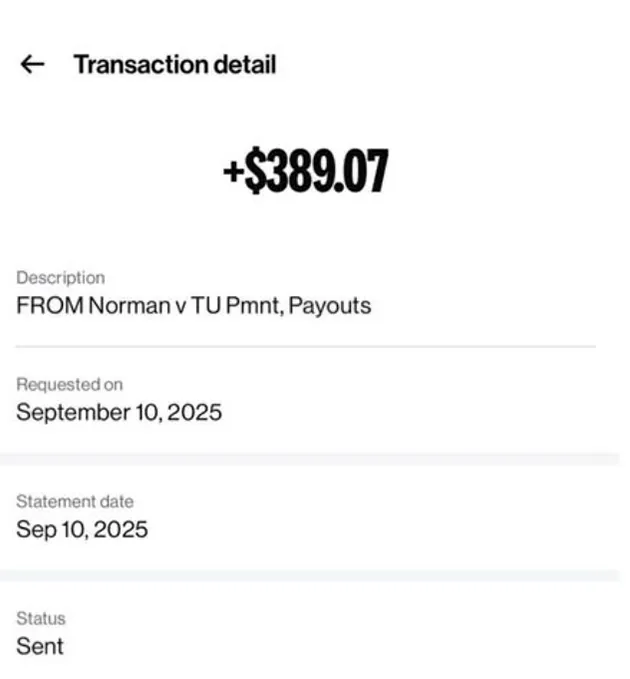
People who were not Concora Credit accountholders but received an artificial or prerecorded voice call on their cellular telephone between May 2, 2021 and May 31, 2026 may qualify to claim an estimated $250 to $650 from the Concora Credit TCPA class action settlement. Claims close October 19, 2026, and the Claimant ID and Access Code printed on the mailed notice are what open the online claim form.


Current Status
Claims are open. The deadline to file is October 19, 2026 — a mailed claim form must be postmarked by that date, and a claim submitted online through the settlement website must be in by the same date. The Notice does not give a cutoff time or a timezone, so treat the date itself as the deadline. The Court entered its order preliminarily approving the settlement on August 5, 2026, and notice went out on September 4, 2026. The final fairness hearing is set for November 24, 2026 at 1:00 p.m. No final approval order has been entered and no payment date had been announced as of September 10, 2026. If a postcard notice reached you, it carries the Claimant ID and Access Code the online claim form asks for.What Changed Recently?
The case behind this settlement, Seals v. Concora Credit Inc., Case No. 3:25-cv-00728-AN, was filed on May 1, 2025 in the United States District Court for the District of Oregon, Portland Division, where Concora is headquartered. The complaint alleges that Concora Credit Inc. — identified in the filing as formerly known as Genesis FS Card Services — violated the Telephone Consumer Protection Act by using an artificial or prerecorded voice on non-emergency calls placed to cellular telephone numbers without prior express consent. It describes a repeating voicemail about an Indigo account that reached a number the named plaintiff had held since 2022 and that had never been given to the company. Those are allegations, and the Court has not decided them. The Notice states that prior express consent is a complete defense to a TCPA claim, and describes the settlement as a way for both sides to avoid the time, risk and expense of continued litigation and reach a final resolution of the disputed claims.The Court entered its order preliminarily approving the settlement on August 5, 2026. Under the schedule that order set, Concora funded the settlement fund and the Settlement Administrator sent notice on September 4, 2026, which is the event that opened the claim process. Class counsel's fee petition was filed the same day. The official settlement website went live with the claim form, the notice, the settlement agreement and the complaint posted in its documents section.
Free settlement alerts
Get notified when new class actions open to claims
Join thousands of readers who get the latest class action settlements you may qualify for — delivered straight to your inbox.
Who Qualifies?
The Settlement Class is every person throughout the United States (1) to whom Concora Credit Inc. placed, or caused to be placed, a call, (2) directed to a telephone number assigned to a cellular telephone service but not assigned to a Concora Credit Inc. accountholder, (3) in connection with which Concora used, or caused to be used, an artificial or prerecorded voice, (4) from May 2, 2021 through May 31, 2026.The second element is the one that trips people up, because it runs the opposite way from most settlements. This class is built out of the people who were not customers. A number that belonged to a Concora accountholder during the class period is outside it; a number that belonged to someone with no account, no card and no relationship with the company is inside it. That is the shape of a reassigned-number or wrong-number robocall case, and it is why the compliance half of the settlement is aimed at reassigned-number procedures rather than at consent records.
The class period is also wider than the one pleaded. The complaint asked for a class running four years back from filing through the date of class certification; the settlement fixes both ends, at May 2, 2021 and May 31, 2026. A qualifying call anywhere in that five-year window counts, whether it came under the Concora Credit name or the older Genesis FS Card Services name the messages used.
Excluded from the class are people who timely and validly exclude themselves. Class membership does not turn on remembering the call: the administrator mailed postcard notices to numbers identified for the case, and a claim form is what converts membership into a payment.
How Much Can You Get?
The Notice estimates that each participating and approved member of the settlement class will receive between $250 and $650, and says in the same breath that the actual amount may be more or less depending on how many participating settlement class members submit approved claims. There are no tiers and no per-call multiplier — every approved claimant gets an equal share of what is left in the fund.The $9,375,000 headline number is two separate commitments, and only one of them is cash for class members. The first is a mandatory TCPA minimum compliance spend of $1,000,000 that Concora must make within three years of the settlement, directed at heightened reassigned-telephone-number procedures — including use of the Federal Communications Commission's Reassigned Numbers Database — periodic internal auditing, employee training programs and other related TCPA compliance policies. The second is $8,375,000 that Concora pays into a settlement fund to compensate the class.
Four things come out of that $8,375,000 before anyone is paid, each subject to the Court's approval: notice and administration costs not to exceed $340,000; an award of attorneys' fees not to exceed $3,000,000; litigation costs and expenses not to exceed $25,000; and an incentive award to the class representative not to exceed $10,000. Subtracting all four ceilings leaves $5,000,000 to divide among approved claims. That is our arithmetic on the figures in the Notice, not a projection from the administrator, and the Court has not yet ruled on the fee request — but it does frame the estimate: a $5,000,000 pool paying $250 to $650 apiece implies somewhere in the range of eight thousand to twenty thousand approved claims, and a claim total outside that range is what would move the per-person figure. If you want the mechanics of how a fixed fund gets divided among claimants, our explainer on pro rata distribution covers it.
For context on what the underlying claim is worth outside a settlement, the Notice states that the TCPA allows damages of $500 per violation and up to $1,500 for willful violations, and that prior express consent is a complete defense.
What Proof or Claimant ID Is Required?
Filing online requires two administrator-issued credentials. The claim page on the settlement website opens on a login screen with a required Claimant ID field and a required Access Code field, plus a captcha, and it carries an instruction above them: do not attempt to file your claim online if you do not have a unique Claimant ID number. Both credentials come from the postcard notice and claim form mailed on September 4, 2026. Because filing is conditioned on a code that appears only on that mailing, this page treats the settlement as Proof Required: Yes.There is a route for people the mailing missed, and it asks for documentation instead of a code. The Notice says a class member who did not receive a postcard notice and claim form may request one in writing from the Settlement Administrator and must submit proof of receipt of an artificial or prerecorded voice call or message from Concora to their cellular telephone between May 2, 2021 and May 31, 2026. What that proof looks like is not spelled out in the Notice; a saved voicemail, a call log entry or a screenshot showing the call is the kind of record the request contemplates. A claim form obtained this way still has to be completed and returned postmarked by October 19, 2026, so leaving the request until October is a bad idea.
Either path ends at the same place: a completed claim form, submitted on time, that the administrator approves. Keep a copy of whatever you send.
What Is the Deadline?
Claim forms are due October 19, 2026. A mailed claim form must be postmarked no later than that date. A class member who received a postcard notice and claim form in the mail may instead submit a claim through the settlement website by the same date. The Notice gives no cutoff time and names no timezone, so the safe reading is to file on or before October 19 rather than late in the day.October 19, 2026 is also the deadline to exclude yourself and the deadline to object — unusually, all three windows close together here, rather than the opt-out and objection dates landing weeks ahead of the claim date the way they often do. A request for exclusion must be postmarked by October 19, 2026, and an objection must be postmarked by the same date. Class members who object and want to enter an appearance must do that by October 19, 2026 as well.
How Do You File a Claim?
If a postcard notice and claim form reached you, the fastest route is the official settlement website, SealsTCPASettlement.com. Open the claim form page, enter the Claimant ID and Access Code from your mailing, clear the captcha, and complete the form. The access code field is case sensitive, cookies have to be enabled for the submission to go through, and the site warns that after three failed captcha attempts you have to start over.The mailed claim form is the alternative, and it is the only route for anyone without a Claimant ID. The settlement website's documents section carries the notice, the claim form, the settlement agreement and the complaint. A class member who never received a mailing requests a claim form in writing from the Settlement Administrator and includes proof that a qualifying call reached their cellular telephone, as described above. The mailing address for the administrator is printed on the notice and the claim form themselves.
What If You Want Out — or Want to Object?
Excluding yourself means you get no payment and release nothing — you keep whatever TCPA claims you may have against Concora and can pursue them on your own. A written request for exclusion has to be mailed to the claims administrator postmarked by October 19, 2026, and must include your full name, your address, the telephone number to which Concora placed an artificial or prerecorded voice call between May 2, 2021 and May 31, 2026 so that the administrator can see you are a class member, and a clear and unambiguous statement that you wish to be excluded — the Notice offers "I request to be excluded from the settlement in the Seals v. Concora Credit Inc. action" as a model. You have to sign it personally, and anyone signing on your behalf must attach a power of attorney authorizing the signature. Our glossary entry on opting out of a class action explains what you keep and what you give up.Objecting is different: you stay in the class, and you tell the Court why you think the settlement should not be approved. An objection must be in writing and postmarked by October 19, 2026, and copies go to class counsel, to counsel for Concora and to the Court — the three sets of details are printed in the Notice. The Notice requires an objection to include your full name; your address; the telephone number that received a qualifying call, to demonstrate class membership; the statement of the objection; a description of the facts underlying it; a description of the legal authorities supporting it; a statement of whether you intend to appear at the fairness hearing; a list of all witnesses you intend to call by live, deposition, affidavit or declaration testimony; a list of exhibits you intend to present; and your signature.
An objection can ask the Court to deny approval. It cannot ask the Court to order a different settlement — the Court can only approve or reject what is in front of it, and if approval is denied there are no payments and the lawsuit continues. Attending the hearing is optional even for objectors, and anyone who appears through an attorney pays for that attorney. A class member who excluded themselves cannot speak at the hearing, because the settlement no longer affects their rights.
If you do nothing, you stay in the class, receive no payment, and release the TCPA-related claims the settlement covers if the Court approves it.
What Happens Next?
The claim, exclusion and objection windows all close October 19, 2026, which is also the deadline for any opposition to the attorneys' fees petition. The motion for final approval is due October 25, 2026, the reply in support of the fees petition on November 2, 2026, any opposition to final approval on November 10, 2026, and the reply in support of final approval on November 17, 2026.The final fairness hearing is scheduled for November 24, 2026 at 1:00 p.m., in person, at the United States District Court for the District of Oregon in Portland. At that hearing the Court will consider whether the settlement is fair, reasonable and adequate, will hear any objections, and may rule, postpone a decision or continue the hearing. The Notice warns that the hearing date may change without further notice and points class members to the settlement website or the court's PACER system to confirm it.
Payments follow final approval, not the hearing. The Notice states that settlement payments will be sent to approved class members no later than 30 days after the judgment becomes final, and that an appeal may delay payment. No payment date had been announced as of September 10, 2026. More robocall and spam-text cases are tracked on our TCPA class action hub, and readers still getting unwanted calls from other senders can have those reviewed through the standing unwanted-contact investigation.
Sources and Verification
• Official settlement website — Seals v. Concora Credit Inc.• Notice of Class Action Settlement — long form notice (PDF)
• Settlement claim form and its login requirements, posted on the official settlement website
• Class Action Complaint, Seals v. Concora Credit Inc., Case No. 3:25-cv-00728-AN, filed May 1, 2025, U.S. District Court for the District of Oregon, Portland Division
• Order preliminarily approving the settlement, entered August 5, 2026, and the case schedule it set
• FCC — Reassigned Numbers Database
• National Do Not Call Registry (FTC)
Questions
Do you have to have been a Concora Credit customer to qualify?
No — the opposite. The Settlement Class is defined as people to whose cellular telephone Concora placed or caused to be placed an artificial or prerecorded voice call and whose number was not assigned to a Concora Credit accountholder. Someone who held an Indigo or other Concora account during the class period is outside the class the settlement resolves. The underlying complaint describes calls that reached a number the plaintiff had held since 2022, about an account belonging to someone else.
The calls said Genesis FS Card Services and mentioned an Indigo account. Is that the same company?
The complaint identifies Concora Credit Inc. as formerly known as Genesis FS Card Services, and describes prerecorded messages that opened by naming Genesis FS Card Services and referring to an Indigo account. It also alleges that the callback number in those messages answers with a greeting for Concora Credit and the Indigo Mastercard account. A message that used the older name is still the conduct the Settlement Class covers, so long as the call reached a number that was not assigned to a Concora accountholder during the class period.
What if you received the calls but never got a notice in the mail?
There is a route, and it costs more than filing with a notice does. The Notice says a person who did not receive a postcard notice and claim form may request a claim form in writing from the Settlement Administrator and must submit proof of receipt of an artificial or prerecorded voice call or message from Concora to a cellular telephone between May 2, 2021 and May 31, 2026. A claim form obtained that way still has to be completed and returned postmarked by October 19, 2026. The online portal is closed to anyone without a Claimant ID, and it says so on its first screen.
Could the estimated $250 to $650 payment end up different?
Yes, in either direction. The Notice presents that range as an estimate and states plainly that the actual amount may be more or less depending on how many participating settlement class members submit approved claims. Each approved claimant receives an equal share of the $8,375,000 settlement fund as it stands after notice and administration costs, the fee award, litigation costs and the incentive award are deducted, so the per-person figure is not fixed until the claim period closes and the administrator finishes reviewing claims.
Does the $1,000,000 compliance spend come out of class members' payments?
No. The $9,375,000 headline figure has two separate halves. One is a mandatory TCPA minimum compliance spend of $1,000,000 that Concora must make within three years, directed at reassigned-number procedures including the Federal Communications Commission's Reassigned Numbers Database, periodic internal auditing, employee training and related compliance policies. The other is the $8,375,000 Concora pays into the settlement fund, and that fund is what class member payments come out of. The compliance money is never distributable cash.
When would payments actually go out?
Not before the Court approves the settlement. The Notice states that settlement payments will be sent to approved settlement class members no later than 30 days after the judgment in the lawsuit becomes final, and that payment may be delayed if there is an appeal. The final fairness hearing is set for November 24, 2026 at 1:00 p.m., and the Court has not yet decided whether the settlement is fair, reasonable and adequate. A hearing being held is not the same as approval being granted. No payment date had been announced as of September 10, 2026.