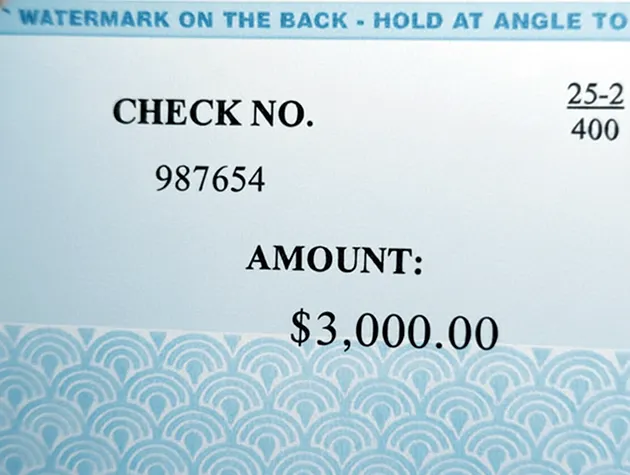
A class action settlement check that a bank accepts and then reverses days later was returned unpaid by the bank it was drawn on, usually with the reason "Refer to Maker." The money is not lost: the settlement administrator that issued the check is the party that replaces it, and the original cannot be deposited a second time.
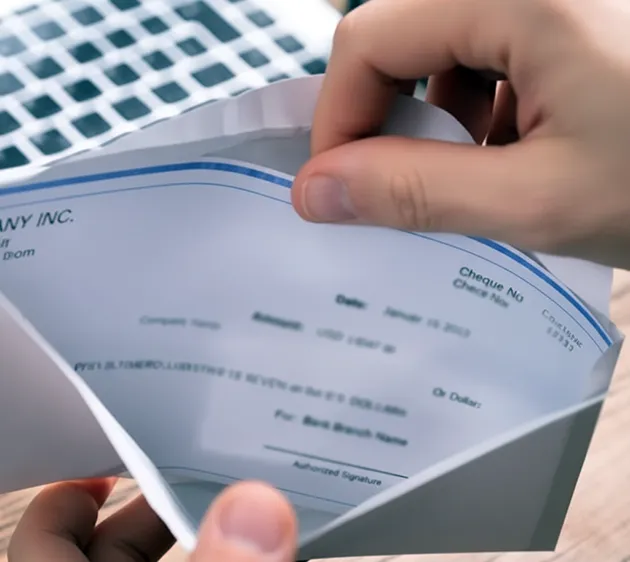

Several such alerts reached Open Class Actions in the week of September 13, 2026, all from class members in the $152.2 million tuna price-fixing settlement, which began sending its first payments in early September and is the largest consumer distribution of the season. One Chime account holder's check was reversed with exactly that wording; another reader's bank posted a $127.33 check deposit reversal; a third asked a forum whether anyone else's tuna check had bounced. In the same week, other claimants were receiving the same distribution electronically, under the payer name "Packaged Seafood Products Price Fixing Litigation COSI Settlement Fund," in amounts from a few hundred dollars to $1,833.50. The steps below apply to any settlement check, from any administrator, that comes back this way.

What to Do, in Order
• Save the alert and note the details. Check number, amount, the date it was deposited, the date of the return, and the return reason exactly as the bank stated it. The administrator will ask for all of it. If the bank mailed back the physical check with a return stamp, keep it.• Do not redeposit the original. It will be returned again.
• Look at the account for the fee and the balance. The reversal takes the full amount back out, which can push an account negative if the money was already spent, and many banks add a returned deposited item fee on top. Ask for the fee to be waived; the bank fee section below covers the argument.
• Find the official settlement website from a source you trust, not from a link or number in the check's envelope or in an email. The settlement's page on Open Class Actions links the official site for every case it covers, and the class notice names it. For the tuna checks, that is the official Tuna End Purchaser settlement website; the tuna settlement page and the tuna payment update carry the same link and the current distribution status.
• Contact the administrator through that site's own contact channel and give the check number, the amount, the deposit and return dates, and the return reason. Ask three specific questions: whether a stop payment or void is recorded on that check number, whether a replacement will be issued and by what method, and whether the mailing address on file is current. Ask for the answer in writing.
• Deposit the replacement immediately, at a teller if possible. Replacement checks commonly carry a fresh void-after window, sometimes shorter than the original. If the first return was a positive pay mismatch created by a mobile deposit's image capture, a branch deposit — where the amount is keyed by a person looking at the paper — removes the most likely cause of a repeat.
• Keep the original until the replacement has cleared. Some administrators ask for a photo of both sides, including the return stamp, before they reissue.
The one place people go wrong is the third-party route. A collection agency, a check-recovery service or a bank's own disputes desk cannot compel a settlement administrator to pay a dishonored check; the reissue is an administrative act inside the settlement, and the only path to it runs through the administrator.
Free settlement alerts
Get notified when new class actions open to claims
Join thousands of readers who get the latest class action settlements you may qualify for — delivered straight to your inbox.
How to Contact the Tuna Settlement Administrator
Yes, the administrator can be reached, and the official Tuna End Purchaser settlement website is the only place to get the contact details. It publishes a toll-free number, an email address and a mailing address for JND Legal Administration under the case name In re Packaged Seafood Products Antitrust Litigation. Open Class Actions does not reprint those details, because a number or address copied from anywhere other than the official site is how people end up talking to an impostor; open the site directly, confirm the case name on it, and use the contact channel it lists.Email is the better first channel: it creates a written record, it lets the administrator attach the reply to the claim, and a phone queue during a distribution of this size is long. Send one message with everything the administrator needs to find the payment and act on it:
• The claimant's full name exactly as it was entered on the claim, the mailing address on file, and the email address used to file. Include the claim confirmation number from the 2024 or Chicken of the Sea process if it was kept; the administrator can locate a claim without it, but it removes a round trip.
• The check number and the check amount, the date it was deposited, the date the bank reversed it, the bank's name, and the return reason exactly as the bank stated it. A screenshot of the alert and a photo of the front and back of the check, if the paper was returned, answer most follow-up questions in advance.
• Three questions, asked plainly: is a stop payment or void recorded on that check number; will a replacement be issued and by what method; and is the mailing address on file current. Ask whether the replacement can go out electronically, since the fund is paying other claimants through a payment app under the name "Packaged Seafood Products Price Fixing Litigation COSI Settlement Fund," which removes the mail and the void-after window from the second attempt.
• A subject line that names the case and the problem — "Returned check, Packaged Seafood end purchaser settlement, check no. ____" — so it is routed to the payments queue rather than the general inbox.
Give the administrator about ten business days before following up, and follow up by replying to the same thread rather than opening a new one. If the first answer is a form response that does not address the check number, reply once more asking specifically for the stop-payment status on that number; that is the fact everything else turns on. Keep the reversed check and the alert until the replacement has cleared, and if the 60-day cancellation window is close, say so in the message.
What the administrator will never need: a bank login, a full Social Security number by email, a payment of any kind, or a gift card. It may ask for the last four digits of a taxpayer identification number or a copy of a document to confirm identity before reissuing a payment to a new address, and that request comes through the official channel, not through a link in an unexpected message. A "check-recovery" or "settlement-recovery" service that offers to handle the reissue for a fee adds nothing the class member cannot do in one email.
What If the Tuna Check Has Not Arrived at All?
A returned check and a missing check are different problems, and the second one is usually not a problem yet. The administrator began issuing tuna payments for approved claims on September 8, 2026, and a distribution of close to a million claims goes out in batches over days or weeks, with first-class mail adding several days after that. The 30-day figure in the reporting on the July 27 order is the window for the administrator to start distributing, not a promise that every claimant is paid within it, so a claimant with nothing in hand in mid-September should give the mail until at least early October.In the meantime, check the email address used on the claim, including spam, because some tuna payments are arriving electronically and an unopened payment-app notification can expire (the Venmo payment guide covers that fix); confirm the mailing address on file through the official Tuna End Purchaser settlement website if you have moved since filing, since an undeliverable check is re-mailed only once the administrator has a current address; and remember that the court-approved notice paid nothing on a claim worth less than $5, so a very small claim produces no check at all. A claim that was rejected or left deficient during review is not in this distribution either. If early October passes with nothing, ask the administrator through the official site whether the claim was approved, what payment method and date are on file, and whether a check came back undeliverable. The payment status and the official site link are on the tuna settlement payment update, and the general checklist for a payment that never arrived is in where is my settlement payment.
What the Alert Is Actually Saying
A deposited check is credited provisionally. The depositing bank gives the account the money on the assumption the check will be paid, then sends the check to the bank it is drawn on, called the paying bank or drawee. If the paying bank decides not to pay, Regulation CC requires it to send the check back so that the depositing bank normally receives it by 2 p.m. on the second business day after presentment, and for checks of $5,000 or more to send a separate notice of nonpayment on the same schedule. The depositing bank then exercises its right of charge-back under UCC section 4-214 and takes the provisional credit back out of the account.So the reversal is the depositing bank's ordinary response to a check that was dishonored somewhere else. The FTC's plain-language version, written for fake-check scams but true of every check, is that banks have to make deposited funds available quickly and that money showing in the account does not mean the check has cleared. A hold expiring and a check being finally paid are separate events, and the alert is the news that the second one did not happen.
Two things follow. The depositing bank did not make the decision and cannot reverse it; it can only report the reason it was given. And the reason it was given is a code, not an explanation.
What "Refer to Maker" Means
Check returns travel with a standardized reason. Most are specific: insufficient funds, account closed, stop payment, stale dated, signature missing, endorsement irregular, duplicate presentment, altered or fictitious item. "Refer to Maker" is the one that says nothing beyond its own name. The paying bank is declining the check and directing the payee to the maker, the party whose account it was drawn on, for the reason.For a class action check, the maker is the settlement administrator, the court-appointed company that runs the claim process and writes the checks from the settlement's distribution account. That is who has the answer. The payee's own bank does not, and will usually say so.
Paying banks reach for this code in a small set of situations: the account holder has instructed the bank to return the item, the item was flagged by an automated fraud control the account holder runs, the bank is uncertain of the check's validity and would rather return it than pay it, or a specific reason exists that the bank does not want to state on the return. In every version the check is not eligible to be presented again. A returned Refer to Maker item that is redeposited comes back a second time, often with a second fee. Whatever fixes the problem, it is not another attempt with the same piece of paper.
Why a Real Settlement Check Comes Back Unpaid
Settlement checks are drawn on a distribution account funded once, for one mailing, at a bank the administrator chose, and the administrator protects that account aggressively because a leaked check-stock image invites forgery. Those arrangements are what produce Refer to Maker returns on legitimate checks. The usual causes, roughly in order of how often they surface:• A positive pay exception. Administrators send the paying bank an issue file listing every check by number, amount and payee; the bank pays only items that match and refers the rest back. Positive pay is standard practice for bulk settlement mailings, and it is why a settlement check can bounce for reasons that have nothing to do with the recipient. A mobile deposit where the amount was misread from the image, a check number the scanner captured wrong, a payee name the bank's matching software could not reconcile with the file, and a check the administrator voided in its own records all return the same way.
• A stop payment on a check that was replaced. If the administrator reissued the payment — after a change of address, a name correction, a request for electronic payment, or a reported lost check — it stops the original. A first check that turns up in the mail after a replacement was requested is a dead item even though it looks fine.
• A check presented after its window. Settlement checks carry a printed void-after date, commonly 60, 90, 120 or 180 days, and the administrator instructs the bank to stop honoring the batch once it passes. The tuna distribution, for example, was reported to give claimants 60 days to cash a check before it is canceled. Separately, UCC section 4-404 lets any bank refuse a check more than six months old.
• A duplicate presentment. The same check deposited twice — once by phone, once at a branch, or by two members of a household — is paid once. The second presentment is returned, and it is the second one that generates the alert.
• A distribution account that was not ready. Occasionally checks reach the bank before the account is funded or before the issue file is loaded. Those returns clear up on reissue and are the administrator's to explain.
• The check was not genuine. Fake settlement checks exist precisely because real ones arrive unannounced, and a reversal is how a counterfeit is discovered. The tell is not the return reason but what came with the check, covered further down.
None of these cancels the underlying claim. The class member's entitlement was fixed when the claim was approved; the check is only the instrument. Under the general rule in UCC section 3-414, the drawer of a dishonored check remains obligated to pay it, and in a settlement the practical form of that obligation is a replacement.
The Bank Fee, and the Argument Against It
Returned deposited item fees have been shrinking since the Consumer Financial Protection Bureau issued Bulletin 2022-06 on October 26, 2022. The bulletin defines a returned deposited item as a check a consumer deposits that comes back because it could not be processed against the check writer's account, and it says that blanket policies of charging a fee on every such return, regardless of the circumstances or the account's history, are likely unfair under the Consumer Financial Protection Act. The reasoning is the one a settlement check illustrates perfectly: the person depositing it had no way to know it would be returned and no way to prevent it. Several of the largest banks dropped the fee afterward, and others reduced it.A bank that still charges one is not required to waive it, but the request is worth making, and it should be made in the bank's dispute or complaint channel rather than in a chat window so that a record exists. The fee, if it stands, is between the depositor and the bank; settlement administrators do not reimburse it. Consumers who paid fees on deposited checks that bounced can also look at the bank bounced check fees investigation attorneys are running on that practice.
The larger exposure is the negative balance. If the settlement money was spent before the reversal, the account is overdrawn by the amount of the check, and overdraft fees or a frozen account can follow at banks that charge them. Moving money in to cover the gap before the next transaction posts avoids compounding the loss.
The Tuna Settlement Example
The case behind the current wave of questions is the $152.2 million packaged-tuna price-fixing settlement with StarKist, Chicken of the Sea and the Lion Capital companies associated with Bumble Bee. Judge Dana M. Sabraw of the Southern District of California signed the order authorizing distribution on July 27, 2026, trade press covering the order reported that JND Legal Administration would begin sending money within 30 days and that claimants would have 60 days to cash a check before it is canceled, and the first payments began landing in early September. The court-approved notice estimated roughly $0.12 per can, with nothing paid on a claim worth less than $5, so most household checks are small, and small checks are the ones people deposit by phone.For tuna checks, the administrator has already acted. Its notice on the official Tuna End Purchaser settlement website says the returns were caused by a bank processing issue that the bank handling the distribution has since resolved, and that replacement checks, each with an additional $20 toward bank fees, were mailed to affected class members on September 28, 2026, so affected class members do not need to request one. Do not redeposit the original; deposit the replacement promptly, since trade press on the distribution order described a 60-day window to cash a check. Contact the administrator through the official site only if your bank charged more than $20 or no replacement arrives. Nothing in a Refer to Maker return suggests the settlement itself is in question; the distribution is court-ordered and funded. Payment details and the official site link are on the tuna settlement payment update, and the returned-check reports are tracked in the tuna settlement checks returned update.
When It Is Not a Real Settlement Check
A returned check is also how a counterfeit announces itself, so the possibility has to be ruled out before chasing a reissue. The distinguishing feature is never the printing. It is whether the sender wanted something back. A genuine settlement payment asks nothing of the recipient beyond depositing it: no processing fee, no portion to return as an overpayment, no gift cards, no verification call that needs a bank login or a one-time code. The FTC's warning is that a fake check can take weeks to be discovered, and when it bounces the person who deposited it is responsible for whatever they sent on in the meantime.The second test is the claim itself. A settlement check arrives because a claim was filed or because the class member was in the defendant's records and the settlement paid automatically. A check for a case the recipient has never heard of, in an amount out of proportion to any purchase, is the setup for the overpayment version of the scam. The five-minute verification in is this settlement notice real applies to checks as well as emails.
What Not to Do
• Do not deposit the returned check a second time, in the app or at a branch.• Do not spend a settlement deposit until the funds are final, not merely available; on an unfamiliar check that is roughly a week.
• Do not contact the administrator through a number, email address or website printed in an unexpected message. Use the official settlement website named in the class notice.
• Do not pay anyone to have a settlement check reissued. Reissues are free.
• Do not discard the returned check or the alert before the replacement has cleared.
• Do not let the settlement's cash-by window run out while waiting; ask for the replacement as soon as the reversal posts.
Related Guides
Endorsing, depositing and hold times are covered in how to cash a class action settlement check. A check that expired before it was deposited, rather than one that bounced, is the subject of reissued settlement checks. A payment that never arrived at all is covered in where is my settlement payment, and a check the bank refused to accept at deposit, as opposed to one it accepted and reversed, is a different problem addressed in the guide to emailed settlement checks.Frequently Asked Questions
What does Refer to Maker mean on a returned settlement check?
It means the bank the check was drawn on declined to pay it and is sending the payee back to the party that wrote it, which for a class action settlement check is the settlement administrator. Refer to Maker is the return reason banks use when the cause is something other than insufficient funds — most often a stop payment, a positive pay exception, or a check presented outside the window the issuer set. The code itself does not say which.
Can I deposit the same settlement check again after it was returned?
No. A check returned as Refer to Maker is not eligible to be presented a second time, and a repeat deposit is returned again, sometimes with a second fee. The fix is a replacement check or an electronic payment issued by the settlement administrator, not another attempt with the original.
Do I still get my settlement money if the check was returned?
In almost every case, yes. A returned check does not cancel an approved claim. The administrator holds the money in the settlement account and can reissue it while the distribution is open; the general rule under UCC section 3-414 is that the drawer of a dishonored check remains obligated to pay it. The risk is timing — many settlements cancel uncashed and reissued checks after a set number of days and then redistribute what is left — so the request should go in as soon as the reversal appears.
Should I call my bank or the settlement administrator about a returned settlement check?
Both, for different things. Your bank can tell you the return reason, the date, and whether it charged a fee, but it cannot pay a check the drawee bank refused. Only the settlement administrator can say why the check was dishonored and issue a replacement. Reach the administrator through the contact channel on the official settlement website named in your class notice, never through a number or address in an unexpected email.
Can the bank charge me a fee because a settlement check I deposited bounced?
Many banks charge a returned deposited item fee, and the deposit itself is reversed under the bank's charge-back right in UCC section 4-214. Ask for the fee to be waived. In October 2022 the Consumer Financial Protection Bureau said blanket policies of charging returned deposited item fees on every returned check, regardless of the circumstances, are likely unfair, because the depositor generally cannot know a check will bounce. Several large banks have since dropped the fee.
Does a returned check mean the settlement is a scam?
Not by itself. Genuine settlement checks are returned for stop payments, positive pay mismatches and expired windows. What separates a scam is what came with the check: a real settlement payment never asks the recipient to send any part of it back, pay a fee, or share a bank login. If a check arrived for a case you never filed a claim in and the sender wants money returned, the reversal is the fake check being discovered, and the FTC's guidance is that the depositor is left owing whatever was sent on.
My tuna settlement check was returned. Who reissues it?
The settlement administrator, JND Legal Administration, through the official Tuna End Purchaser settlement website. The court's July 27, 2026 distribution order was reported to give claimants 60 days to cash a check before it is canceled, so a returned tuna check should be reported promptly with the check number, the amount and the return reason your bank gave. Do not redeposit the original.
How do I contact the tuna settlement administrator about a returned check?
Through the contact details published on the official Tuna End Purchaser settlement website, which lists a toll-free number, an email address and a mailing address for JND Legal Administration. Use email so there is a written record, and send the claimant name and address on file, the check number and amount, the deposit and reversal dates, the bank's return reason, and a screenshot of the alert. Ask whether a stop payment is recorded on the check, whether a replacement will issue and by what method, and whether the address on file is current. Never use a number or address from an unexpected email or text.
How long does a replacement settlement check take?
It depends on the administrator's schedule. Some reissue on request within a few weeks; others batch replacement checks every month or two and stop payment on the originals in the same run. Replacement checks commonly carry their own void-after window, often 60 or 90 days, so deposit one as soon as it arrives.
My tuna settlement check has not arrived yet. Is it late?
Not yet, in most cases. The administrator began issuing tuna payments for approved claims on September 8, 2026, and a distribution of close to a million claims is mailed in batches, so a check missing in mid-September is within the normal window. Check the email used on the claim for an electronic payment, update the mailing address through the official settlement website if you have moved, and remember that claims worth less than $5 receive no payment. If nothing has arrived by early October, ask the administrator through the official site whether the claim was approved, which payment method is on file, and whether a check was returned as undeliverable.
Sources
• 12 CFR 229.31 — Regulation CC, paying bank's responsibility for return of checks and notices of nonpayment• Uniform Commercial Code — Section 4-214, Right of charge-back or refund
• Uniform Commercial Code — Section 3-414, Obligation of drawer
• Uniform Commercial Code — Section 4-404, Bank not obligated to pay check more than six months old
• Consumer Financial Protection Bureau — Bulletin 2022-06, Unfair Returned Deposited Item Fee Assessment Practices
• Federal Trade Commission — How to Spot, Avoid and Report Fake Check Scams
• Kroll Settlement Administration — Positive pay and reverse positive pay in class action settlement administration
• U.S. District Court, Southern District of California — In re Packaged Seafood Products Antitrust Litigation, No. 15-MD-2670, distribution order of July 27, 2026, via the official Tuna End Purchaser settlement website