Published
September 30, 2026
Updated
October 3, 2026
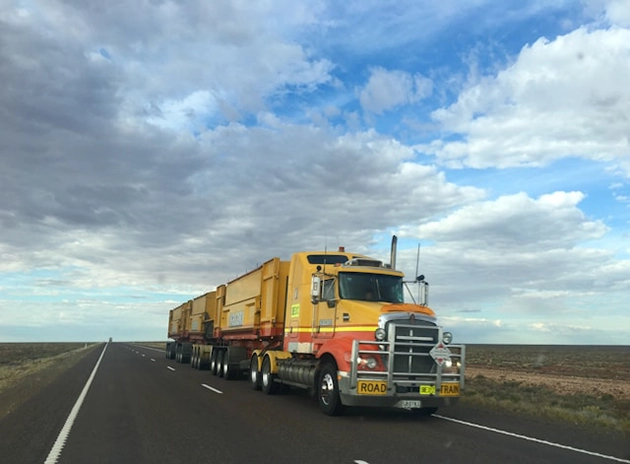

Within hours, police reports circulate to insurers, safety departments, and sometimes regulators. Within weeks, attorneys on multiple sides begin requesting driver logs, maintenance files, and dispatch records. The incident becomes a test of how well several organizations managed risk they may have treated as routine.
For executives outside the transportation sector, these cases offer an unexpectedly clear window into liability exposure, documentation discipline, and the cost of fragmented oversight. The mechanics of a truck accident claim touch on employment practices, fleet maintenance, federal compliance, and contract language. Each element mirrors the kind of risk that surfaces in any operation where heavy equipment, hourly workers, and tight deadlines intersect.
The stakes extend far beyond one courtroom. How a trucking company, its insurer, and its legal counsel respond to a serious crash often determines whether a single event becomes a contained loss or a multi-year drain on capital and reputation.
Liability spreads across multiple parties
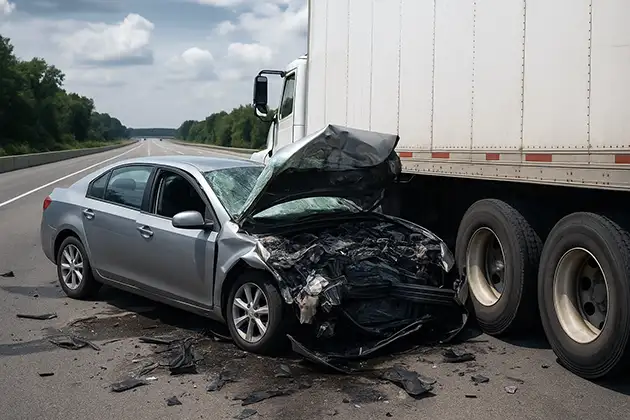
A tractor-trailer collision typically involves more than one defendant. The driver, the motor carrier, the shipper who loaded the cargo, and sometimes a maintenance contractor each carry some share of potential responsibility.Federal rules require motor carriers to maintain minimum levels of financial responsibility, but those floors often sit far below the actual damages in a catastrophic crash. When insurance limits are exhausted, plaintiffs look further up the chain. They examine whether the carrier properly vetted the driver, whether hours-of-service rules were enforced, and whether the vehicle passed inspection on schedule.
That inquiry pulls human resources, safety, and operations into the same legal proceeding. A missing onboarding record or an unsigned safety manual becomes evidence, not just an administrative gap. Baseline data from the Bureau of Labor Statistics shows that transportation and warehousing account for a substantial share of workplace injuries, a trend that regulators and plaintiff attorneys both track. The practical implication is straightforward: companies that treat compliance as a filing exercise rather than an operating discipline tend to face wider exposure when something goes wrong.
Documentation gaps become legal vulnerabilities
Electronic logging devices have made it harder to falsify driving hours, but they have also created a new kind of risk. The data exists, and it can be subpoenaed. Carriers that fail to review exception reports or ignore repeated fatigue flags may find those omissions used to argue negligent supervision. Similarly, maintenance records that show deferred repairs or skipped inspections can support claims that the company knew about a hazard and did nothing.What looks like a clerical backlog inside a fleet office often reads as a pattern of disregard in a deposition. The gap between what a policy says and what employees actually do is where many cases turn. Leadership teams in any industry can learn from this. The records a company keeps, and the records it fails to keep, shape how outsiders judge its decisions long after an incident occurs.
Insurance responds differently than operators expect
Commercial auto policies typically include cooperation clauses that require the insured to assist in the defense. In practice, that cooperation can become strained when the carrier’s own conduct is part of the dispute. Insurers may reserve their rights, meaning they agree to defend under protest while preserving the option to deny coverage later. That posture frustrates executives who assumed the policy would absorb the loss. It also forces the company to fund its own defense or negotiate separately with plaintiffs.For businesses outside trucking, the parallel sits in any liability policy where coverage depends on compliance with internal procedures. A claim that exposes a procedural failure can trigger the same reserved-rights dynamic. The lesson isn’t that insurance fails, but that it responds to facts on the ground, not to assumptions made at renewal.
Federal oversight adds layers of scrutiny
The Federal Motor Carrier Safety Administration maintains safety ratings and inspection data that are publicly accessible. A crash that triggers a compliance review can affect a carrier’s ability to operate, and the findings may be cited in civil litigation. That dual exposure, regulatory and civil, means a company under investigation faces pressure on two fronts at once. Safety directors must respond to federal inquiries while outside counsel manages the lawsuit. Internal communications can become discoverable, so casual emails about the incident carry real weight.Guidance from the Federal Motor Carrier Safety Administration outlines the compliance expectations that carriers are measured against, and those standards often become the benchmark plaintiff experts use. Companies in other regulated sectors recognize this pattern: when an agency publishes standards, courts tend to treat them as a measure of reasonable conduct. Preparation, in this context, means aligning internal practices with what regulators already expect, before an incident forces the issue.
Early legal strategy shapes long-term outcomes
The first weeks after a serious crash often determine how the rest of the case unfolds. Evidence preservation letters, witness interviews, and data downloads happen quickly or not at all. Delays can be costly. Companies that retain experienced counsel early tend to preserve more options. They can assess coverage disputes, coordinate with insurers, and manage communications in a way that limits unintended admissions. Small procedural choices early on can narrow or widen the range of outcomes much later.For organizations facing complex liability, exploring a lawyer for 18 wheeler accident resources can help clarify how experienced counsel approaches evidence preservation, regulatory coordination, and multi-party negotiations. The decision to bring in an outside perspective is one part of a broader strategy, and leadership still connects that input to its own operational priorities.
Financial exposure extends beyond settlements
Jury verdicts in catastrophic trucking cases can reach amounts that exceed insurance coverage by wide margins. But the financial impact rarely stops at the judgment.Higher insurance premiums, difficulty securing contracts with shippers who audit safety records, and elevated driver turnover all follow a serious incident. Recruiting becomes harder when a carrier’s safety rating declines. Some shippers require minimum safety scores before awarding routes.
These second-order effects accumulate slowly, which makes them easy to underestimate in the immediate aftermath. A company focused only on the lawsuit may miss the operational costs that persist for years. Risk managers in any capital-intensive industry recognize this pattern. The direct loss is visible, but the indirect costs often determine whether a business recovers fully.
Free settlement alerts
Get notified when new class actions open to claims
Join thousands of readers who get the latest class action settlements you may qualify for — delivered straight to your inbox.
Compliance culture matters more than policy manuals
Many carriers have comprehensive safety manuals. Fewer enforce them consistently across every terminal and shift. The gap between documentation and daily behavior is where liability grows. Companies that invest in training, audits, and clear accountability tend to fare better when claims arise. Those investments don’t prevent every incident, but they create a record that supports a reasonable-conduct defense. They also reduce the likelihood that a single employee’s shortcuts become a company-wide legal problem.The same principle applies outside transportation. Any organization that depends on front-line judgment under time pressure benefits from making compliance part of the culture rather than a document filed away after onboarding.
Lessons cross industry boundaries
Executives in manufacturing, construction, and logistics face similar dynamics when heavy equipment, contract labor, and regulatory oversight intersect. The trucking industry’s experience with catastrophic claims offers a case study in how quickly a single event can expose systemic gaps.The response that holds up over time usually combines disciplined record-keeping, early legal coordination, and a genuine commitment to the standards regulators publish. None of those steps guarantees a favorable outcome, and no company can eliminate the possibility of a serious incident. What separates organizations that recover from those that struggle is often the depth of preparation long before a claim arrives. The work that matters most tends to happen quietly, in the months and years when nothing seems urgent. That preparation is what determines how much room a company has to maneuver when everything suddenly is.
About This Page
OpenClassActions.com is a consumer news and information site, not a law firm. This article is general information about commercial truck accident claims and corporate risk. It is not legal advice, and reading it does not create an attorney-client relationship.
For more class actions keep scrolling below.