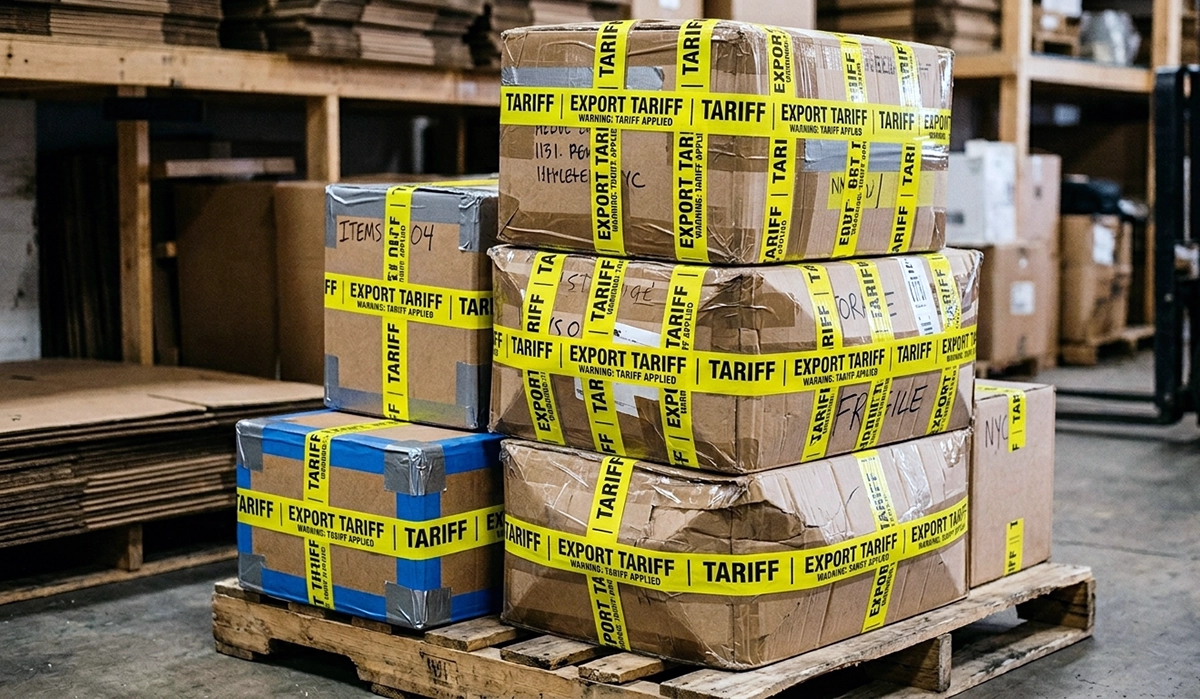
Shoppers who bought merchandise in Dollar Tree stores between February 1, 2025 and February 24, 2026 may be covered by a proposed class action alleging the discount chain raised prices to pass IEEPA tariff costs to customers and then collected roughly $369 million in federal refunds of those same tariffs. No class has been certified and there is nothing to file yet.

Allegations Only · No Settlement Yet
This article describes a class action complaint. The statements below are unproven allegations. Dollar Tree has not been found liable, there is no certified class, and nothing to claim at this time. This page is informational and is not legal advice.
What Is This About?
Dollar Tree is facing a proposed class action alleging that the discount chain raised shelf prices on imported merchandise to recover federal tariff costs, and then collected hundreds of millions of dollars in government refunds of those same tariffs after they were struck down — without returning anything to the shoppers who allegedly paid the higher prices. Dollar Tree has not been found liable, and the allegations remain unproven.The case is captioned Fennessy v. Dollar Tree, Inc., Case No. 2:26-cv-00932, and is pending in the U.S. District Court for the Eastern District of Virginia, where Dollar Tree is headquartered. It was filed on September 3, 2026 by ten named plaintiffs and assigned to District Judge Elizabeth W. Hanes, with Magistrate Judge Lawrence R. Leonard referred. The complaint names four related corporate entities — Dollar Tree, Inc., Dollar Tree Stores, Inc., Dollar Tree Sourcing Company, LLC, and Greenbrier International, Inc. — reflecting that the importing entity that paid the duties at the border and the retail entity that set the shelf prices sit inside the same corporate family. The docket lists the case under diversity jurisdiction as a contract matter.
Free settlement alerts
Get notified when new class actions open to claims
Join thousands of readers who get the latest class action settlements you may qualify for — delivered straight to your inbox.
The Tariff "Double Recovery" Problem
The lawsuit is part of a wave of consumer cases built on a gap in how U.S. tariff law works, alongside similar suits already filed against Five Below, Target, Amazon, Nintendo and others tracked on the tariff refund class action page. When a tariff is imposed, the importer of record pays the duty at the border and typically raises retail prices to recover that cost, so the shopper effectively pays part of the tariff at checkout.When the tariff is later struck down, the refund mechanism runs back to whoever paid the duty at the border — the importer — and not to the customer who paid the higher shelf price. There is no federal process through which a retail shopper can recover the tariff component of what they paid. The complaint argues that this lets a large retailer collect elevated prices from consumers during the tariff period and then collect a refund of the same duties afterward, recovering twice for a single economic burden. What makes the Dollar Tree case different from most of the cluster is that the refund is no longer hypothetical: the money has already landed.
What the Complaint Says About Dollar Tree's Prices
Dollar Tree spent most of its history as a strict single-price store, which makes a price increase unusually visible to its customers — the whole brand promise is built on a fixed price point. The chain has since moved to a multi-price assortment, which it describes in its own filings as a central pillar of its strategy, carrying the expanded assortment in the substantial majority of its stores as of August 1, 2026.According to the complaint, Dollar Tree marked tariff-affected merchandise with red stickers identifying the items the duties applied to, and prices on many of those items rose by as much as $1.75. The lead plaintiff, a Virginia resident who shopped regularly at Dollar Tree stores in the state, says she noticed the increases after the tariffs took effect. These characterizations come from the complaint and have not been tested in court.
Dollar Tree's own quarterly report supports the narrower point that pricing moved during the tariff window, though not the complaint's conclusion about it. The company attributes part of its improved cost of sales rate to "pricing initiatives executed during the second and third quarters of fiscal 2025" and notes that store payroll later fell because "the labor needed to support our pricing initiatives in fiscal 2025 did not re-occur." Whether those pricing actions were unlawful, or whether shoppers are entitled to any of the refunded money, is exactly what the case will decide.
Dollar Tree's Tariff Refunds, in Its Own Filings
The refund figures in this case are not estimates drawn from a complaint — Dollar Tree has reported them to investors. In its quarterly report for the 13 weeks ended August 1, 2026, the company disclosed that it submitted claims for IEEPA tariff refunds totaling $379 million in April 2026, and that during the second quarter it began receiving those refunds, "totaling approximately $369 million, plus $14 million of interest." The company said the roughly $369 million is recorded within cost of sales and the interest within other income, and that it does not expect the remaining refunds to be material.The effect on the company's reported results was substantial. Dollar Tree's cost of sales rate fell to 57.1% for the quarter from 65.6% a year earlier, and the company attributed 755 basis points of that 850-basis-point improvement to the receipt of the $368.7 million in tariff refunds. Gross profit margin rose to 42.9% from 34.4%, and operating income rose to $690.1 million from $231.0 million, an increase of 198.7%. Those are the company's own reported figures, not allegations.
What Dollar Tree Says It Is Doing With the Refunds
Dollar Tree has not filed a response to the complaint, and a company's securities filings are not a legal defense. But the same quarterly report that discloses the refunds also describes what the company says it is doing with them, and that is directly relevant to the complaint's central claim that the money was simply kept.The company told investors that during the second quarter it "began to reinvest certain of these proceeds in a number of initiatives designed to strengthen our business" and expects to reinvest "a significant portion of the total tariff refunds" over the remainder of 2026. It said it plans to direct approximately $40 million to a philanthropic fund supporting its associates and the communities it serves, and that it is using a portion of the proceeds to "strengthen customer value," including "targeted pricing strategies, customer messaging and marketing, and incremental improvements in store conditions and operations."
Some of that spending is already in the numbers. Dollar Tree reported roughly $22.0 million in markdowns in the quarter tied to its tariff reinvestment initiative, along with additional marketing and labor costs, and said it expects further markdowns and expenses in the third and fourth quarters. The company also lists the reinvestment as a risk, warning it "may not be successful in executing or achieving the anticipated benefits" of it.
Markdowns and marketing directed at future shoppers are not the same thing as refunds to the people who paid the higher prices, and the complaint's theory is that the class is owed money rather than goodwill. Whether reinvestment of this kind defeats an unjust enrichment claim is an open question that no court has yet answered in any of the tariff cases.
The IEEPA Tariffs and the Supreme Court Ruling
Beginning in February 2025, the federal government imposed tariffs on imports from numerous countries by invoking the International Emergency Economic Powers Act (IEEPA). On February 20, 2026, the U.S. Supreme Court held that IEEPA does not authorize the President to impose tariffs, invalidating those duties in Learning Resources, Inc. v. Trump. U.S. Customs and Border Protection stopped collecting the duties as of February 24, 2026 — which is why the complaint ends its proposed class period on that date.On March 4, 2026, the U.S. Court of International Trade ordered CBP to begin refunding tariffs collected under IEEPA, and on April 20, 2026 CBP launched a process for importers to submit refund claims. Dollar Tree submitted its claims that same month. Consumers who absorbed the cost through higher retail prices have no equivalent government mechanism, and that gap between who paid and who can recover is what this lawsuit targets.
What the Lawsuit Seeks
The complaint is pleaded on the same consumer-restitution theory as the rest of the tariff cluster — principally unjust enrichment and money had and received, with a declaratory judgment and state-law consumer protection claims for the proposed state subclasses. In broad terms it asks the court to:• Certify the case as a class action covering in-store Dollar Tree purchasers, with nine state-specific subclasses, and appoint the named plaintiffs and their counsel to represent the class.
• Order Dollar Tree to return the tariff-related amounts embedded in the elevated prices class members paid, with interest, or a proportionate share of the tariff refunds the company has recovered.
• Declare that a retailer's receipt of a government tariff refund does not entitle it to retain the tariff-related amounts it collected from consumers.
• Award restitution, damages, pre- and post-judgment interest, and attorneys' fees and costs.
All of these are requests for relief tied to unproven allegations. Dollar Tree has not been found to have done anything unlawful, and no money has been awarded to anyone.
Is There a Dollar Tree Settlement Yet?
No. Fennessy v. Dollar Tree, Inc. is a newly filed lawsuit, not a settlement.That means:
• There is no settlement fund.
• There is no claim form.
• There is no payout, and no deadline to act.
• Consumers do not need to do anything at this stage.
As of mid-September 2026 the docket showed only the complaint, the judicial assignments, and routine clerk notices — the case is at its earliest administrative stage. The filing of a complaint is the beginning of a case, not the end. If the case is ever resolved through a settlement or a class is certified, a formal claims process with its own eligibility rules and deadlines would be announced separately.
Who Could Be Affected?
The complaint proposes a class of people who bought merchandise in Dollar Tree stores between February 1, 2025 and February 24, 2026, together with nine state-specific subclasses bringing claims under those states' consumer protection laws. The class as proposed is limited to in-store purchases.No class has been certified, and the final definition — if a class is certified at all — could change. Shoppers who bought at Dollar Tree during that window may want to hold on to receipts in case a claims process ever opens. There is nothing to file right now.
Beware of Dollar Tree Tariff Refund Scams
Important: whenever a class action is filed against a household-name retailer, scammers send fake "tariff refund" texts, emails and calls asking shoppers to click a link, confirm bank details, or pay a small "processing fee." There is no Dollar Tree tariff refund claim form right now, and Dollar Tree has not announced any consumer refund program. A legitimate claims process — if one ever exists — would be run by a court-appointed settlement administrator, would be free to participate in, and would never ask for banking passwords, gift cards, or up-front fees.What Happens Next?
From here the case moves through the normal early stages of federal litigation. Dollar Tree may answer the complaint or move to dismiss, the parties may exchange information in discovery, and the plaintiffs would at some point ask the court to certify a class. Each of those steps can take months, and the case could be amended, narrowed, consolidated with other tariff suits, or resolved along the way.The early motions matter more than usual in this cluster. No court has yet ruled on whether a consumer can recover the tariff component of a retail price from a retailer that has been refunded the duty, so a ruling on a motion to dismiss here would be among the first real tests of the theory. OpenClassActions.com will keep watching the docket for a response, a dismissal ruling, class certification activity, or any future claim form.
Frequently Asked Questions
What does the Dollar Tree tariff lawsuit allege?
According to the complaint, Dollar Tree raised retail prices on imported merchandise because of the IEEPA tariffs and then collected federal refunds of those same tariffs after they were struck down, without returning the money to shoppers. The complaint calls that a double recovery. Dollar Tree has not been found liable and the allegations are unproven.Is there a Dollar Tree settlement or claim form?
No. This is a newly filed complaint, not a settlement. There is no settlement fund, no claim form, no payout and no deadline. Anyone asking you to file a claim or pay a fee for a Dollar Tree tariff refund today is running a scam.Who could be covered by the proposed class?
The complaint proposes a class of people who bought merchandise in Dollar Tree stores between February 1, 2025 and February 24, 2026, along with nine state-specific subclasses. No class has been certified, so the definition is not final.How much did Dollar Tree receive in tariff refunds?
Dollar Tree told investors in its quarterly report for the period ended August 1, 2026 that it submitted refund claims totaling $379 million in April 2026 and received approximately $369 million, plus $14 million of interest. The company says it is reinvesting a significant portion of the refunds in its business, including markdowns and targeted pricing.What should Dollar Tree shoppers do now?
Nothing is required at this stage. Shoppers who bought at Dollar Tree during the class period may want to keep receipts in case a class is certified and a claims process opens later. This page is informational and is not legal advice.Sources
• Class Action Complaint, Fennessy v. Dollar Tree, Inc., No. 2:26-cv-00932 (E.D. Va., filed September 3, 2026).• Dollar Tree, Inc., Quarterly Report on Form 10-Q for the quarterly period ended August 1, 2026 (filed August 27, 2026) — U.S. Securities and Exchange Commission.
• Learning Resources, Inc. v. Trump (U.S. Feb. 20, 2026).
• Order directing refunds of IEEPA duties, U.S. Court of International Trade (Mar. 4, 2026); U.S. Customs and Border Protection refund claim process launched Apr. 20, 2026.