Illinois residents who uploaded photos of their own faces to Grok for analysis or editing may be covered by proposed class actions alleging SpaceXAI, the company formerly called xAI, captured scans of their face geometry without the notice and written consent Illinois’ Biometric Information Privacy Act requires. No class has been certified and there is nothing to file yet.

Allegations Only · No Settlement Yet
This article describes class action complaints. The statements below are unproven allegations. SpaceXAI has not been found liable, there is no certified class, and nothing to claim at this time. This page is informational and is not legal advice.
What Is This About?
Three proposed class actions filed in October 2026 accuse SpaceXAI Corp. and SpaceXAI LLC, the companies behind the Grok AI assistant, of violating Illinois’ Biometric Information Privacy Act. According to the complaints, the companies were known as X.AI Corp. and X.AI LLC until they were renamed in August 2026, after SpaceX acquired the xAI business earlier in the year.The first suit, Padilla v. SpaceXAI Corp., No. 1:26-cv-12335, was filed October 7, 2026 in the U.S. District Court for the Northern District of Illinois and assigned to Judge Sara L. Ellis. A near-identical complaint, Wilson v. SpaceXAI Corp., No. 1:26-cv-12502, followed on October 12 before Judge Martha M. Pacold. A third case, Mueller v. X.AI Corp., was filed in Cook County Circuit Court and moved to the same federal court on October 16 as No. 1:26-cv-12698. The cases are at the complaint stage, and the allegations are unproven.
Free settlement alerts
Get notified when new class actions open to claims
Join thousands of readers who get the latest class action settlements you may qualify for — delivered straight to your inbox.
What the Lawsuits Allege
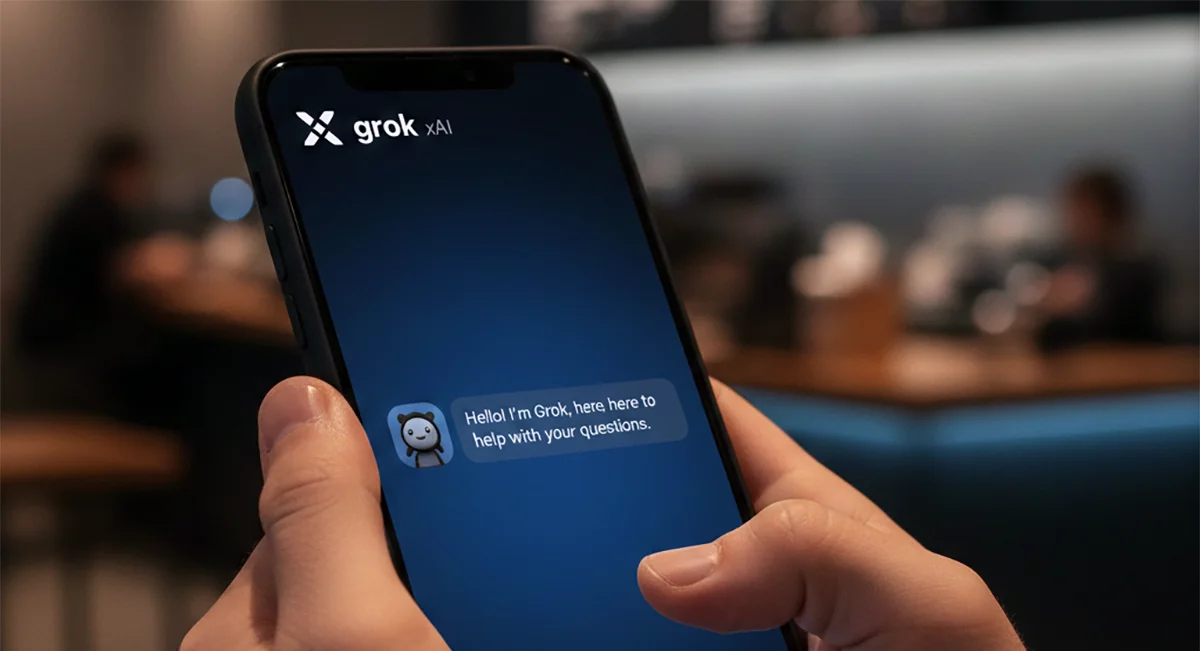
The complaints describe what happens when a Grok user uploads a photo of a face and asks Grok to analyze, rate, edit or transform it. According to the first complaint, SpaceXAI’s systems locate the face, examine how its features are arranged and create a face-specific representation that encodes its geometry, including the proportions, symmetry and spatial relationships among the eyes, nose, lips, jaw and facial contour. That representation, the plaintiffs argue, is a “scan of face geometry” protected by Illinois law, separate from the photo itself.The first complaint gives an example from the named plaintiff’s own use: he uploaded a selfie taken in his car and asked Grok to turn it into a professional headshot, and Grok returned an edited image that preserved his recognizable features. The complaints allege that SpaceXAI never told users in writing that it was collecting face-geometry data, never stated a purpose or retention period, never obtained a written release, and never published a retention and destruction policy. Because each scan is created inside a logged-in Grok account, the complaints say it can be tied to the account holder’s name and other identifying information.
Who Is in the Proposed Class?
The first complaint proposes a class of all Illinois residents who, while located in Illinois and logged into a Grok account, uploaded a photo of their own face and used Grok to analyze, rate, edit, transform or generate content based on it. It says the class period begins when Grok first accepted uploaded photos from Illinois users, which it puts at about October 2024, and runs through class certification. The complaint estimates the class at “thousands” of people, citing reports that Grok has about 117 million monthly users worldwide.The proposed class is limited to Illinois residents, because BIPA is an Illinois law. It excludes anyone who signed a BIPA-compliant written release before the alleged collection. A court has not certified any class, and the definition can change as the cases proceed.
What the Plaintiffs Are Asking For
The complaints seek BIPA’s liquidated damages of $5,000 per intentional or reckless violation, or $1,000 per negligent violation, plus attorneys’ fees. They also ask the court to order SpaceXAI to stop collecting face-geometry data without consent, to delete the biometric data it holds, and to publish a retention schedule and destruction policy that complies with the statute.What Happens Next
On October 15, 2026, the plaintiff in the second case filed notice of a motion asking the court to relate the Grok cases, reassign them to one judge, consolidate them and appoint interim co-lead counsel for the proposed class. If the court grants it, the suits would likely proceed as one case. No court has ruled on whether the claims can go forward, and SpaceXAI has not publicly addressed the allegations.These cases are separate from the Arkansas lawsuit over Grok-generated images of children. They join a run of 2026 suits testing how Illinois’ biometric law applies to AI features that read faces, including claims against Google Nest’s Familiar Face Detection, Amazon Ring’s Familiar Faces and Apple’s Face ID.
Questions
Who is in the proposed class in the Grok face-scan lawsuits?
As written in the first complaint, the proposed class covers Illinois residents who, while in Illinois and logged into a Grok account, uploaded a photo of their own face and used Grok to analyze, rate, edit, transform or generate content from it. The class period would run from about October 2024, when the complaint says Grok began accepting uploaded photos in Illinois, through class certification. No class has been certified, and the definition can change.
Is this the same as the Grok lawsuit over sexualized images of children?
No. The Arkansas case against xAI involves allegations that Grok generated sexualized images of minors. The Illinois cases are about biometric privacy: they allege Grok captured face-geometry data from photos users uploaded of themselves, without the consent Illinois law requires. They are separate lawsuits with different plaintiffs and claims.
How much money is at stake under BIPA?
BIPA sets liquidated damages of $1,000 for each negligent violation and $5,000 for each intentional or reckless violation, or actual damages if greater, plus attorneys’ fees. The complaints ask for those amounts on behalf of the class. These are the statute’s figures, not an award: no court has found that SpaceXAI violated the law, and there is no settlement or fund.
Do the lawsuits say a photo itself is biometric data?
No. Photographs are excluded from BIPA’s definition of a biometric identifier, and the first complaint says so directly. Its theory is that when Grok performs face-specific analysis or identity-preserving edits, it derives a separate scan of face geometry from the photo, and that scan is what the law covers. SpaceXAI has not yet responded to that theory in court.
Sources
• Class Action Complaint, Padilla v. SpaceXAI Corp., No. 1:26-cv-12335 (N.D. Ill.) (October 7, 2026)• Class Action Complaint, Wilson v. SpaceXAI Corp., No. 1:26-cv-12502 (N.D. Ill.) (October 12, 2026), and docket entry of October 15, 2026 (notice of motion to relate and consolidate)
• Mueller v. X.AI Corp., No. 1:26-cv-12698 (N.D. Ill.), removed from the Circuit Court of Cook County, No. 2026CH08606 (October 16, 2026)
• ID Tech, “Grok faces second Illinois biometric privacy lawsuit over photo processing”
• MediaPost, “Grok Sued Over Biometric Privacy” (October 2026)
• Illinois Biometric Information Privacy Act, 740 ILCS 14